Federal government sets new benchmark for immigrant and refugee participation in workforce amid ongoing labour shortages

Looking to address the country’s ongoing labour shortage, Ottawa has announced a new target when it comes to the percentage of Canada’s labour force comprised of immigrants and refugees.
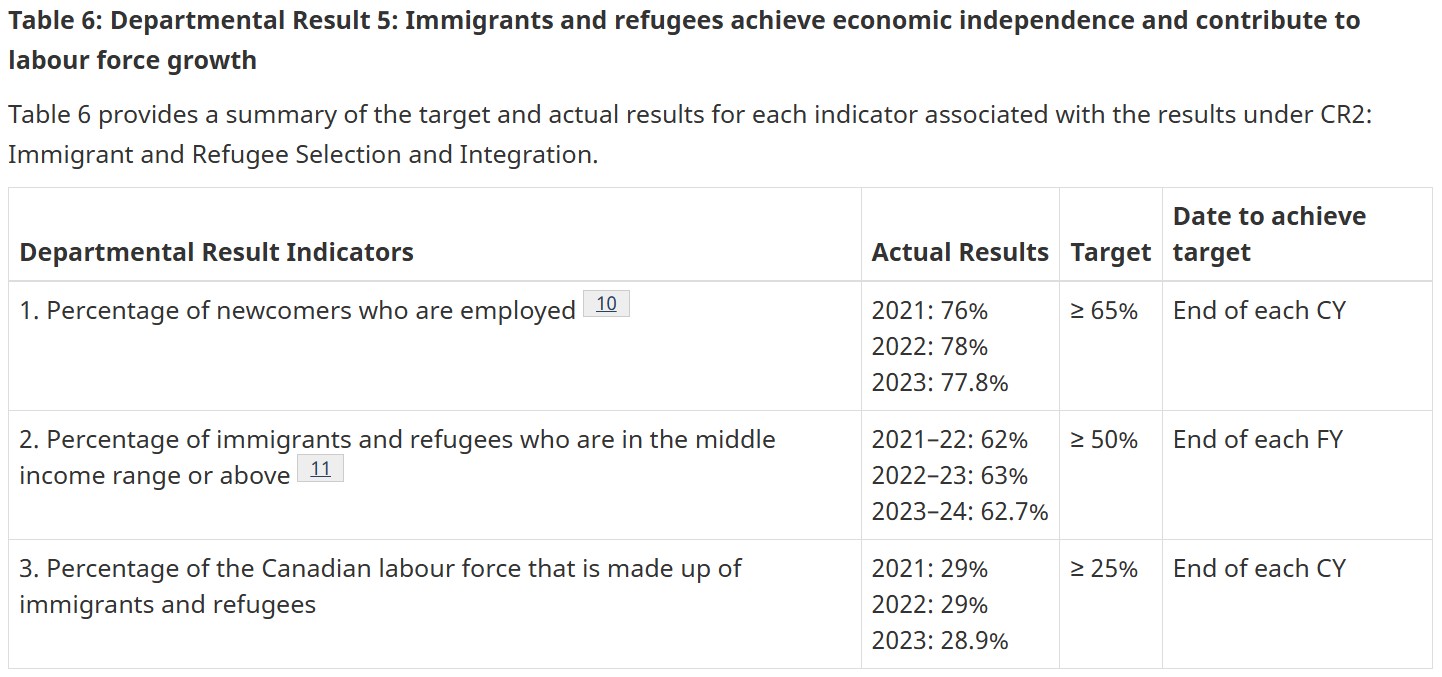
In a new departmental plan released by Immigration, Refugees and Citizenship Canada, a section titled “percentage of the Canadian labour force that is made up of immigrants and refugees" indicates that the target is “≥ 25%.”
"Many newcomers come here to build better lives and be part of building Canada. They bring new businesses, innovations, and cultures, and they contribute to a strong, educated workforce. Immigration has always been an economic advantage to Canada, and with that comes a responsibility to maintain a sustainable immigration level consistent with our country’s community and service capacity. This is also necessary to make sure that those who do come here have access to the jobs, social services and housing they need to contribute to our communities," says the Minister in the plan.
While the new target represents a slight reduction from the pandemic-era peak of 29 per cent, it remains well above the levels seen in previous decades, notes the National Post.
In 2011, immigrants made up 22.6 per cent of the Canadian labour force, and in 2006, the figure was 21.5 per cent. By comparison, the United States currently reports that 19.2 per cent of its civilian labour force is foreign-born, a proportion similar to Canada’s two decades ago, says the report.
In 2024, then Prime Minister Justin Trudeau claimed that the growth in the number of temporary immigrants in Canada needs to be brought “under control”. He said that temporary immigration had ballooned far beyond what the country can absorb. Trudeau noted that, in 2017, two per cent of Canada’s population was made up of temporary immigrants. “Now we’re at 7.5 per cent of our population comprised of temporary immigrants,” he said in the Global News report.
Reducing immigration to Canada
Since October, the Liberal government has signalled its intention to reduce overall immigration, with Prime Minister Mark Carney pledging in a May 21 mandate letter to bring “overall immigration rates to sustainable levels,” says the Post.
Despite these reductions, the targets for both temporary and permanent residents remain well above pre-pandemic norms. Non-permanent residents now account for 7.1 per cent of the Canadian population, a figure the government aims to reduce to five per cent—still a 60-per-cent increase over pre-COVID levels.
For permanent residents, the Immigration, Refugees and Citizenship Canada’s (IRCC) has set a target of 367,000 to 436,000 admissions for the next fiscal year, down from the record 471,808 in 2023 but significantly higher than the 341,000 admitted in 2019. Notably, 2019 itself was a year in which Canada surpassed immigration levels not seen since 1913, the National Post reports.
Employment in Canada
Canadian job growth continues to lag behind population increases. The national job vacancy rate dipped to 2.8 per cent in April, down from 2.9 per cent in March, according to Statistics Canada (StatCan).That figure represents the lowest rate since October 2017, StatCan reported.
However, total job vacancies still totalled 501,300.
The StatCan report notes that “overall, there has been virtually no employment growth since January,” a trend that is particularly acute among Canadians under 25, who are facing one of the most challenging summer job markets on record, according to the National Post. Youth unemployment now stands at 11.2 per cent, the highest rate outside of the COVID-19 lockdowns since the mid-1990s.
Research by King’s Trust Canada highlights a parallel surge in the use of temporary foreign workers (TFWs) in low-skilled sectors, according to the report. Between 2016 and 2023, the number of TFWs in restaurants rose by 634 per cent, while those in retail increased by 456 per cent. This shift has coincided with the government’s efforts to recalibrate immigration levels.
As many companies continue to face hiring struggles, most hiring managers in Canada (86 per cent) report their company has waived some job requirements to fill open roles, according to Express Employment Professionals.