‘It's a balancing act,’ premier says: flexible work policy stresses employee choice, but managers have discretion to refuse, with reason

As Ontario and Alberta order public servants back to their desks full time, Manitoba is doubling down on a written flexible work policy.
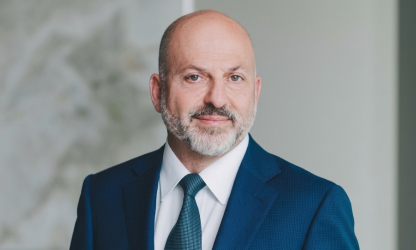
Premier Wab Kinew has endorsed the current requirement that full‑time provincial staff be on site at least three days a week, with remote work agreed case by case. For him, family realities are a central consideration, stating in an interview that he believes “It's a balancing act because again you have people with young kids and families.”
Behind Kinew’s political stance sits a formal “Flexible Work Arrangements” policy issued by the Manitoba Public Service Commission.
The document says the province is committed to “providing high quality public services supported by an engaged and effective workforce” and that flexible work “allows our public service to enhance operational efficiency and effectiveness, support work-life balance, and adapt to evolving service and workforce needs, while continuing to provide a high level of service to Manitobans.”
Pandemic-era flexible work policy will stand: Manitoba premier
The policy, updated Feb. 26, 2022, applies to “all members of the core public service of the Manitoba government, as defined in The Public Service Act.” It defines a flexible work arrangement as “an agreement between management and an employee to adjust the employee's hours and/or location of work, on a re-occurring or on-going basis.”
It runs counter to Ontario’s approach, which has mandated all public service workers back in the office full-time, despite a lot of pushback from employees and unions.
Remote work is treated as one form of flexibility, where some or all duties are done from an alternate location on a full‑ or part-time basis, so they can “adjust their working hours to help balance work with personal responsibilities.”
Crucially, the policy states flexible arrangements must be voluntary for employees and approved by supervisors, and cannot erode service, specifying that management may consider remote work and adjusted hours only where they “will not impact on service or program delivery.”
It also stresses that arrangements must “make prudent use of public resources and ensure that services continue to be provided fairly, reliably and competently” and that service levels “are not negatively impacted.”
It also specifies that the flexible arrangement itself is subject to change according to “changes in the priorities and needs of the department, government, stakeholders and the public.”
Flexible work responsibilities for individual employees
Manitoba’s rules also spell out responsibilities for individual employees, including completing a Remote Work Agreement, using a Remote Workplace Safety Checklist and maintaining basics such as “adequate homeowner or tenant insurance, Wi-Fi data plan, heat, electricity and maintenance.”
Employees must also “report to the official work location (headquarters) when requested for meetings, training and/or at supervisor's discretion with reasonable notice.”
On the employer side, supervisors are required to assess whether each request is “operationally feasible, maintains or improves service and productivity, and does not generate unreasonable cost to government.”
Managers can end a flexible work agreement immediately, but are required to give reasons in writing. They also must give written reasons if they deny a proposal.
“Flexible work arrangements may be terminated by either employer or employee provided written notice in accordance to any applicable collective agreement provision is given,” the policy states.
Union boss happy with the hybrid work arrangement for civil servants
In a CBC report, Kyle Ross, president of the Manitoba Government and General Employees’ Union, said the continuation of hybrid work for civil servants is “reaffirming for our workers.”
“I think it's good because people plan their lives around their work arrangements with their employers — they plan their home, their daycare, their drop-off for school,” he said.
CBC detailed that in November 2025, 30 percent of Manitoba’s civil servants work remotely “at least one day per month” according to a spokesperson.
The Kinew government has been less flexible with front-line managers, arguing that they must visibly support front‑line staff.
He told reporters that the current focus is in health-care, stating “We've asked health-care management to go back in person, and that's been our focus so far.”