
Worker involved in workplace incident went home, consumed drug before post-incident test
A federal arbitrator has upheld the discharge of a worker in a safety-sensitive position who went home and consumed marijuana before submitting to a post-incident drug and alcohol test.
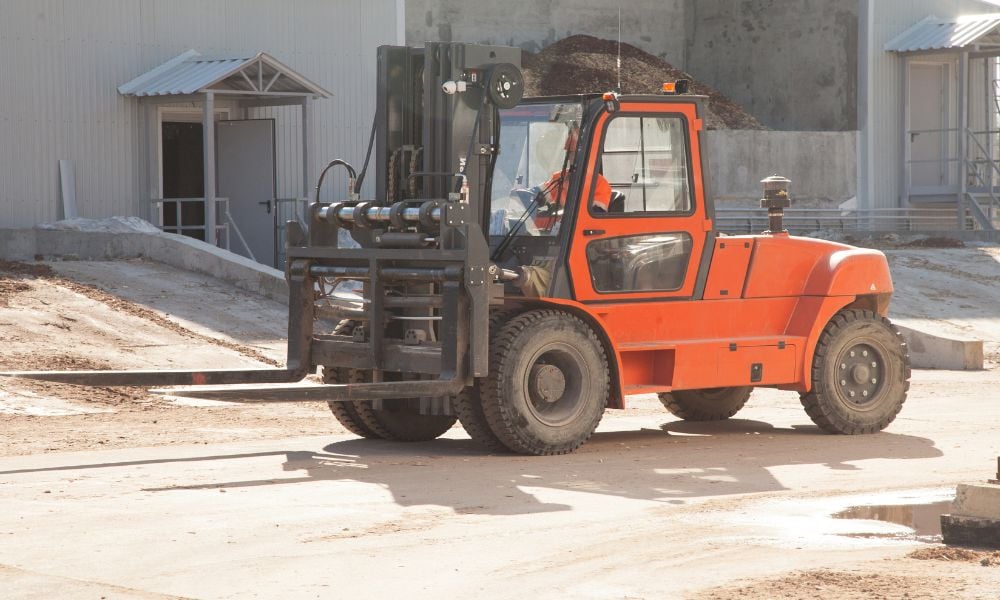
The worker was hired by Alstom Transportation Canada, a manufacturer of transportation systems based in St-Bruno, Que., in March 2024 to drive a reach truck – a large forklift used to lift and stack up to five levels of applets. It was a safety-sensitive position as the reach truck lifted heavy loads in confined spaces, with other employees nearby.
On Aug. 23, 2024, the worker was operating a reach truck when he struck a heavy metal platform used for work on train roofs, causing it to move backwards an estimated seven-to-10 feet. The company investigated the incident to gather the facts. The worker was interviewed and he acknowledged how far the platform moved and that it was a significant error under the company’s drug and alcohol policy that would require testing. A surveillance video of the incident was also reviewed, which depicted the worker’s truck hitting the mobile platform, and then the worker manoeuvring around it.
The worker was told that he would be subjected to post-incident drug and alcohol testing. He refused to do it off-site, so he was allowed to go home before returning for testing about three hours later.
Worker tested positive for marijuana use
When the worker returned for testing, his saliva test returned a positive result for marijuana at 25 ng/ml, and the urine test showed a marijuana/THC metabolite level of 800 ng/ml. Alstom’s drug and alcohol policy set positive thresholds at 10 ng/ml for saliva and 15 ng/ml for urine. The worker later admitted to consuming marijuana after he went home, about 1.5 to two hours before the test.
Alstom terminated the worker’s employment for being unfit for duty in the workplace, which was a breach of its drug and alcohol policy.
The union grieved, saying the company’s investigation wasn’t fair or impartial - citing the absence of union representation during the initial investigation and the late provision of certain documents during the formal investigation rather than prior to it. It also argued that there was little damage to the mobile platform and nobody was injured, so the incident didn’t constitute a serious incident that warranted testing.
The arbitrator found that the initial investigation was a safety inquiry rather than a disciplinary proceeding, so union representation wasn’t required at that stage. As for two company documents that were introduced during the investigation, they were relatively minor, said the arbitrator in determining that the investigation was fair and impartial, subject to the exclusion of these documents.
Serious workplace incident
As for the seriousness of the incident, the arbitrator referred to established jurisprudence and the Supreme Court of Canada’s guidance, which permits post-incident testing in cases of workplace accidents or significant incidents. In this case, the incident constituted a “serious incident” and a “near miss” with the potential for harm, as defined by Alstom’s drug and alcohol policy, and the worker himself acknowledged that the event met the policy’s definition of an accident, the arbitrator said. As a result, the arbitrator found that the worker was directly involved and testing was appropriate under the circumstances.
The arbitrator considered that the worker was informed he would be tested, he refused off-site testing, and he left the workplace before the test was administered. In addition, the worker admitted to daily or near-daily marijuana use and to consuming marijuana approximately 90 minutes before testing, resulting in levels well above company policy limits.
The company argued that the worker consumed marijuana knowing he was subject to testing, thereby presenting himself at the workplace in an unfit state and potentially interfering with the testing process. The union countered that the worker wasn’t on duty at the time of consumption and didn’t expect the test to proceed due to delays.
The arbitrator found that, by his own admission, the worker wasn’t fit for duty when he returned to the workplace for testing, in contravention of company policy. The worker’s actions also constituted interference with the testing process, which warranted discipline, said the arbitrator..
Breach of drug and alcohol policy
The arbitrator noted that the worker acknowledged his error and the need for a change in attitude, but his misconduct amounted to two breaches of the drug and alcohol policy and he worked in a safety-sensitive position with only five months of service with Alstom. The worker also admitted to frequent marijuana use but didn’t claim he had any addiction issues, so the arbitrator determined that there weren’t sufficient grounds to overturn the Alstom’s decision to terminate the worker’s employment.
The grievance was dismissed. See Alstom Transportation Canada Inc. v. Teamsters Canada Rail Conference Maintenance of Way Employees Division, 2025 CanLII 84715



