
A dog walker’s day on the job ended in surgery and a $1‑million lawsuit
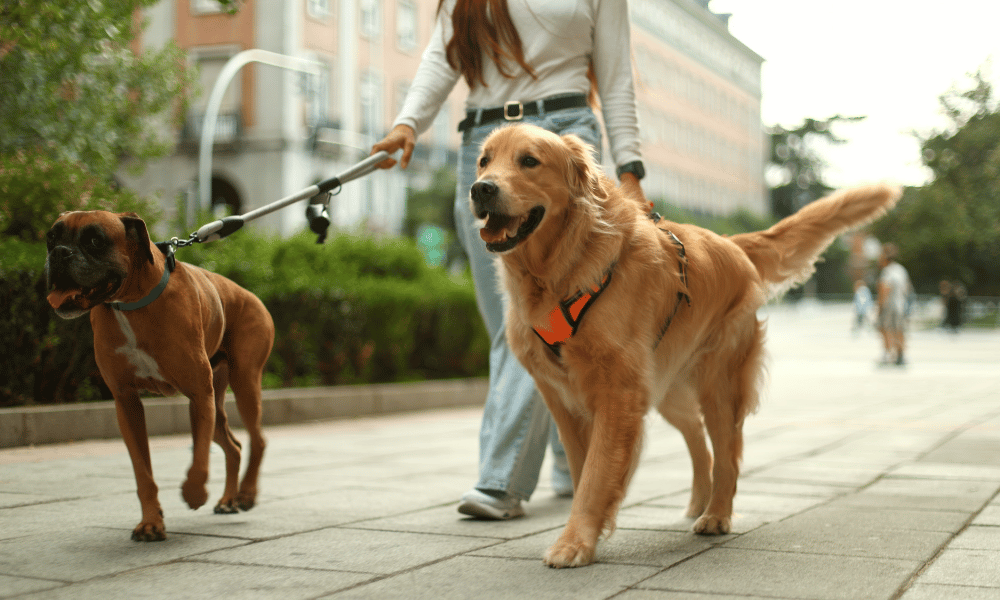
Ontario’s Dog Owners’ Liability Act is putting unexpected risk on dog walkers, groomers and anyone else handling someone else’s pet.
A recent Ontario Court of Appeal decision has confirmed that a dog walker injured on the job could not sue the dog’s owners because, in law, she was treated as the “owner” at the time of the attack.
Broad dog ‘owner’ definition shifts risk to handlers
Under Ontario’s Dog Owners’ Liability Act (DOLA), responsibility for a dog bite does not rest only with the person whose name is on a licence or adoption form. Anyone who has care and control of the animal at the time of an incident can be treated as an owner for liability purposes.
That includes dog walkers, groomers, kennel staff, veterinary technicians, trainers, volunteers and even friends or family helping out.
In the case before the court, part‑time dog walker Amanda Nigro regularly visited clients in Oshawa, Ont., to walk their boxer, Forrest Gump. During a winter visit in March 2022, she followed the owners’ instructions to put booties on the dog before letting him into the snowy backyard. As she tried to put on the booties, the dog attacked, leaving her with serious injuries to her arms, abdomen and thigh.
Nigro sued the dog’s owners for damages, arguing they should bear responsibility. The owners responded that Nigro herself met the definition of owner because under DOLA she controlled the dog at the time of the incident. Both the Superior Court and the Court of Appeal agreed and dismissed her claim.
In a CBC article Nigro’s lawyer, Shane Katz, warned that the ruling should serve as a wake‑up call for anyone handling other people’s animals in Ontario.
“Based on these two decisions, the public needs to be very careful when they’re looking after or hanging out with somebody else’s dog,” he said.
“It’s opening up a whole new class of owners and exposing way more people to potential liability. And they probably don’t even realize it.”
DOLA promotes immediate responsibility
In its reasons, the Court of Appeal stressed that the statute is designed to place responsibility on those in the best position to prevent harm.
“The DOLA seeks to promote responsibility and accountability in those who are best able to prevent dog bites and attacks, wherever they occur. It would defeat this legislative objective if someone meeting the definition of owner could escape liability merely because they were in someone else’s home at the time of the incident,” the decision said.
How other Canadian jurisdictions handle dog liability
Outside Ontario, there is no exact equivalent to the Dog Owners’ Liability Act, but employers elsewhere should not assume there is less exposure. Many laws still push responsibility onto whoever has custody of a dog when something goes wrong.
In Manitoba, the Animal Liability Act creates one of the closest parallels to DOLA, making dog owners liable for damage and allowing “owner” to extend to those in possession or control. In Quebec, Civil Code rules make the “custodian” of an animal presumptively liable for harm it causes, a concept that can easily include employees handling a client’s dog, reinforced by Quebec’s dog‑control framework law and local bylaws.
Across B.C., Alberta, Saskatchewan, the Atlantic provinces and the territories, liability is shaped by general negligence law plus municipal dog or animal control bylaws. Those bylaws commonly define “owner” to include anyone who possesses, harbours or cares for a dog and can trigger fines, control conditions or destruction orders after an attack.
For employers with operations in multiple provinces, the practical thread is the same: the person physically handling the dog — often your worker or contractor — is frequently treated as the legal “owner” for enforcement and, in many cases, civil liability.
What pet-care employers should know about ‘leash liability’
Vancouver‑based animal law lawyer Victoria Shroff told CBC that DOLA is unusual in Canada and creates what she calls “leash liability.” She says the two recent decisions show courts are prepared to apply a “fairly broad” view of who qualifies as an owner.
For employers and HR teams whose operations involve animals — from pet services to home‑care agencies, security firms, hospitality, real estate and more — the ruling underscores the need to:
-
Map where staff or contractors may have custody or control of clients’ animals, even briefly.
-
Clarify in contracts how risks and insurance obligations are allocated between the organization, workers and clients.
-
Ensure workers are trained on animal‑handling protocols, including what to do if a dog shows fear or aggression.
-
Confirm that workers’ compensation, commercial general liability and professional liability coverage respond to animal‑related incidents.
In Shroff’s words, “Everybody who works in this field in Ontario should be reviewing their contracts — today.”



