Per-capita drug spending reached $1,656 in 2025, up from $1,592 in 2024, finds Medavie Blue Cross

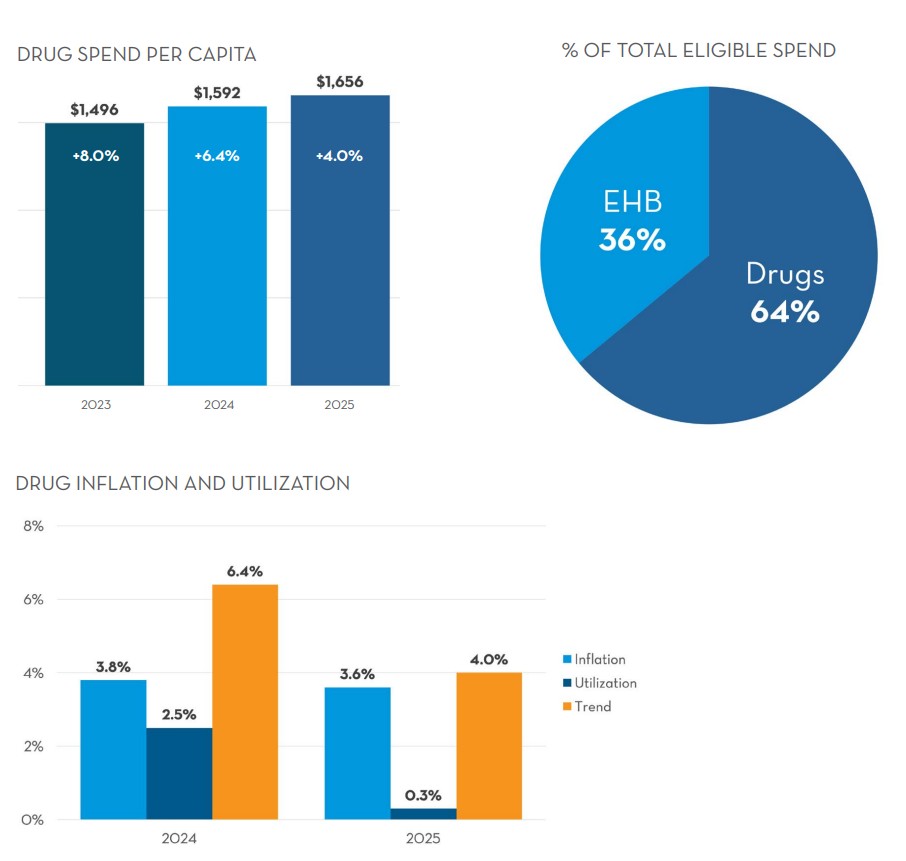
Canadian employers experienced continued upward pressure on drug plan budgets in 2025, as per-capita drug spending rose 4.0 per cent, according to a recent report.
Per-capita drug spending reached $1,656 in 2025, up from $1,592 in 2024, Medavie Blue Cross reported. While the 4.0 per cent increase was the slowest pace of growth in recent years, the insurer cautioned it does not signal lasting relief for plan sponsors.
Specialty drugs – typically costing more than $10,000 per year – represent only one per cent of drug claims but drove 37 per cent of total spending, the report said. In Atlantic Canada, that share climbed even higher, to 41.6 per cent.
"These shifts signal a future where rapid uptake in select high-interest therapies — rather than broad utilization growth — will define the sustainability challenges facing benefit plans," David Adams, Medavie Blue Cross's executive vice-president of insurance business, said in the report.
Overall, 61.8 per cent of insured individuals made at least one drug plan claim in 2025, up from 58.7 per cent in 2023, according to a previous TELUS Health report.
Most popular drugs by spend and claims
Semaglutide, sold as Ozempic and Rybelsus, remained the single largest drug expense in 2025, representing 6.1 per cent of total drug spend, though its share slipped slightly from 6.6 per cent in 2024, Medavie Blue Cross said.
Infliximab (Remicade) and adalimumab (Humira), both used for inflammatory conditions, followed closely behind.
By number of claims, rosuvastatin (Crestor) remained the most commonly dispensed drug, followed by pantoprazole (Pantoloc, Tecta) and levothyroxine (Synthroid), the report said. Metformin, the foundational Type 2 diabetes therapy, was used by 58.4 per cent of diabetes claimants, more than any other diabetes drug.
Spending on lisdexamfetamine (Vyvanse) for ADHD dropped sharply following generic entry, even as utilization continued to rise, Medavie Blue Cross said.
|
Drug (generic name) |
Brand name(s) |
Drug class |
What it's used for |
|
Semaglutide |
Ozempic (injectable), Rybelsus (oral) |
GLP-1 receptor agonist |
Type 2 diabetes management; a higher-dose version is sold separately as Wegovy for weight management |
|
Infliximab |
Remicade |
Biologic (TNF inhibitor), administered by IV infusion |
Rheumatoid arthritis, Crohn's disease, ulcerative colitis, psoriasis, psoriatic arthritis, ankylosing spondylitis |
|
Adalimumab |
Humira |
Biologic (TNF inhibitor), self-injected |
Rheumatoid arthritis, Crohn's disease, psoriasis, and related inflammatory conditions |
|
Rosuvastatin |
Crestor |
Statin |
Lowers LDL ("bad") cholesterol; reduces risk of heart attack and stroke |
|
Pantoprazole |
Pantoloc, Tecta |
Proton pump inhibitor (PPI) |
Acid reflux, GERD, stomach and duodenal ulcers |
|
Levothyroxine |
Synthroid |
Synthetic thyroid hormone |
Hypothyroidism (underactive thyroid) |
|
Metformin |
(commonly sold generically) |
Oral antihyperglycemic |
First-line treatment for Type 2 diabetes |
|
Lisdexamfetamine |
Vyvanse |
Stimulant (prodrug of dextroamphetamine) |
ADHD; also approved for binge eating disorder in adults |
The percentage of employers providing GLP-1 medications under their benefit plans has gone from 31% in 2025 to 37% in 2026, according to a previous report.
Drugs gaining the most traction
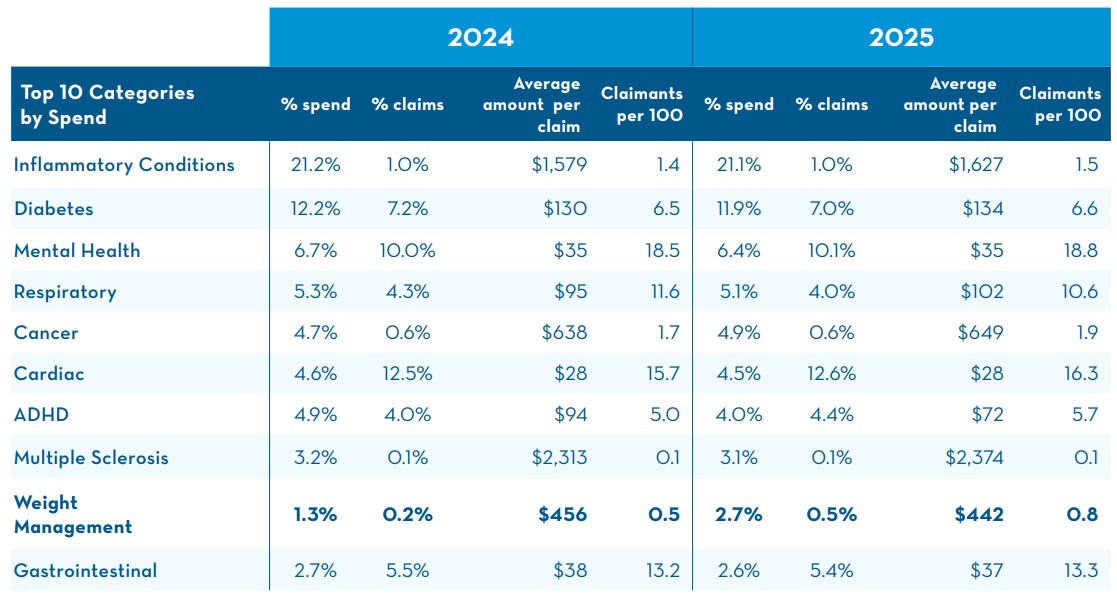
Semaglutide sold as Wegovy for weight management saw the sharpest growth of any drug in the report, with its share of weight management category spend rising to 90 per cent in 2025 from 61 per cent the year before. Zepbound, launched in July 2025, already represents one per cent of total weight management spend.
Biologics for inflammatory skin conditions, including Dupixent, Adtralza and Ebglyss, drove a 50.7 per cent trend increase in that category, Medavie Blue Cross said, as more patients with atopic dermatitis move to treatments costing over $2,000 per month. Risankizumab (Skyrizi) and dupilumab (Dupixent) also posted notable claimant growth among inflammatory condition biologics.
Estradiol, the leading hormone therapy product for menopause, contributed 19.8 per cent of that category's growth in 2025 and now represents 56 per cent of hormone therapy spend, the report said, as utilization among women aged 40 to 60 continues to climb across all Canadian regions.
|
Drug (generic name) |
Brand name |
Drug class |
What it's used for |
|
Semaglutide |
Wegovy |
GLP-1 receptor agonist (higher dose than Ozempic) |
Chronic weight management, alongside diet and exercise |
|
Tirzepatide |
Zepbound |
Dual GIP/GLP-1 receptor agonist |
Chronic weight management; diabetes version sold as Mounjaro |
|
Dupilumab |
Dupixent |
Biologic (interleukin-4 and interleukin-13 inhibitor) |
Atopic dermatitis (eczema), asthma, chronic rhinosinusitis with nasal polyps |
|
Tralokinumab |
Adtralza |
Biologic (interleukin-13 inhibitor), self-injected |
Moderate-to-severe atopic dermatitis unresponsive to topical treatments |
|
Lebrikizumab |
Ebglyss |
Biologic (interleukin-13 inhibitor) |
Moderate-to-severe atopic dermatitis |
|
Risankizumab |
Skyrizi |
Biologic (interleukin-23 inhibitor) |
Plaque psoriasis, psoriatic arthritis, Crohn's disease |
|
Estradiol |
(commonly sold generically and under various brands) |
Estrogen hormone therapy |
Perimenopause and menopause symptoms (hot flashes, night sweats, vaginal dryness); typically paired with progesterone in women with a uterus |