‘Embracing technology to tackle psychosocial risks and make tangible sustainability commitments’
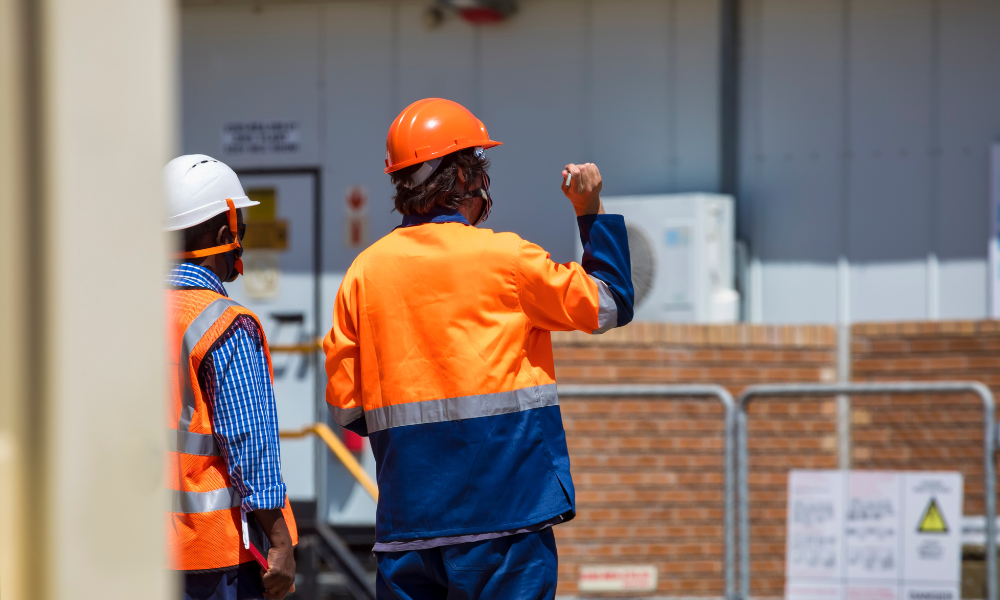
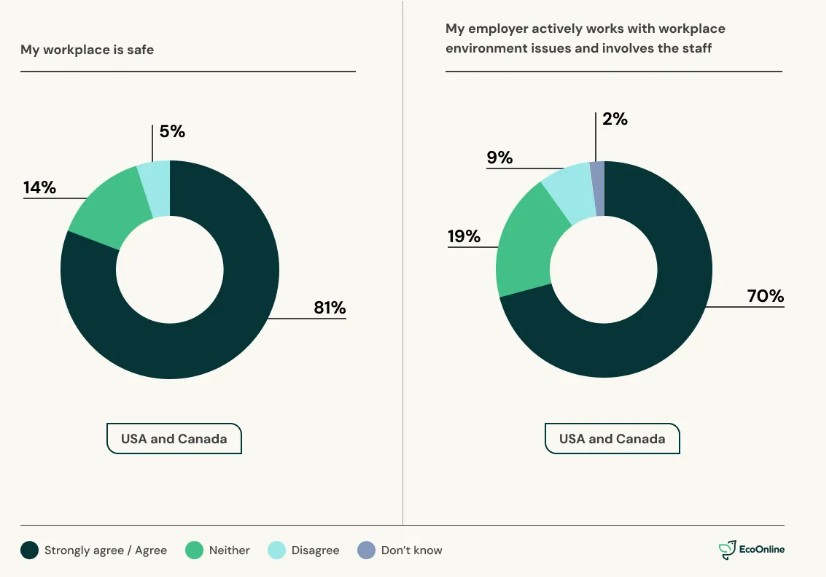
Most workers in Canada and the United States claim that they feel safe at work, according to a new report.
Specifically, 81 per cent of workers in the two countries feel safe in their workplace, with 71 per cent claiming that employers are good at addressing workplace environment issues as well as involving staff.
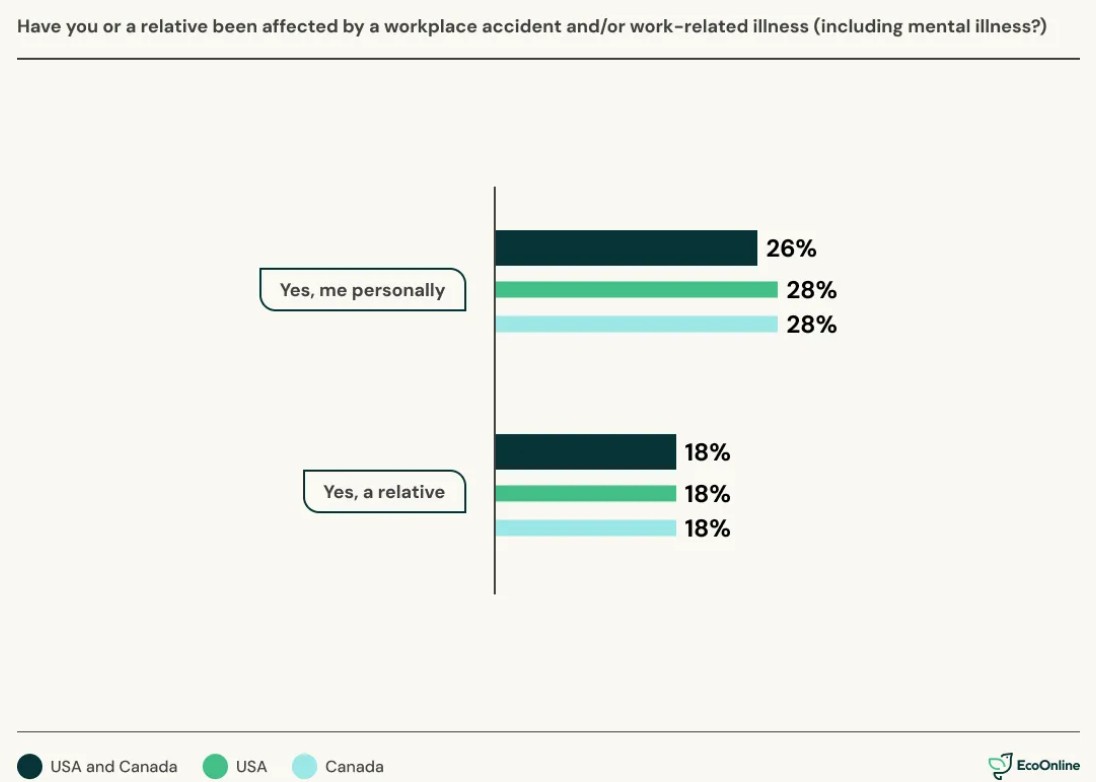
Despite this, almost half of workers in both the USA and Canada have personally experienced, or have a relative who has experienced, a workplace accident or work-related illness, finds the report from EcoOnline.
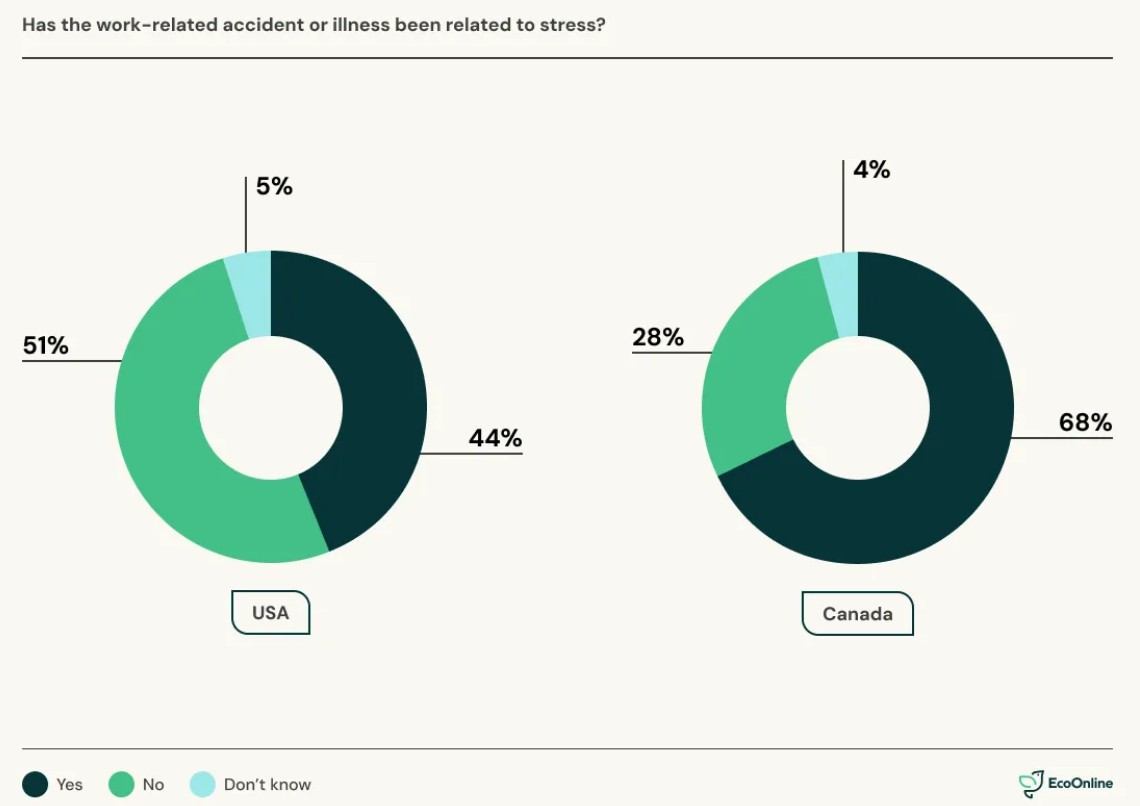
Of the workers who said they or a relative had experienced a work-related accident or illness, 68 per cent of Canadian respondents identified stress as a factor, compared to 44 per cent in the U.S.
While incidents such as falls and equipment malfunctions often dominate workplace safety discussions, health-related risks are dangerously overlooked, Cindy Schiewek, director of Health & Safety Services and Strategy at Workplace Safety North (WSN), previously told Canadian HR Reporter.
Safety risks at work
Chemical safety is rife with risk and a critical gap, according to EcoOnline’s survey of 2,097 respondents in North America, the United Kingdom, and Ireland, conducted from April to May 2025.
Nearly half (44 per cent) of workers are exposed to chemicals on the job, and among them, nearly 40 per cent say their company is not actively working to substitute hazardous chemicals.
Most workers (78 per cent) receive formal chemical training and 80 per cent have access to safety data sheets (SDS), but these aren’t available via QR code on mobile devices.
One in three North American workers identify as lone workers (35 per cent). Among them, 45 per cent strongly agree their employer takes lone worker safety seriously, compared with 53 per cent among all North American workers who feel safe.
Psychosocial risks like mental health and fatigue outrank physical hazards for lone workers, with 48 per cent naming them as top concerns, followed by environmental hazards (43 per cent) and accidents or falls (43 per cent).
Previously, an Alberta heavy equipment company was fined $330,000 following the death of a worker who succumbed to carbon monoxide poisoning while on the job.
Digital, AI safety tools
Seven in 10 (70 per cent) employees say they’d feel safer with more digital health and safety tools, rising to 81 per cent among those aged 18–34, according to EcoOnline.
“Today’s workplace experience hinges on the three S’s: Safety, Stress and Sustainability. Supporting employee well-being means going beyond compliance, creating environments that are productive, supportive and safe,” says Tom Goodmanson, the firm’s CEO.
“With 81 per cent of workers saying they’d consider leaving due to poor conditions, the link between safety, sustainability and job satisfaction is clearer than ever. Embracing technology to tackle psychosocial risks and make tangible sustainability commitments will be essential to keeping people protected and engaged. This is a business imperative, not just a regulatory one.”
However, even though 41 per cent want to report incidents digitally, many companies still rely on manual processes, according to the report.
Over six in 10 (62 per cent) workers are open to AI improving workplace safety, increasing to 70 per cent for 18–34-year-olds, but trust will depend on how it’s implemented.
“The biggest opportunities lie in showing how AI can support rather than replace human safety processes, with potential use cases such as predictive alerts or virtual assistants,” says EcoOnline.
Previously, Ontario pushed for automatic external defibrillators (AEDs) to be required at construction sites as part of a provincial effort to enhance worker safety.