
Over half of workers describe their workplace as stressful, says report

Canadian employers are grappling with persistent workplace stress and rising burnout rates among staff, according to new data from Mental Health Research Canada (MHRC).
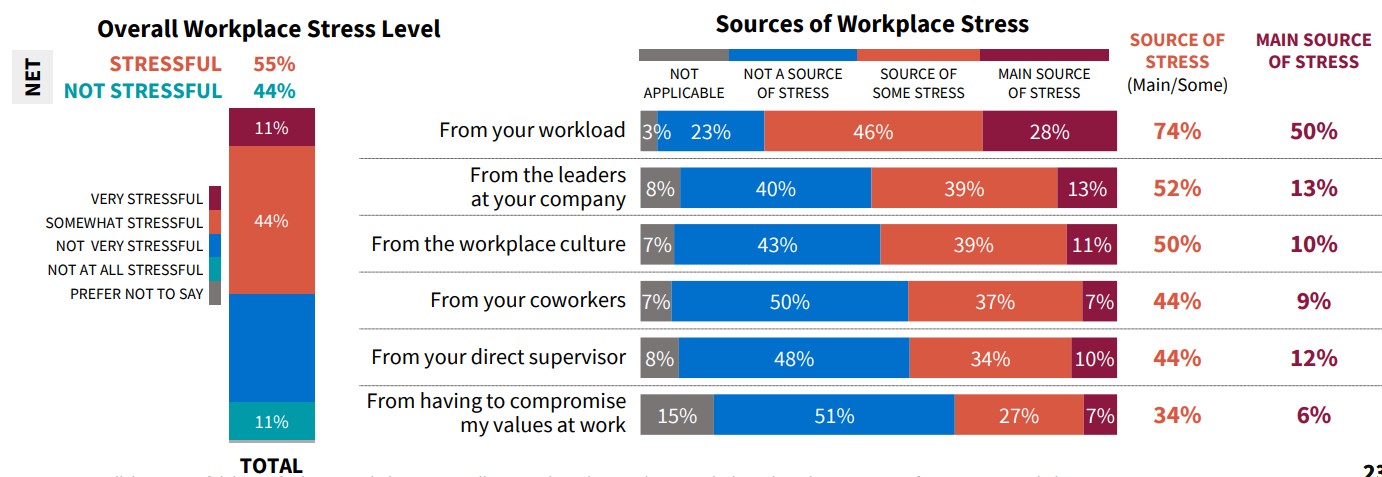
Fifty-five per cent of employees find their workplace stressful, with 11 per cent describing it as very stressful. Stress is most pronounced among employees at large public companies, where 63 per cent report workplace stress, and among managers, at 60 per cent.
The MHRC report identifies heavy workloads as the primary source of stress for 74 per cent of employees, while 52 per cent cite company leadership or organisational culture as contributing factors.
Overall, 76.3 per cent of workers say their mental health has been negatively affected by job or financial stress in the past year, according to a previous report.
Burnout prevention
Two in three employees consider their workplace to be psychologically healthy and believe that available services and benefits address their psychological health needs. However, the report warns that employees dealing with mental health conditions—diagnosed or not—are less likely to feel positively about their workplace benefits or psychological health.
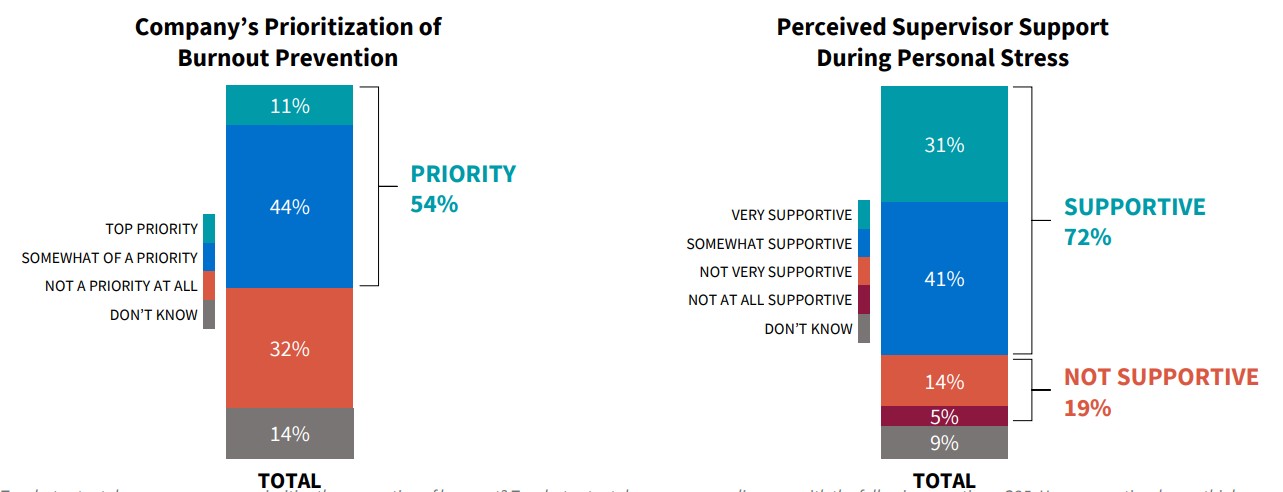
Burnout prevention remains a critical area for employers. The MHRC survey found that 46 per cent of employees say their company does not prioritise burnout prevention or that they are unaware of any such programme. Only 11 per cent report that burnout prevention is a top priority at their workplace.
According to MHRC, employers who make burnout prevention a priority see burnout rates 30 per cent lower than average, while those who do not take action experience rates 20 per cent higher than average. For an employer with 500 staff, prioritising burnout prevention could mean productivity gains or savings of approximately $1.7 million, or about $3,400 per employee.
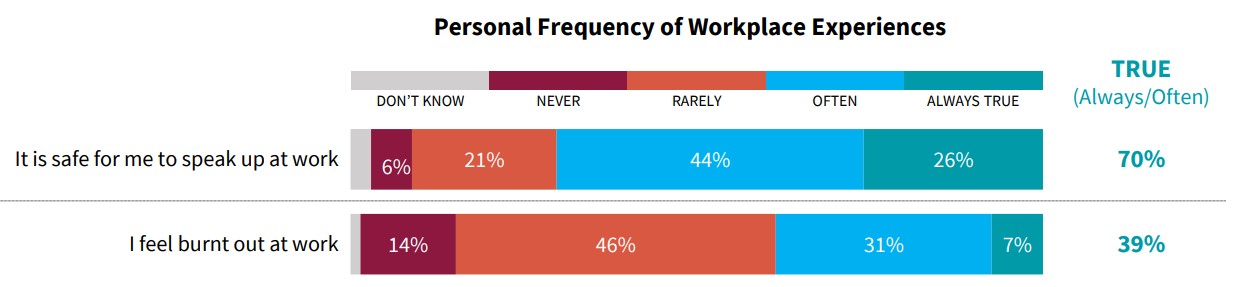
The survey also shows that 39 per cent of employees feel burnt out often or always, up from 35 per cent in 2023. Burnout rates are especially high among women and racialised Canadians, both at 42 per cent. The report further highlights that fewer employers are prioritising work–life balance and burnout prevention compared to last year.
Mental Health Research Canada urges employers to take a proactive approach to psychological health and burnout prevention, noting that “promotion of work–life balance has decreased since 2023.”
Forty percent of workers have been diagnosed with a mental illness or neurodevelopmental condition at some point in their lives, according to a previous report.
How do you address burnout in the workplace?
Leading by example is one of the best ways business leaders can address the issue of burnout in the workplace, according to Citation Canada.
“Leadership is essential for shaping an organisation’s culture. Leaders set the tone through their actions, which employees often mirror. Prioritising mental health and setting a positive example is essential for fostering a healthy and productive workplace. This includes demonstrating the importance of taking breaks and maintaining work–life balance,” the company says.
They add: “By taking intentional steps to prevent burnout, organisations demonstrate a genuine commitment to employee wellbeing and operational success. Through thoughtful, evidence-based strategies, businesses can cultivate a healthier, more engaged workforce, strengthening productivity, enhancing workplace culture, and establishing themselves as employers of choice and leaders in their industry.”
There is a significant disconnect between employer perceptions and the reality of mental health support in Canadian workplaces, according to a previous report.



