
'The real value of AI comes from working alongside people, not replacing them'

Most Canadian hiring managers say human involvement is non-negotiable in the decisions that affect employees most directly, according to a survey.
More than four in five (82%) say AI will never replace the need for actual employees at their company, and 89% say their company is committed to preserving a human element in the workplace, according to an Express Employment Professionals-Harris Poll survey.
And for any HR professionals concerned about their jobs, there’s considerable support for continued human judgement versus AI, with human resources coming out on top among hiring managers:
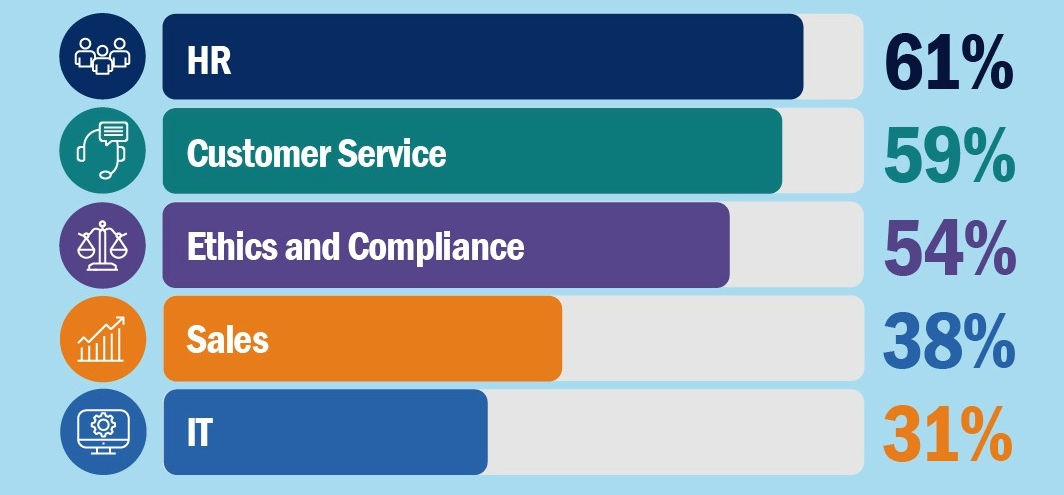
Among both hiring managers and job seekers, the strongest support for keeping people involved centres on moments “where judgment, trust and direct interaction matter most,” says the report, such as:
- Managing crisis situations or emergencies — 76 per cent
- Handling employee disputes or grievances — 75 per cent
- Negotiating deals or contracts with other businesses — 73 per cent
- Making decisions on ethical practices and compliance — 72 per cent
- Conducting performance reviews and providing feedback — 71 per cent
- Determining who gets laid off — 70 per cent
Employed job seekers closely echo those views when it comes to human involvement:
- Managing crisis situations or emergencies — 74 per cent
- Handling employee disputes or grievances — 70 per cent
- Conducting performance reviews and providing feedback — 69 per cent
- Making decisions on ethical practices and compliance — 68 per cent
- Determining who gets laid off — 67 per cent
Hiring managers also extend the human-first preference to two functions at the core of HR practice: serving as the first point of contact for customer issues or questions (66 per cent) and reviewing applications and selecting candidates for interviews (65 per cent), according to the report that’s based on two surveys: one of 504 Canadian hiring and the other of 502 adults, both conducted in November 2025.
Canadians continue to express concern about AI, yet a growing share are allowing AI systems to act on their behalf, according to a previous report. Overall, just 13% of Canadians have used autonomous AI in the past six months — systems that go beyond offering recommendations to taking action without human intervention, reported EY.
AI anxiety persists
Despite those assurances, employee anxiety about the staffing consequences of AI remains acute and widespread. Seventy-five per cent of job seekers whose companies use AI say they fear the growing use of the technology will result in their company reducing the size of the workforce — a figure that stands in sharp contrast to the 82 per cent of hiring managers who say AI will never replace the need for actual employees at their company, finds the report.
Among employed job seekers, 81 per cent share that view, saying generative AI will never replace the need for actual employees where they work.
“HR leaders and business decision-makers play a critical role in easing workforce replacement fears as AI adoption grows, and an effective way to do that is by grounding the conversation in transparency and real results," says Mike Shekhtman, Senior Regional Director at Robert Half, in a statement emailed to Canadian HR Reporter. "Clear, honest communication matters. Employees need to understand how AI is being used and where they fit."
Bob Funk Jr., CEO, president and chairman of Express Employment International, says the survey results reflect an understanding of AI as a tool that works alongside people rather than one that supplants them.
"AI can improve efficiency, boost productivity and take routine tasks off employees' plates so they can focus on other priorities, but that does not mean it should stand in for people," he says. "When the situation is sensitive or the outcome affects someone's job, career or future, human involvement still matters. The real value of AI comes from working alongside people, not replacing them."



