SHRM ‘fundamentally disagrees,’ weighs appeal after jury finds it failed to accommodate job applicant
A federal jury has found that the Society for Human Resource Management (SHRM) violated disability law when it withdrew a job offer from an applicant who asked to bring her diabetes alert dog to work. SHRM says it will consider an appeal.
The jury in the U.S. District Court for the Eastern District of Virginia, in Alexandria, unanimously found that SHRM failed to provide Fiona Torres with a reasonable accommodation under both the Americans with Disabilities Act (ADA) and the Virginia Human Rights Act, according to the verdict form.
The jury also found that SHRM rescinded Torres's job offer because of its need to accommodate her disability, and that it discriminated against her on the basis of disability under the Virginia law.
But the jury did not find that SHRM rescinded the offer because of her disability itself. It also did not find that SHRM failed to engage in a timely, good-faith interactive process with Torres.
The jury awarded Torres US$400,000 in compensatory damages and no punitive damages in the Oct. 9 decision.
"This outcome penalizes an organization for executing a rigorous, good-faith, multi-step interactive process — exactly the kind of process the ADA was designed to require," SHRM said in a statement after the verdict.
What the jury decided
The verdict form put six liability questions to the jury across four counts. The jury answered yes to four:
- SHRM rescinded Torres's job offer because of its need to accommodate her disability (ADA)
- SHRM failed to provide her a reasonable accommodation (ADA)
- SHRM discriminated against her on the basis of her disability (Virginia Human Rights Act)
- SHRM failed to provide her a reasonable accommodation (Virginia Human Rights Act)
It answered no to two:
- SHRM rescinded Torres's job offer because of her disability (ADA)
- SHRM failed to engage in a timely, good-faith interactive process (Virginia Human Rights Act)
A late 2025 report form the Conference Board of Canada highlighted a persistent challenge for Canadian workplaces: confusion and uncertainty around the accommodation process for employees with disabilities.
Revoked job offer
According to her complaint, Torres was offered a senior specialist role in SHRM's product management department in June 2024. SHRM revoked the offer the following month after she asked to bring her trained medical service dog to the office.
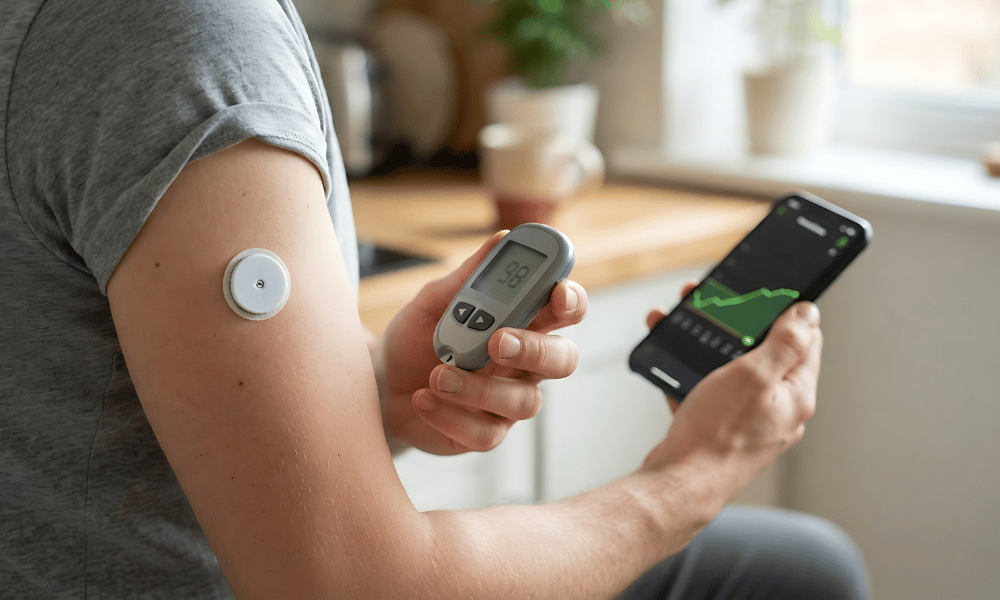
Torres has Type 1 diabetes. She said the dog can detect changes in her blood sugar faster and more reliably than a top-tier glucose monitor, according to Business Insider's reporting on the complaint.
"Before she had the assistance of her service dog, Ms. Torres blacked out approximately 10 times a year," the complaint said, as reported by HR Dive. "Since acquiring the service dog's assistance eight years ago, she has had only one such incident."
The complaint alleged that SHRM denied the request on the grounds that she "was able to perform the essential duties of the job without the presence of her service dog." According to the complaint, SHRM offered instead to let Torres keep food, water and an insulin pump at her desk, which she considered inadequate.
Accommodation ‘a dialogue, not a dictation’
In its statement, SHRM said it made the conditional job offer knowing of Torres's diagnosis. It said it reviewed her medical documentation, consulted legal counsel and proposed several alternatives, including support for continuous glucose monitoring, insulin pump adjustments and flexible leave.
"SHRM said no to one specific accommodation. We did not say no to Ms. Torres, her diagnosis, or her need for support," the statement read.
"Accommodation is meant to be a dialogue, not a dictation," SHRM said. "An applicant's preference for one specific accommodation does not strip an employer of its right to establish reasonable operational boundaries or to propose alternative, effective solutions."
SHRM also pointed to evidence it said came out at trial. According to the statement, Torres's treating physician testified that she had never prescribed a diabetes alert dog, and testimony showed Torres manages her diabetes without the dog during exercise, travel and in professional settings, relying on a continuous glucose monitor. SHRM said that is "the same monitoring approach SHRM proposed as part of its offered accommodations."
SHRM: Warning for HR
SHRM framed the case as one with consequences for HR departments beyond its own.
"If today's verdict becomes precedent for the principle that an employer must always capitulate to an employee's exact preferred accommodation, the interactive process the ADA was built around ceases to function," the statement read.
The organization said it is evaluating its appellate options "to protect not just our own position, but the operational rights of HR departments and employers nationwide who rely on that process every day."
Elaine Fitch, managing partner of the law firm KCNF, said the firm would vigorously defend the verdict if SHRM appeals, according to HR Dive.
The verdict is SHRM's second employment-related jury loss in less than a year. In December 2025, a Colorado jury found SHRM liable for race discrimination and retaliation against former employee Rehab Mohamed, awarding $1.5 million in compensatory damages and $10 million in punitive damages, according to HR Brew.
SHRM is appealing that verdict.