Occurrence reports after each incident were reminders; worker admitted need for directive
An arbitrator has upheld a three-day suspension for a federal correctional officer who breached personal protective equipment protocols multiple times during the pandemic.
The worker was a correctional officer at the Elgin Middlesex Detention Centre (EMDC), a maximum-security jail in London, Ont., since 2017. He had a clean disciplinary record.
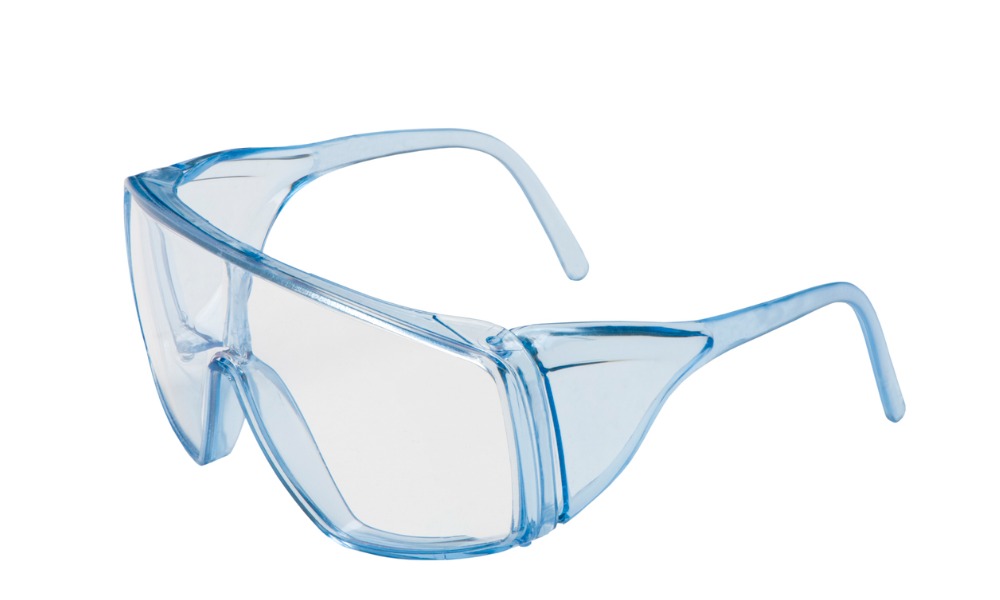
On Jan. 7, 2021, the Ontario Ministry of the Solicitor General, which operates the EMDC, sent out a directive to all staff at correctional facilities requiring them to wear masks and eye protection inside at all times. This was because anyone not wearing such personal protective equipment within proximity of someone who was positive for COVID-19 would be a high-risk close contact. Given the high number of staff and inmates in close contact inside correctional institutions, the ministry considered it a priority to take measures to reduce the chance of infection.
On Jan. 15, the worker was assigned to watch an inmate suspected of concealing contraband narcotics. The offender was caught with contraband and the worker tried to restrain him to keep him from swallowing it. During the struggle, he removed his safety eyewear to see better.
Management observed the worker removing his eye protection on closed-circuit television (CCTV) and asked him to fill out an occurrence report. The worker indicated that his safety eyewear had fogged up and he removed it so he could see. Management determined that the removal of the safety eyewear was justified and didn’t issue any discipline.
Worker acknowledged eyewear directive
On Jan. 26, a sergeant observed the worker in the staff lounge with his safety eyewear on top of his head. In another occurrence report, the worker explained that he had been drinking hot coffee and his goggles had fogged up, so he put them on his head. He said that he had forgotten to put them back on his eyes because he still had his coffee in his hand, but he acknowledged that he was supposed to be wearing them at all times.
On March 17, management was performing contact tracing from a positive COVID-19 case with the CCTV and found footage from nine days earlier of the worker again wearing his safety eyewear on top of his head as he returned from an inmate escort in a van. The worker was required to submit another occurrence report, in which he didn’t deny not complying with the directive and suggested that the goggles might have fogged up, but he couldn’t recall why he wasn’t wearing them at the time. He also said that he didn’t realize that he had to wear goggles when in the van, but this was because he hadn’t read the policy properly.
More contact tracing with CCTV on March 21 found the worker without any protective eyewear. The worker said that he recalled his goggles fogging up and putting them on his head, but he admitted that he couldn’t remember if he had his goggles at all that day. He said that he “knew better and would wear goggles at all times in the future.”
After this last incident, management decided that the worker had demonstrated a pattern of disregarding the protective eyewear directive and the worker only had a good reason in the Jan. 15 incident involving restraining the inmate. Since these were health-and-safety breaches, management decided to suspend the worker for three days. The worker was given an allegation letter outlining his misconduct on April 1.
Worker never warned: union
The union grieved the suspension, arguing that the worker was never warned that his breaches could lead to discipline and he wasn’t given an opportunity to correct his misconduct. It also argued that the two-month delay from the first two occurrence reports to his suspension should be considered condonation of the worker’s conduct and acceptance of his explanations.
The arbitrator agreed that management accepted the worker’s explanation for removing his eyewear in the first incident involving the inmate, but this should not be interpreted as a blanket condonation for removing it in other circumstances. In fact, the worker was required to submit occurrence reports for the other three incidents after not doing so for the first one, said the arbitrator.
The arbitrator also noted that, after each incident, the worker acknowledged that he needed to wear safety eyewear and his misconduct didn’t meet expectations.
The arbitrator also pointed out that the ministry had a duty under the Occupational Health and Safety Act to take all precautions reasonable to protect employees and these incidents happened during the pandemic before vaccines were widely available. There was a significant risk of infection of staff and inmates in the institution if personal protective equipment wasn’t worn, said the arbitrator, adding that failing to follow the directive “created a health and safety risk that transcended the usual need for more modest progressive discipline.”
Reminder after each incident
The arbitrator found that it would have been reasonable for a letter for the first violation and one-day suspensions for subsequent violations, although the worker wasn’t disciplined until after the fourth incident. In this case, the employer’s request for occurrence reports after each incident should have served as reminders for the worker to comply with the directive, but instead the worker “was simply not getting it,” the arbitrator said.
The arbitrator determined that the health and safety risk from the worker’s continued failure to follow the director to wear protective eyewear, despite the reminders, made the three-day suspension appropriate.
The union also raised concerns over the use of CCTV to monitor staff and that fact that it was incidentally used towards disciplining the worker, but the arbitrator found it the purpose of using CCTV for contact tracing along with “safety and security of staff, inmates, and property of the respective ministry” was reasonable. In addition, the “awareness of widespread surveillance” in the EMDC and the possibility of its use for a range of reasons did not negatively impact the worker’s privacy when CCTV was used incidentally for discipline purposes, said the arbitrator.