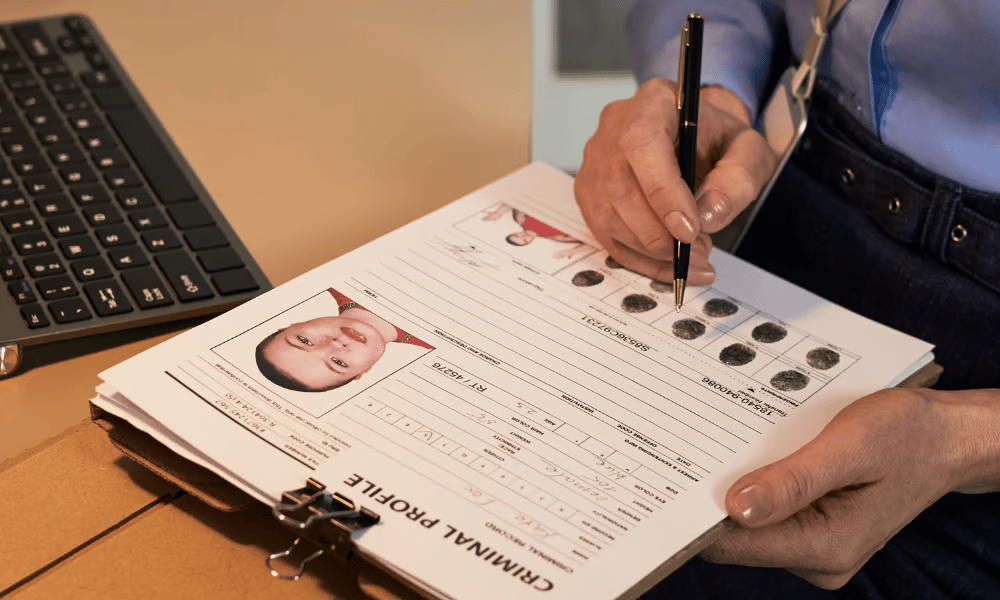
Company had history of safety violations; worker’s inquiry about fall protection brushed off
The Saskatchewan Provincial Court has fined a construction company $136,000 for workplace safety violations that resulted in a young worker becoming a quadriplegic after a bad fall.
King Stud Contracting was a small construction company in Hauge. Between 2016 and 2020, King Stud was cited three times by provincial Occupational Health and Safety (OHS) inspectors for 10 violations, with four of them related to fall prevention and safety.
The worker was a 20-year-old first-year electrician apprentice with King Stud. On Feb. 19, 2021, the worker was on a work platform five metres in the air, held up by a stand-off forklift or crane, installing rafters above the second-floor balcony of a townhouse being built. The worker and King Stud’s principal were on the platform, which consisted of a floor and a waist-high wire-mesh on three sides. The end walls were gates that could be opened and the front side of the platform was open.
Less than six months earlier, in September 2020, King Stud had been cited by OHS inspectors for safety violations and the company had been told that the platform could not be used for workers, only material. However, since then, the company continued to use the platform for employees to perform work. The principal decided not to acquire a new work platform to save money.
The roof rafters being installed were bigger than the width of the work platform, so the gates on each end were open to accommodate them, leaving only the mesh wall on one side. Neither the worker nor his colleague were wearing fall protection equipment, although some was available at the worksite.
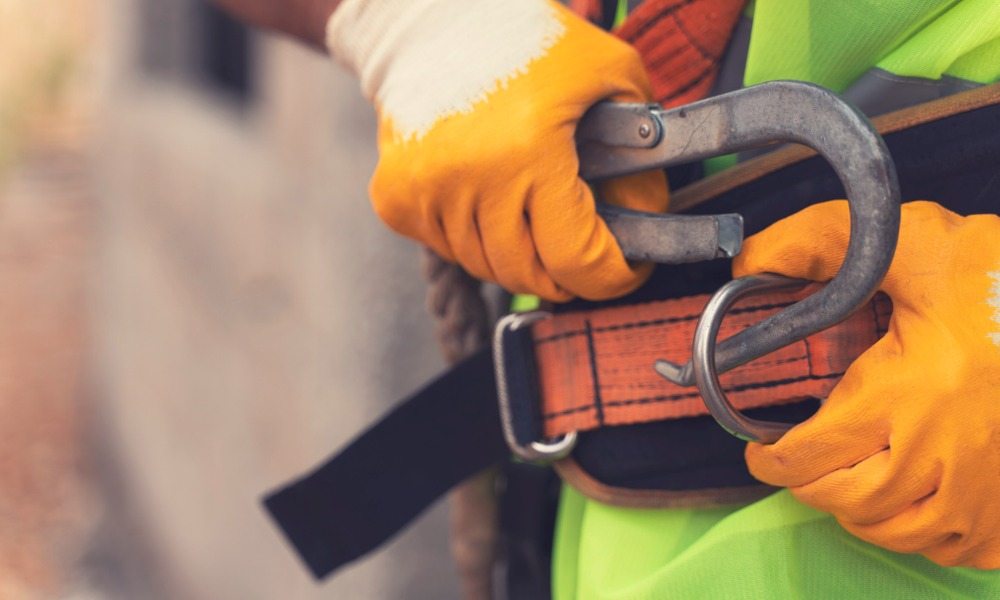
The Saskatchewan government issued a reminder to employers and workers to wear fall protection equipment when working three or more metres off the ground.
Fall protection brushed off
The worker had worn the fall protection equipment a couple of times, but he had not received any training on it. Before they stepped onto the platform, he asked the principal if they should be wearing it, but the principal brushed it off, saying that it slowed down their work.
As they were completing installation of the rafters, the worker pushed against the unsecured gate on one side of the platform. The gate swung open and the worker fell five metres to the ground, landing face-down.
The worker suffered a spinal fracture in the fall and spent three months in intensive care units. The injury made him a quadriplegic needing 24-hour nursing care, specialized equipment, and medications for the rest of his life.
King Stud was charged with and pled guilty to failing, as an employer, to ensure that a worker on a work platform mounted on a forklift used a personal fall arrest system that met requirements under the Saskatchewan Occupational Health and Safety Act.
The court was left with determining King Stud’s sentence for the violation, based on several factors including the scope of the operation, the gravity of the offence, the degree of risk and danger, past diligence, previous offences, and the degree of fault.
The court noted that King Stud was a small business, with gross annual revenues of between $200,000 and $400,000 over the previous six years.
The purpose of penalties for lack of proper fall protection is deterrence, not financial ruin for a small company, the Ontario Court of Justice said.
Aggravating factors
The situation was aggravated by the fact that the incident was a direct result of the decision not to acquire a safer work platform when the company had been cited for a similar violation less than six months earlier. The degree of risk, danger, and foreseeability of the incident were all high, said the court.
The court also considered that King Stud has received multiple citations for violations in the previous few years and made a deliberate decision not to comply with the order to get a safer platform. The worker had not been trained in fall safety and the manager brushed off the worker’s inquiry as to whether they should use it. The evidence indicated that King Stud had a history of failing to guard against falls and a “general lack of interest in worker safety,” said the court.
King Stud provided a letter of apology as part of its submissions, but it was not sent to the worker and no reparations or financial assistance were provided to the worker or his family. After the incident, the company finally purchased a certified platform and completed a fall protection plan. However, one year later, it received another citation from an OHS inspector for failing to implement fall protection measures.
The court determined that it was appropriate to penalize King Stud the equivalent of about one year’s net proceeds, given the seriousness of the company’s repeated safety violations and the worker’s injury. King Stud was ordered to pay a fine of $90,000 plus a surcharge of $36,000, for a total penalty of $126,000 for its failure to adequately protect the worker from a fall and contributing to the catastrophic result for the worker.
See R v. King Stud Contracting Ltd., 2022 SKPC 47.
Wearing fall protection equipment is one of the most dangerous and pressing compliance issues, according to WorkSafe Saskatchewan and the Saskatchewan Construction Safety Association.