
'What the employer should have done is issue the employee a written notice'
A New Brunswick employer must pay an employee that it placed on “furlough” early in the pandemic 12 months’ pay for constructive dismissal, the New Brunswick Court of Queen’s Bench has ruled.
It’s an example of the difference between what employment standards legislation may allow versus the common law, says Jessica Bungay, a partner at Cox & Palmer in Fredericton.
“Even if you had a right to lay off under the statute, that doesn't alleviate liability as an employer or [the employee’s] right to claim common law entitlements or wrongful dismissal where your employment contract, either in written form or what's occurred in the history of employment, doesn't permit layoffs,” says Bungay.
Pandemic slowdown
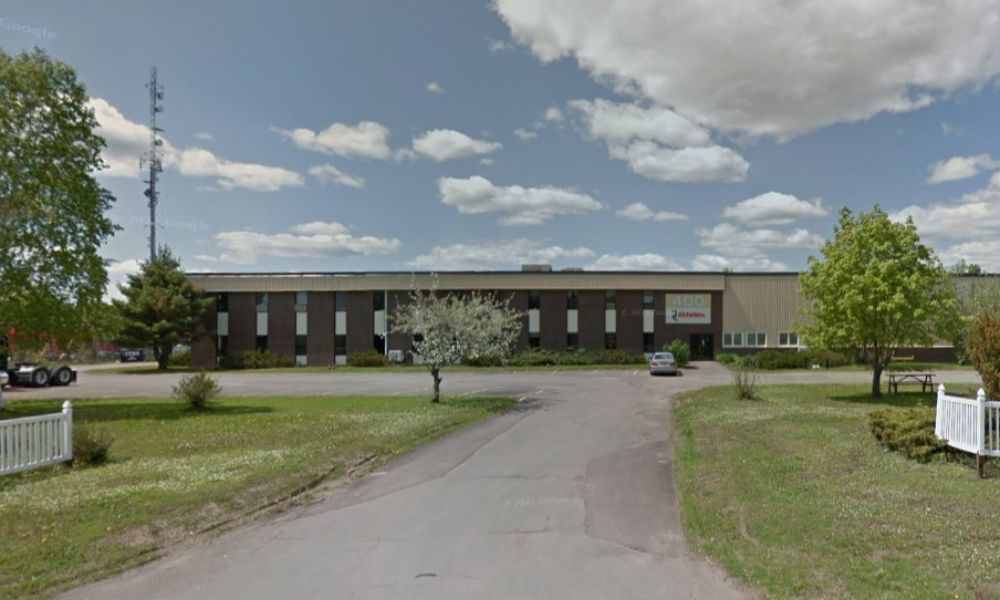
The 49-year-old worker was an employee of Quincaillerie Richelieu Hardware, a specialty hardware distribution and manufacturing company based in Montreal. Hired in 2010, he was a sales representative in the company’s Moncton, NB, division.
In March 2020, Richelieu’s business took a hit when the COVID-19 pandemic shut down much of the economy. The worker’s manager told him on March 23 that he and his colleagues were being placed on “furlough” for an indefinite period beginning on April 2, at which point his salary and benefits would stop. While the company didn’t know how long the furlough would be, the intention was that he would return to work at some point. Eleven employees in Moncton were temporarily laid off, as well as employees in other divisions across Canada and the U.S.
The communication about the furlough was entirely verbal, as the worker didn’t receive any written documentation or a record of employment.
From April to September, the worker received Canada Emergency Response Benefits (CERB) totalling $14,000.
On Sept. 2, Richelieu contacted the worker and sent him a termination letter effective that day. The letter indicated that he would receive four weeks’ salary in lieu of notice, four weeks’ average commission, and accrued vacation pay.
The worker was one of four employees terminated from the Moncton division, which had experienced a 20-per-cent drop in sales from the previous year.
The worker found a new job in October with a salary of about one-half of his Richelieu position. This employment was terminated in July 2021.
Wrongful dismissal suit
The worker filed a wrongful dismissal suit against Richelieu, arguing that the verbal notice of being placed on furlough wasn’t a layoff and he was entitled to full compensation for the five months until his termination, plus a reasonable notice period of between 12 and 15 months.
Richelieu argued that it laid off the worker due to the unforeseen circumstances of the pandemic, which fell under an exception in the New Brunswick Employment Standards Act (ESA) allowing for temporary layoffs due to lack of work – meaning that the worker wasn’t entitled to pay for the period of layoff from April to September 2020.
Read more: A pandemic-related layoff to which a worker agreed was fine, but a layoff extension to which he didn’t agree was constructive dismissal, the B.C. Supreme Court found.
Richelieu’s invocation of the ESA exemption didn’t work because the company didn’t follow the steps required by the legislation, says Bungay.
“What the employer should have done is issue the employee a written notice informing them that they were being temporarily laid off in accordance with that provision of the [ESA] that deals with when you need to temporarily lay off someone for unforeseen measures,” she says. “Usually, when there are mass terminations by an employer, there's a requirement under the ESA to give six weeks’ [written] notice and give notice to the minister, but in the spring of 2020, the province indicated that they didn’t need to receive that notice.
“It's an emergency or temporary measure because of the unforeseen consequences [of the pandemic], so issuing a written notice stipulating a temporary layoff due to unforeseen consequences and issuing a record of employment [was necessary]. They missed both of those steps in this case.”
Furlough not a layoff
The court found that the ESA exception didn’t apply in this case, as Richelieu’s actions were not consistent with an intention to temporarily lay off the worker under the ESA. The company didn’t provide any written notice of layoff and didn’t even use the term “layoff” – verbally placing the worker on “furlough” – which wasn’t a term under the ESA and wasn’t the same, said the court.
The court found that, without the protection of the ESA exception, the purported layoff constituted a constructive dismissal resulting in the termination of the worker’s employment in April 2020.
The court also found that, considering the worker’s age of 48 at the time of dismissal, his 10 years of service, the economic factors of the pandemic, and the fact that Richelieu short-changed him on his termination pay, the worker was entitled to 12 months’ pay in lieu of notice, minus the severance already paid by Richelieu and the income the worker earned in his alternate employment. The reasonable notice period started with the termination in April – there was no legal basis to add the first five months as regular employment and then start the notice period when Richelieu provided the termination letter in September, said the court.
Common law liability
It's a reminder that a statutory allowance for temporary layoff doesn’t avoid the common law liability for constructive dismissal even during an emergency like the pandemic, says Bungay.
“Even though the economy was shutting down in 2020, that did not give employers the unilateral right to lay off employees who had never been laid off from their employment before – and if they did, that's going to trigger liability for a claim of constructive dismissal or wrongful dismissal,” she says. “We can't go back and turn back the hands of time, but it’s always better to set that out in writing [in an employment agreement] and provide the record of employment, which was missing in this case.”
The pandemic was a factor in determining the length of reasonable notice, but the court considered it a “subcategory” the fell within the availability of similar employment and the state of the economy at the time of dismissal, says Bungay.
Read more: Even if employers have a temporary layoff clause, they need to be sure that the agreement as a whole is enforceable, according to an employment lawyer.
The court also found that the worker would likely have to repay the CERB benefits he received if they were found to relate to the same time period for which he was compensated through damages, so it declined to deduct the $14,000 in CERB benefits from the damage award.
Bungay notes that when it comes to deducting CERB benefits from wrongful dismissal damages, there is a divergence in case law across Canada – in the West, courts tend to deduct CERB from damages while in Eastern Canada they usually don’t, as they treat CERB as similar to EI benefits, which must be repaid under certain conditions.
“Personally, I'm not sure – I see quite a few differences between CERB and EI benefits, in the sense of the way the plans are structured – EI is a program where contributions are made by employees and employers, and there is a legislated requirement to repay those benefits that doesn't exist for CERB,” says Bungay. “[CERB] was an ad-hoc benefits program that didn't have contributions from employees and employers and there's no legislated repayment requirement.
“But right now, the law in New Brunswick would be that they would not have to be deducted.”
See Donovan v. Quincaillerie Richelieu Hardware LTD., 2021 NBQB 189.


