What HRFest sponsors UKG and ADP see ahead for HR technology
As HR leaders gather in Toronto for HRFest Canada 2026, held Nov. 10–11 at Rebel, two of the festival's sponsors say the AI conversation in HR has moved past whether to use the technology. The harder question now is how to use it without losing the people side of the work.
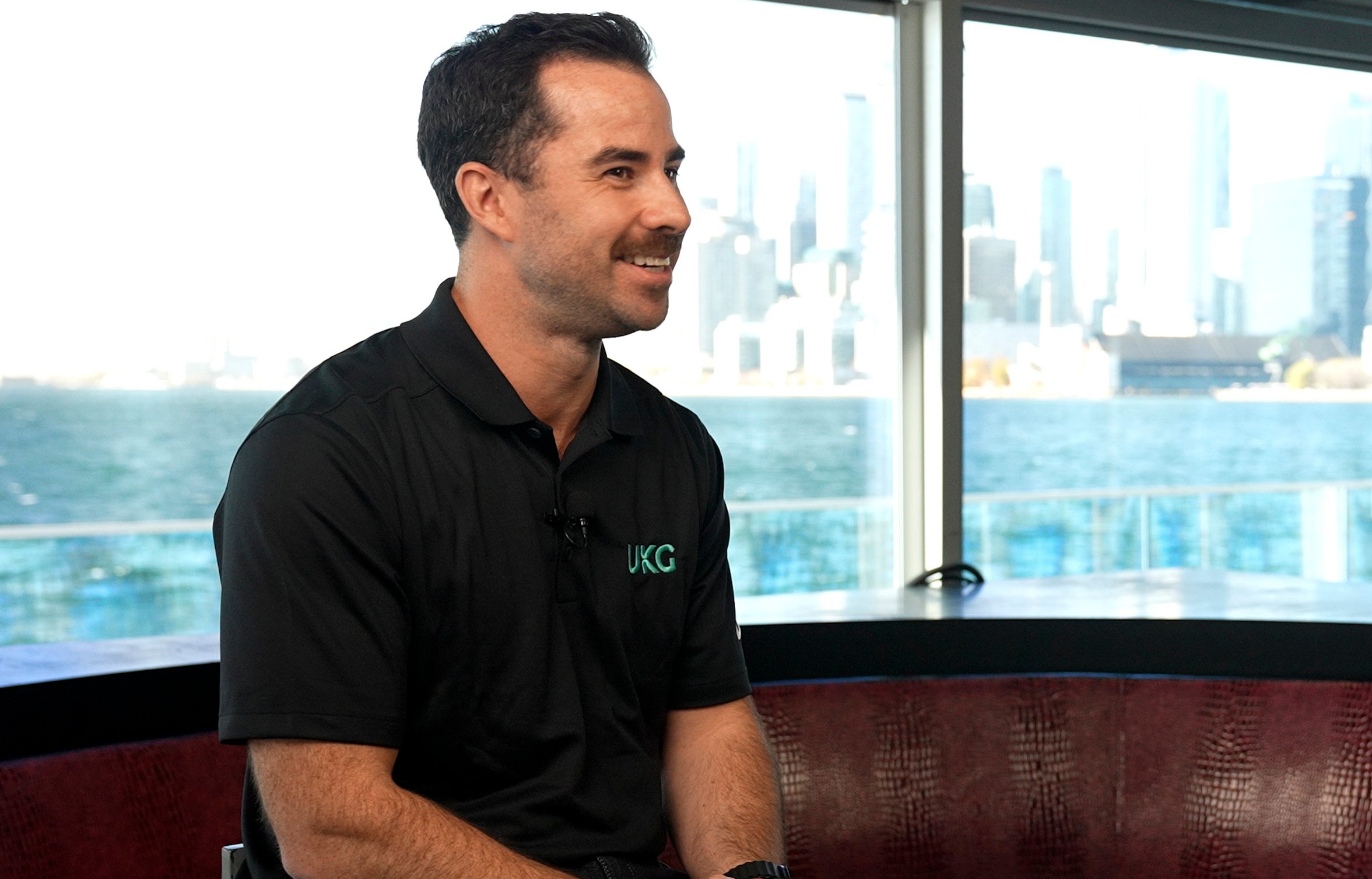
"AI is really important, but it doesn't eliminate the human aspect," says Connor Hough, sales executive at UKG. "Our focus is really on maybe eliminating some of that admin work and opening up organizations and people to focus on more strategic issues or more strategic priorities."
Carlos Gonzalez, vice-president and general manager of majors and nationals account services at ADP Canada, makes a similar case. He says organizations that can blend AI with their people will pull ahead.
Listening to HR
For both vendors, sponsoring the festival is as much about hearing from HR leaders as it is about pitching to them.
"I think it's really important for UKG as an organization to be a part of the conversation, and not just here with presence, but actually listening and learning to what HR leaders and business owners are seeing in the day-to-day," says Huff. "So much is changing when it comes to work, technology, employee expectations."
Gonzalez says ADP wants a seat at the table for that same discussion.
"Any opportunity we have in having discussions on what redefines work and what the future of work will look like, it's a conversation we want to be part of and engaged in.”
He points to the company's track record as a reason it belongs there, citing what he describes as ADP firsts in automation, the move to the cloud, its mobile app and its Marketplace, which lets users connect their data to ADP's systems.
Taking out admin, not people
UKG brings together workforce management, HR and payroll, functions that Huff says "sometimes sit siloed depending on which organization you're in." The company is now layering what it calls workforce AI across all three.
The goal, he says, is "giving you information and actionable insights across all of those things so that you can see how to make work better for your employees there."
Interest from employers is strong, says Huff, but the questions go beyond speed.
"Productivity is a big thing, but then also trust and governance is also a huge thing now as AI continues to develop."
At ADP, Gonzalez says product design follows three principles.
"Number 1, the application must be easy to use. And it should remove friction and accelerate action for our users. Number 2, it must be smart — gone are the days of providing dashboards to our senior executives and having them do the work in determining what's next," he says. "Our systems are built to provide insight that accelerates decision-making."
The third principle is that the technology must be human, which he says means it should help executives and leadership teams connect with their employees.
Trust as a productivity tool
For HR teams trying to boost productivity, Gonzalez says the starting point is the data. "Data is paramount," he says, and it needs to sit in a single system of record that handles everyday administrative tasks, from onboarding and time management to documenting conversations between leaders and employees.
ADP is building AI on top of that base.
"We are enabling AI nudges that allows a leader to be notified when there are signals in their employee base to understand where they can tap in and drive that human touch that will allow them to retain their employees," he says.
Building trust is critical, according to Gonzalez. He cites ADP research showing that workers who trust their teammates are 16 times more likely to be highly motivated and committed than those who don't. That rises to 26 times for trust in managers and supervisors, and 41 times for trust in senior leaders.
Those figures come from a monthly survey panel of 2,500 U.S. workers, according to ADP Research. The same study found that freedom, flexibility and autonomy at work were closely tied to trust.
From reactive to proactive analytics
On HR analytics, Huff says the big shift is in timing. Until recently, the data mostly explained what had already gone wrong.
"Where we were before was more of a reactionary model where we would see something that happened and it would give us maybe the reason why that happened, but it wouldn't give us actionable insights or data points to understand how to prevent that in the future," he says.
"I think really the big trend I'm seeing with HR analytics is moving from that reactionary model to something that's more proactive and allows you to leverage the insights that you're gathering across your organization to make better decisions, whether that's helping you keep people, understanding why people are leaving."
When outsourcing HR makes sense
Whether an employer should outsource HR is "highly dependent on the organization," says Gonzalez. He says many organizations find their HR teams tied up in compliance, payroll management and manual transactions rather than the work they want HR focused on.
"Organizations that have a high degree of manual transactions within their HR organization would be the ones to benefit from HR outsourcing and see the most benefit out of that engagement," he says.
"What is important is to find the right partner. The right partner is not just providing operational support, but provides technology, insight, and analytics to drive that organization forward."
He says cross-border employers in particular benefit from expertise across several countries where they may not have staff on the ground.
Looking to 2027: security, adoption and HR-IT ties
Looking ahead to 2027, Gonzalez says the winners will be the organizations that get the balance right.
"I believe that organizations that are able to seamlessly integrate AI and leverage and augment their human potential will see significant progress over the coming years."
That starts with showing staff what AI will mean for them. "Employers should show to their employees what the future of AI will look like and how it will make them more productive," he says.
Gonzalez also says employers should focus on responsible AI use, as many employees are not yet using it. ADP's research found 13 per cent of Canadian workers use AI every day and 22 per cent have not used it at work at all. He says about 26 per cent use it weekly and another 14 per cent monthly.
"The real opportunity here is that 22% of those surveyed said they were not using AI at all at work.”
Finally, Gonzalez says, HR and IT will need to work more closely.
"Connected HR and IT teams will become critically important. When we ask businesses what their top priority is in transforming payroll, they tell us that it's the integration of their systems,” he says.
"HR knows their people, IT understands architecture and the way data flows, and the difference maker for organizations will be when those teams come together and drive changes within the organization."