Bill Gates calls for government to deliberately keep some occupations off-limits to automation
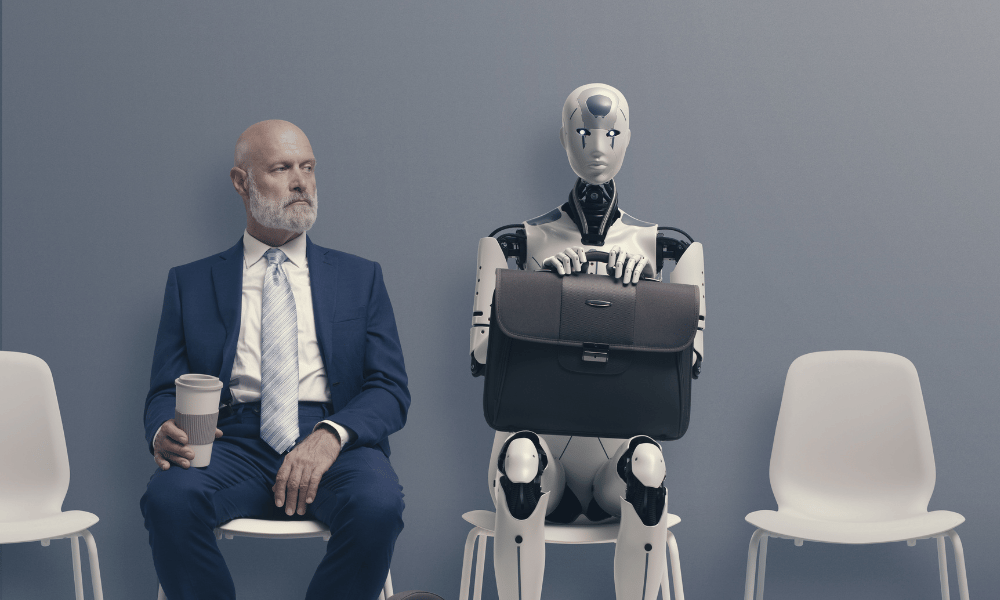
Bill Gates spent the better part of four decades convincing employers that software could do more of the work people used to do. On Wednesday, in a nearly 6,000-word essay posted to his personal site, “The turbulent AI era is here,” the Microsoft co-founder argues for the opposite.
Governments, he writes, should deliberately keep some jobs off-limits to automation, whether or not AI could eventually do them just as well.
Gates calls the idea "human reserved," and part of his reasoning is personal rather than economic. He writes about the caregivers who looked after his father before he died of Alzheimer's disease in 2020, describing what they gave him as "irreplaceably human." No robot, he adds, could or should have provided it.
Gates says childcare and jury duty belong in the same category. These are jobs a society keeps human on principle, he argues, regardless of what AI can technically do. His comparison is to a nature reserve, land that could be developed but is deliberately set aside instead.
A second category is more provisional. Gates points to a construction worker in his 50s who can't simply retrain into a new trade the way a recent graduate might, and argued that some roles may need protection long enough for a workforce to catch up, rather than forever.
Education and healthcare, he said, would land somewhere in between. Both would still be touched by AI, but with a person kept firmly in charge of it, in what he calls "a mix."
The proposal isn't free. Gates is also reviving a longstanding call to tax businesses on their use of AI software and robots, similar to payroll tax on human staff. The current tax code, he argues, "nudges you toward replacing people with machines." He acknowledges to Axios that fixing that would require rewriting tax policy more dramatically than anything in his lifetime, at a moment when politics is more polarized than he's ever seen.
Asked how much of the labour market could realistically be shielded, Gates offers a ceiling. In the most extreme version of the idea, perhaps 40 per cent of jobs might initially qualify. Even reaching that number was harder than he expected, he admits, and he doesn’t pretend to have answered the obvious follow-up questions, including who decides which jobs qualify, how enforcement would work, and what stops an employer from automating around the edges anyway?
He is less hedged in his essay about the underlying trend. "I'd love to be convinced that I'm wrong about the job market," he tells Axios.
Canadian HR doesn't need to wait for a policy framework to see the same tension play out. In a survey conducted last fall by Angus Reid and The Conversation, 48 per cent of working Canadians said it was at least "somewhat likely" that Anthropic chief executive Dario Amodei's prediction of a wave of entry-level white-collar job losses would come true, while 36 per cent called it unlikely.
For a workforce that hasn't yet seen mass AI layoffs, that split tracks closely with the uncertainty running through Gates's own essay.
The clearest Canadian evidence so far sits at the entry level. Statistics Canada data shows job vacancies for candidates with less than a year of experience, and for those with one to three years, fell between the first quarter of 2025 and the first quarter of 2026, even as postings for candidates with five or more years of experience rose.
Rola Helou, chief executive of Chartered Professionals in Human Resources (CPHR) Canada, has warned that severing the entry-level pipeline now risks a longer-term talent gap, telling Canadian HR Reporter that without it, organizations "are going to be in a crisis in a few years."
The pattern shows up distinctly in tech hiring too, where overall software job postsings are climbing even as the traditional junior developer role disappears, with recruiters increasingly expected to hire for AI fluency rather than the entry-level tasks AI now handles.
Gates's "who decides, and how is it enforced" problem also has a specifically Canadian answer, and it isn't reassuring. A report published in Policy Options and covered by Canadian HR Reporter found that federal labour standards were last meaningfully updated for technological job loss in 1973, when amendments to the Canada Labour Code introduced advance notice and consultation requirements for jobs displaced by new technology. Those protections apply only to federally regulated employers, roughly 6 per cent of the workforce, leaving most Canadian workers without any legislated notice period tied specifically to automation.
The report's author, Nisan Baysal, put it plainly: "Work no longer provides stability for millions of Canadians." She argues that Canada's broader shift toward labour-market deregulation since the early 1990s has left individual workers absorbing most of the adjustment cost.
There's also a cost to the uncertainty itself. Researchers studying what they call AI replacement dysfunction, a proposed clinical term for the psychological distress tied to the threat or reality of AI-driven job loss, argue the mental health side of this transition has received far less attention than the layoff headlines it follows.
A "human reserved" policy is easier to write around a job title than around that kind of harm, but it's arguably closer to the point Gates was making with his father's caregivers. Some of what's at stake here doesn't show up on a productivity spreadsheet.
Read next: Can AI use harm workers' mental health?
Gates's essay is more concrete about where AI is headed than where it currently stands, and physical labour is where the warning sharpens. He points to fast-improving Chinese robotics as evidence that blue-collar roles, not just white-collar ones, sit in the technology's path.
JPMorgan's analysts put a number behind that claim in a research note: a humanoid robot can now be operated for under US$10 an hour, against a fully loaded cost of roughly US$30 an hour for a US warehouse worker. Other industry estimates suggest current humanoid robots still move slower than a trained worker, so that math won't hold in every warehouse yet.
The direction, though, is the same one Gates is pointing to. Cost, not just capability, is what will decide how fast automation reaches physical work, on either side of the border.
Three questions worth asking before AI takes over a role
- Would customers, patients, or employees notice, or object, if the human presence disappeared? Gates's caregiving example is the extreme version of this test, but it applies further down the org chart than most people assume.
- If this role were automated tomorrow, could the person in it realistically move into something else within your organization, or would they be out of the labour market entirely?
- Is the case for automating this role really about capability, or about cost? And has anyone checked what reassigning or eliminating the role could mean for constructive dismissal risk under Canadian employment law before the decision is made?
None of Gates's proposals are close to becoming policy anywhere, including in Canada. No government has adopted a human-reserved jobs framework or an AI usage tax, and Gates has acknowledges that the idea raises more questions than it answers.
What the essay does is put a name on something a lot of HR leaders are already doing without one, and doing it ahead of a legal framework that, in Canada at least, hasn't caught up.
Gates said he plans to raise the issue with lawmakers in Washington and intends to discuss the pace of robotics development with Chinese President Xi Jinping during his upcoming US visit. Neither meeting is likely to produce much on its own.
In the meantime, the decisions about which Canadian jobs stay human, and which don't, are being made function by function, inside HR departments, without waiting for anyone in Ottawa to weigh in.