Economists question whether Canada can find workers to deliver $670 billion in major projects by 2030

Canada may not have enough construction workers to build the major projects it has lined up for the rest of the decade, according to economists at National Bank of Canada.
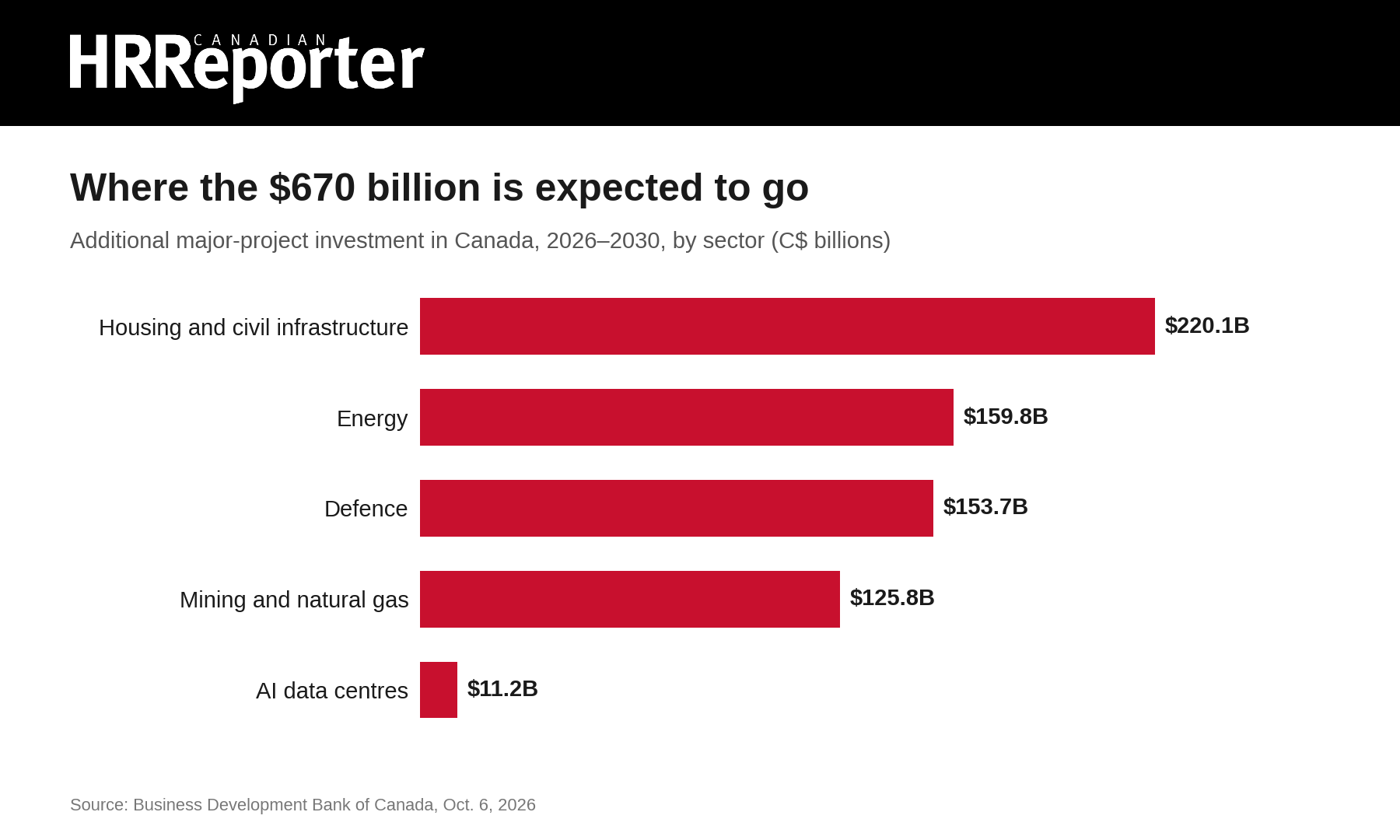
The bank's economists drew on a Business Development Bank of Canada (BDC) study published on Oct. 6, which estimates that planned major projects could bring an additional $670 billion in investment into Canada between 2026 and 2030. To deliver work on that scale, they estimate construction employment would have to rise by about 51% over the next four years, according to a summary of the analysis published by Finimize.
That increase would start from a high base. Nearly 13% of Canada's male workforce already works in construction, which is close to a record share.
BDC's study splits the pipeline into five areas: housing and civil infrastructure ($220.1 billion), energy ($159.8 billion), defence ($153.7 billion), mining and natural gas ($125.8 billion) and AI data centres ($11.2 billion). It estimates the spending could raise GDP 4.1% above its baseline by 2030 and would involve about 280,000 Canadian businesses.
BDC's analysis also says Canada will need about 580,000 new workers by 2030, many of them in construction, the Financial Post reported. "Canada's population is aging, labour force growth is slowing, and the construction sector already faces worker shortages. Expanding the workforce alone will not be enough," the report said.
Retirements add to gap
BuildForce Canada's latest residential outlook, released in July, projects that about 21% of the residential construction workforce, or roughly 135,000 people, will retire by 2035, according to the Canadian Home Builders' Association.
A Deloitte Future of Canada Centre analysis estimated that once retirements and normal building growth are added to policy-driven demand, gross recruiting requirements over the next 10 years could rise well above 800,000.
Governments are putting more money into training to close the gap. Ottawa has committed new funding for trades training, and some provinces have announced programs of their own.
Wages are rising
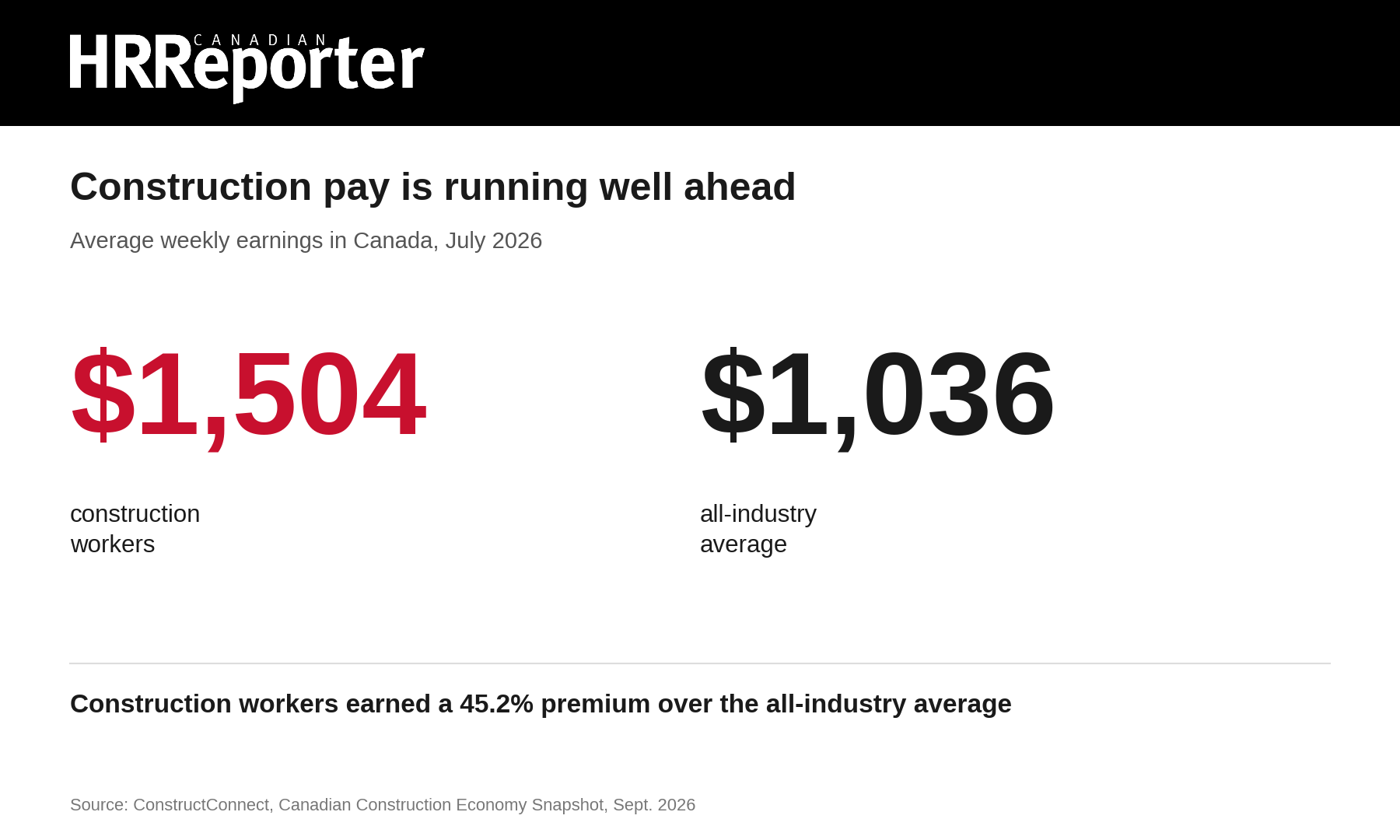
Construction workers earned an average of $1,504 a week in July, 45.2% more than the all-industry average of $1,036, according to ConstructConnect. Average hourly pay was $40.07.
Higher pay can draw workers away from other employers and sectors, but it does nothing to shorten training, and many Red Seal apprenticeships take years to complete. When employers compete for the same limited pool of qualified people, costs tend to rise and schedules slip.
Smaller firms want in
BDC surveyed 1,000 small and mid-sized businesses in June, including 750 already working on large projects and 250 that want to. Two-thirds of those already involved expect to increase their participation over the next 24 months. Among businesses that want to take part but haven't yet, 44% cited financial barriers such as upfront costs and cash flow, the Financial Post reported.
Pierre Cléroux, BDC's chief economist, told the paper that "the ability to increase our efficiency, or in other words, productivity, will be critical" as investment ramps up. The report recommends more automation, digital tools and advanced equipment, along with closer collaboration across supply chains.
Options for employers
Women made up 13.6% of Canada's construction industry workforce in 2024 but held about 4% of skilled trades positions, BCBusiness reported, citing Statistics Canada and industry sources. Employers trying to bring more women into trades roles will also need to look at site culture, harassment policies, properly fitting PPE and scheduling if they want those hires to stay.
Federal support for apprentices changed this year. Ottawa's Team Canada Strong plan, which the government describes in a September backgrounder as an $8 billion investment, aims to recruit, train and hire 80,000 to 100,000 new Red Seal tradespeople by 2030–31. Through its Build Canada Apprenticeship Service, which launches later this fall, small and medium-sized employers can receive up to $10,000 for hiring a first-year apprentice in an eligible Red Seal trade.
Getting apprentices to finish is the harder part. More than 100,000 new apprentices registered in 2024, but only about 34,000 completed an apprenticeship that year, according to the federal Spring Economic Update.
Keeping experienced workers also matters. Phased retirement, mentoring roles and structured knowledge transfer can keep older tradespeople on the job longer and help apprentices progress faster.
Other sectors will feel it
Electricians, millwrights, welders, engineers and project managers also work in manufacturing, utilities, health care and municipal services. Those employers will be hiring from the same pool as the major projects, often against much larger budgets.
BDC's $670 billion figure is an estimate of what could be invested. How much of it turns into homes, power lines and defence facilities will depend in part on whether employers can recruit, train and keep enough workers.