AI should assist strategic decisions, not make them, says Ford analytics director at HRFutureFest
HR is evolving in its role and its use of technology, and that includes integrating artificial intelligence (AI) into the HR function. But HR is a people-centric venture, so AI’s value comes from its ability to enhance HR practices, not replace them.
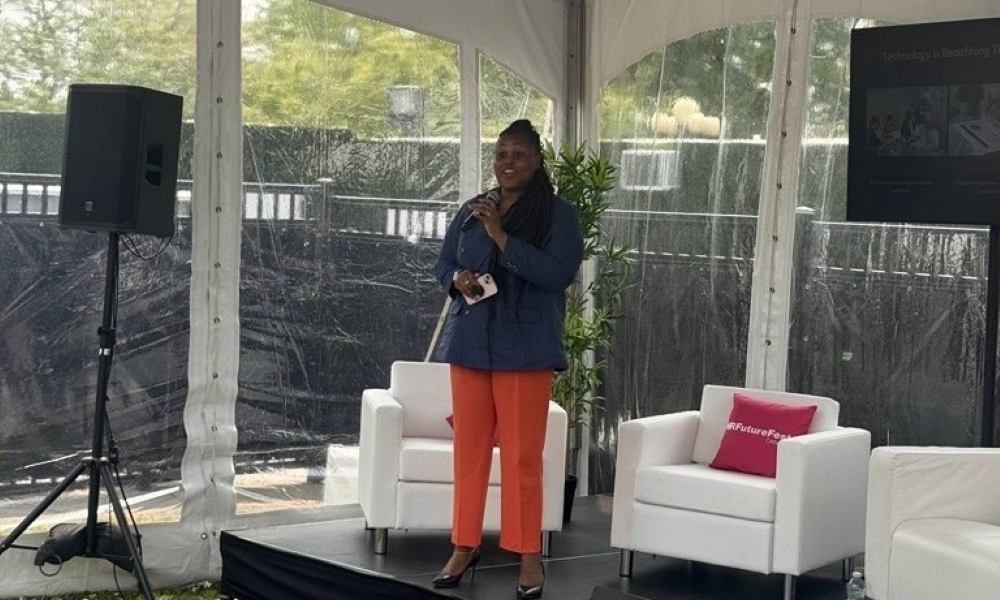
That was the topic covered in a session at HR FutureFest on June 3 at the Toronto Event Centre entitled “AI 101 – Leveraging AI for people-centred strategies.”
“AI is transforming HR by enabling - not making - data-driven decisions that enhance employee engagement and organizational effectiveness,” said Dr. Kalifa Oliver, the Global Director, Employee Experience Analytics Strategy for Ford Motor Company and an employee experience strategist and author, at the session.
Adopting a tool such as AI requires recognition that its utility will be shaped by how HR has changed – from a traditionally transactional part of an organization that keeps the business running to a value creator that contributes to business outcomes where efficiencies can be created, according to Oliver.
“When we think about AI, the first fear that everybody has is that AI is going to replace people, but we said the same thing about computers and all it did was change our skills,” she said. “Combining data insights with people-centric approaches – and the business outcomes – is the key to integrating HR and AI.”
Employee experience
AI can be an important tool for shaping the employee experience, which Oliver defined as the organization setting people up for success. Technology is redefining the employee experience, and employees are HR’s first customer –since AI is a tool that can identify individual customer needs and wants, it can do the same for employees.
“When customer experience and employee experience are seen together and employee experience is viewed as a product, then the introduction of AI makes more sense, because you're at value creation, efficiency, getting rid of repeatable tasks, and personalization,” Oliver said. “By integrating AI tools, HR can offer personalized experiences and a more inclusive experience for all employees, because people in your organization aren’t monoliths.”
An AI tool that’s calibrated to the organization’s needs helps elevate “employee listening” that provides real-time data on employee sentiment and engagement on things like what benefits are wanted and what aren’t, so HR can develop an action plan.
“Advanced analytics can harness the power of natural language processing – it once took weeks and months to process data, but now it would take five minutes to summarize the data so that you have faster decisions being made, enhanced efficiency, reduced bias, and a more people-centered design in workplaces,” Oliver said.
People-centred approach
The people-centred approach applies not just to outcomes, but also to using AI itself. For Oliver, an optimal AI strategy involves focusing on the specific purpose for the AI tools that will streamline processes and leave HR with more time to create value, while understanding what gaps need to be filled.
“AI has to enhance people strategies by streamlining your processes in HR - we can't get away from the transactional stuff, but tools that streamline processes can help you, because innovation can only happen when people have time to think,” she said. “Too often in HR, you don't have time to think because you are bogged down by the minutia of transactional things and repetitive tasks, so the big question that you have to solve when you're thinking about AI is, what is the problem we're solving?”
“And then ask the simple question, is your system even ready? A broken system with AI is just a broken system with AI,” added Oliver. “You're not solving anything, because if you want to fix your processes, you first have to understand them, or else you're introducing AI to a system not ready to adapt it or to change.”
One of Oliver’s key points was that, once AI tools are being used, people must design and continuously improve their function and scope.
“Just because you introduced AI today for one reason, doesn’t mean it's the same reason next month, and that’s one of the biggest lessons we can learn when we think about the introduction of technology - you have to adapt based on customer feedback, with your customers being the employees, and if you're using a tool to make things more efficient, you need to listen to the feedback on the tool,” she said.
Ongoing improvement of AI tools
It goes back to making the employee experience a product and the employees customers -if customers provide feedback that they don’t like a product, the company makes changes.
“Often HR is too reticent to make changes and doesn’t push back because it isn’t involved in the technology decision-making process,” said Oliver. “But sometimes you have to shout from outside of the room when you don’t have a seat at the table - and HR should have that seat, because in order to create value, you have to be a part of the decision at the beginning.”
AI is iterative and has to keep learning in order to get better, which is why the human element is still important. Oliver stressed that AI at its most effective can help create data-driven insights, but you don't want it to make the decision for you.
“After a while, AI starts to learn from itself, so you have to constantly be aware of what's happening with the AI tools that you implement,” she said. “If you are asking an AI tool to make a decision for you, as opposed to with you - there should always a human in the loop making the final decision - your system will fail and you are setting yourself up for trouble, because the law hasn’t yet caught up with the explosion of AI, but it will, and when it does, it will catch up very quickly.”
People first, AI-powered
At the core of Oliver’s message was, when you design a tool to solve an HR problem, you have to put people in the heart of it.
“If people aren’t in the center of the solution, the technology isn’t helping, so leveraging AI for HR means automating repetitive tasks and allowing HR professionals to focus on more strategic, people-centered initiatives,” she said, adding that AI is for people, not processes.
As Oliver wrapped up the session, she stressed that ethical, responsible AI has to maintain fairness, trust, and transparency, and the future of work is people first, AI-powered, and experience driven.
“Artificial intelligence is not a substitute for human intelligence - it's a tool to amplify human potential, creativity, and impact.”