'The total tax bill, which includes all types of taxes, has increased by 2,784% since 1961, more rapidly than any other single expenditure item'

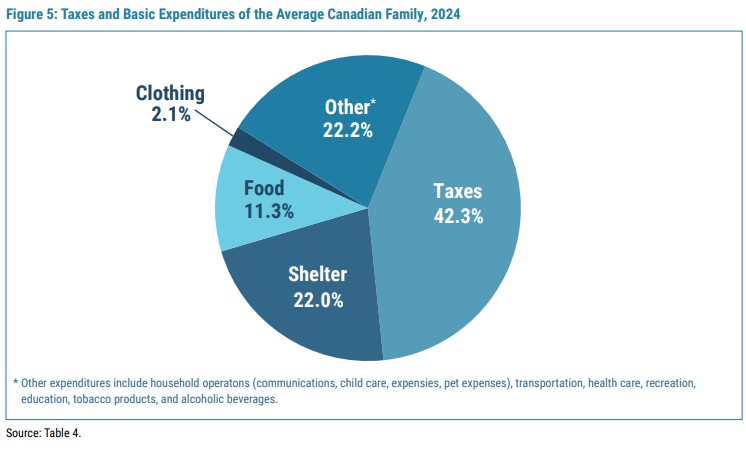
Canadian families are spending a larger portion of their income on taxes than on basic necessities such as food, shelter, and clothing, according to a recent report from the Fraser Institute.
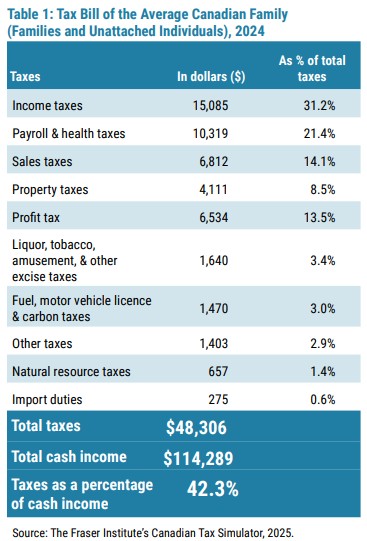
In 2024, the average Canadian family earned $114,289 and paid $48,306 in total taxes, representing 42.3 per cent of their income, notes the report.
“The interaction of a number of factors has produced the dramatic increase in the average family’s tax bill from 1961 to 2024,” say Jake Fuss, director of fiscal studies, and Grady Munro, policy analyst, both at the Fraser Institute.
“Among those factors is, first, a sizeable increase in incomes over the period: 2,186 per cent since 1961. Even with no changes in tax rates, the family’s tax bill would have increased substantially; growth in family income alone would have produced an increase in the tax bill from $1,675 in 1961 to $38,287 in 2024.
"Second, the average family faced a tax rate increase from 33.5 per cent in 1961 to 42.3 per cent in 2024.”
The income gap between Canada’s wealthiest and poorest households reached a record high in the first quarter of 2025, according to Statistics Canada (StatCan).
Spending for shelter, food, clothing
While the amount spent paying taxes has soared, only 35.5 per cent of income was spent on shelter, food, and clothing combined in 2024, according to the Fraser Institute.
In 1961, just 33.5 per cent of the average family’s income went to taxes and 56.5 per cent was allocated to basic necessities.
Also, the total tax bill for the average Canadian family has increased by 2,784 per cent since 1961, outpacing the growth of expenditures on shelter (2,129 per cent), food (927 per cent), and clothing (460 per cent) over the same period. The increase in the tax bill has also greatly exceeded the rise in the Consumer Price Index, which measures the average price of goods and services and has risen by 925 per cent since 1961.
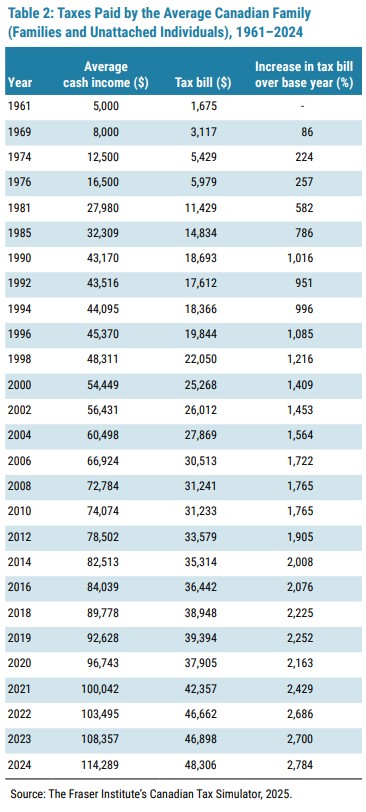
Even after adjusting for inflation, the tax burden has increased by 181.4 per cent since 1961.
The average Canadian family spent 42.6 per cent of their income on taxes in 2019 – more than they did for housing, food and clothing costs combined, the Fraser Institute previously reported.
On average, Canadians put just seven per cent of their paycheque into savings, according to a previous H&R Block Canada survey of 1,790 Canadian members of the Angus Reid Forum, conducted February 12–13, 2025.
How to improve workers’ financial wellbeing
Here are some ways employers can help improve workers’ financial wellbeing, according to Mercer:
- Utilise progressive strategies to boost healthcare affordability by offering:
- Free employee-only coverage
- Salary-based contributions
- Low/no deductible plans
- Larger HSA contributions
- Offer financial wellness tools such as:
- Student loan optimisation
- Tuition reimbursement or integrated tuition assistance
- Employer-assisted emergency savings
- Subsidise everyday expenses
- Offer paid leave and increased flexibility