
Roundtable: HR leaders at Canada Goose, Staples and Lactalis Canada rethink benefits design for multigenerational workforce — balancing rising costs, personalized care and utilization rates
"Far too often, employees only engage when they need something," says Sandra Scollay, senior director of total rewards, payroll and HR systems at Lactalis Canada.
"We're focused on building a transparent understanding so employees can see the value of their total rewards every day, not just at that one point in time."
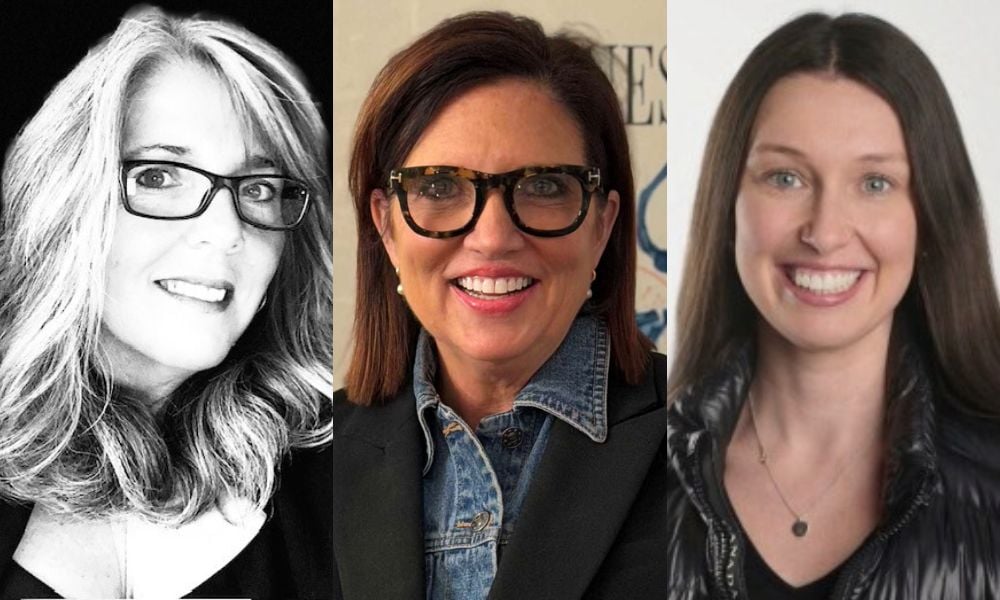
That challenge — shifting employees from a reactive to a proactive relationship with their benefits — was among the top concerns raised during a recent virtual roundtable on employee benefits presented by Canadian HR Reporter, featuring Scollay alongside Kristie Houlahan, director of global total rewards at Canada Goose, and Mary Bolan, senior director of total rewards at Staples Canada.
Diverse workforce, competing needs
All three leaders named the multigenerational workforce as their most pressing design challenge. Benefits needs vary widely through a person’s career, and a traditional, uniform approach may no longer be effective.
“How do you balance that personalized care while also balancing that budget?” said Houlahan, citing the extra challenge of many “wonderful” tools and vendors.
"How do you manage or balance that fragmentation across too many different tools and people, not knowing which ones to use — while still remaining competitive and trying to meet those needs of the different workforce?"
Employees at Staples are looking for offerings “that resonate with them during their employee life cycle,” agrees Bolan, but communication is a stubborn obstacle.
"We offer great programs, but they're only as great as the awareness around them… especially in retail where it’s not as simple as sending out an email to all employees.”
Strategic investment over scaling back
On the question of rising costs around benefit plans, Bolan says Staples is continually leaning into plan design, utilization rates and metrics to target its funding.
For example, through the flex plan, offering a parent-and-child option rather than defaulting to parent and spouse can better reflect employee demographics while keeping costs manageable, she says.
"There is a real attempt not to… pass on [increased costs] to associates and just be creative and deliberate in the plan design to make it cost-effective.”
On the question of rising costs, Scollay says Lactalis is not looking to scale back but to “invest more strategically," she says. "We're really doubling down on the areas that deliver the strongest return to our employees in the organization."
That has included prioritizing wellbeing, evaluating the EAP market and securing a new provider that offers a “higher value in services support, but at a lower cost,” says Scollay, as well as implementing prior authorization and promoting the responsible use of generic medications where appropriate.
“It's really about putting the right levers in place, more so protecting the employee experience while managing that cost sustainability for future,” she says.
At Canada Goose, Houlahan says the company introduced an optional premium tier that employees can contribute to if they want broader coverage — a move that has preserved sustainability without eliminating choice.
"We did get the consensus from our employees that they were interested in paying a little bit for having kind of a gold tier… [to] dial up their coverage,” she says. “So, we’ve seen a lot of value there.”
Close collaboration with brokers on Power BI modeling and scenario analysis has also been beneficial, says Houlahan.
“That's helped us a lot to be able to intervene early where we might see costs starting to drive up: ‘How can we get strategic early and intervene early in those conversations or lean more into some of those trends that we're seeing?’ We've seen really great strides and feedback from that.’
Mental health as ecosystem
Mental health was a consistent theme throughout the discussion, with the three leaders describing a shift away from treating it as a standalone benefit toward embedding it into organizational culture.
"What I'm really seeing in the mental health space is that it's more than just the programs or the offerings that we're providing from a total rewards perspective, but really this ecosystem of ‘How are we showing up beyond benefits as well?’” says Houlahan.
That includes flexible work arrangements, off-work interactions and dedicated training for people leaders on navigating mental health conversations with their teams, she says.
Scollay pointed to a shortage of practitioners as the most significant constraint, which has driven Lactalis to expand mental health access through virtual care for “just-in-time” consultants and to develop a wellness toolkit for managers.
"If we want mental health to be not just a standalone benefit, we've got to invest holistically within our leadership to make this part of our capabilities and culture," she says.
At Staples, a “Thrive” wellness program — built on four pillars of physical, mental, social and financial well-being — has become a central vehicle for supporting employees holistically, according to Bolan. Mental health sits as a significant component within that broader framework, with manager training, EFAP access and program visibility all treated as ongoing priorities.
Critically, Bolan says the company tracks whether wellness investments are translating into measurable outcomes elsewhere in the organization.
"We do see a tie-in to other programs such as short-term and long-term disability, where they're making an impact," she says.
Financial wellness takes centre stage
Financial stress is increasingly recognized as a core driver of overall well-being, according to the three panellists.
Scollay described Lactalis's approach as deliberately paternalistic — moving toward mandatory pension contributions and structured matching to foster retirement readiness.
“What we're trying to embed and foster is a mindset of mandatory, so no longer making it a voluntary contribution and setting up those strategic matching where if you're not participating, you're leaving money on the table," says Scollay.
The approach appears to be working: when benchmarked against industry peers through the company's vendor, Lactalis is performing above the 90th percentile in plan adoption, she says.
The company also introduced a retirement guide designed to walk employees through savings fundamentals, diversification and government resources regardless of career stage.
Canada Goose is in the early stages of expanding financial wellness beyond a focus on retirement savings, said Houlahan, citing the multi-generational workforce. For example, looking at whether registered retirement savings vehicles are the right fit for employees early in their careers, and if matching contributions could be directed to a TFSA instead.
Financial wellness is a core part of Staples’ wellbeing strategy, said Bolan which includes tailored financial literacy programming by demographic — running separate webinars for employees in their 20s compared to those in their 40s and 50 thinking about retirement.
“When I started in HR, the whole financial wellness really didn’t exist. And it’s really interesting and great that the shift has happened,” she says, citing the financial stress felt by many people.
Inclusive benefits gaining momentum
Fertility care, hormonal health and neurodiversity are emerging as meaningful differentiators in benefits design, according to the panellists.
Canada Goose recently piloted a hormonal health education program — extended to people leaders as well as employees — and saw strong uptake, says Houlahan.
"The employee need and excitement around these programs is really growing," she says, adding that a fertility care program is next on the roadmap.
Scollay said Lactalis is expanding its virtual care offering to include a dedicated women's health section and is also launching an all-indigenous, virtual, mental health wellness clinic from Noojimo Health, along with a virtual gaming-based program designed to build calming skills for children aged six to 14 through the new EAP system.
"Our focus is really to ensure that employees can access support that is relevant to their personal circumstances at the right time," she said.
Personalization as a talent differentiator
Flex plan designs at both Canada Goose and Staples are helping employees self-select coverage that fits their life stage, according to the HR leaders. At Canada Goose, the tiered approach has evolved into a talent attraction tool.
"It's really allowing us to move away from benefits just being a total rewards initiative or an HR initiative, to really moving it into how we are investing in the employee by coming to join Canada Goose," says Houlahan.
For Lactalis, the traditional plan can make personalization “more difficult,” says Scollay, especially with a workforce situated across five provinces that is two-thirds hourly. So, the health spending account has become the primary personalization vehicle — with nearly 100 per cent utilization, she says.
Utilization data and ROI
The panellists cautioned against over-relying on utilization rates when evaluating the success of employee benefit programs, noting that low uptake doesn't necessarily signal low value.
"This is a difficult one,” says Scollay, adding that each metric serves a different purpose.
“Utilization helps me assess the value but it doesn’t tell me the full story or impact,” she says.
“If my utilization is high, obviously it confirms it’s relevant. But low utilization doesn't necessarily mean it lacks value because… benefits may not be used today, depending on where an employee is in their life cycle, but [they] can be really critical at a key moment.”
Bolan offered a similar perspective, in discussing the importance of utilization rates and ROI.
“It's so tricky because sometimes something that you will maybe consider of small value is so meaningful to an associate. You think of things like maybe a smoking-cessation program that could have so many impacts, like if we're seeing low utilization, but the impact on future claims from a healthcare perspective, it can be misleading.”
Houlahan agreed on the importance of drilling down into data for year-over-year trends instead of quick snapshots in time.
She also pointed to a plan change at Canada Goose — removing traditional vision coverage and reallocating those dollars to a more flexible spending account that resets annually — as an example of using trend data to make a counterintuitive call that ultimately served employees better.
"We’re actually seeing really positive success with that because people are able to utilize it more freely and to their own needs," she says.
Long-service recognition
The conversation turned to whether benefits can play a role in recognizing long-tenured employees — a question Scollay acknowledged remains unresolved.
She said that Lactalis is exploring the possibility of tiering health spending accounts by length of service: "It's just something we're trying to solve for. We just don't have the right mechanism yet."



