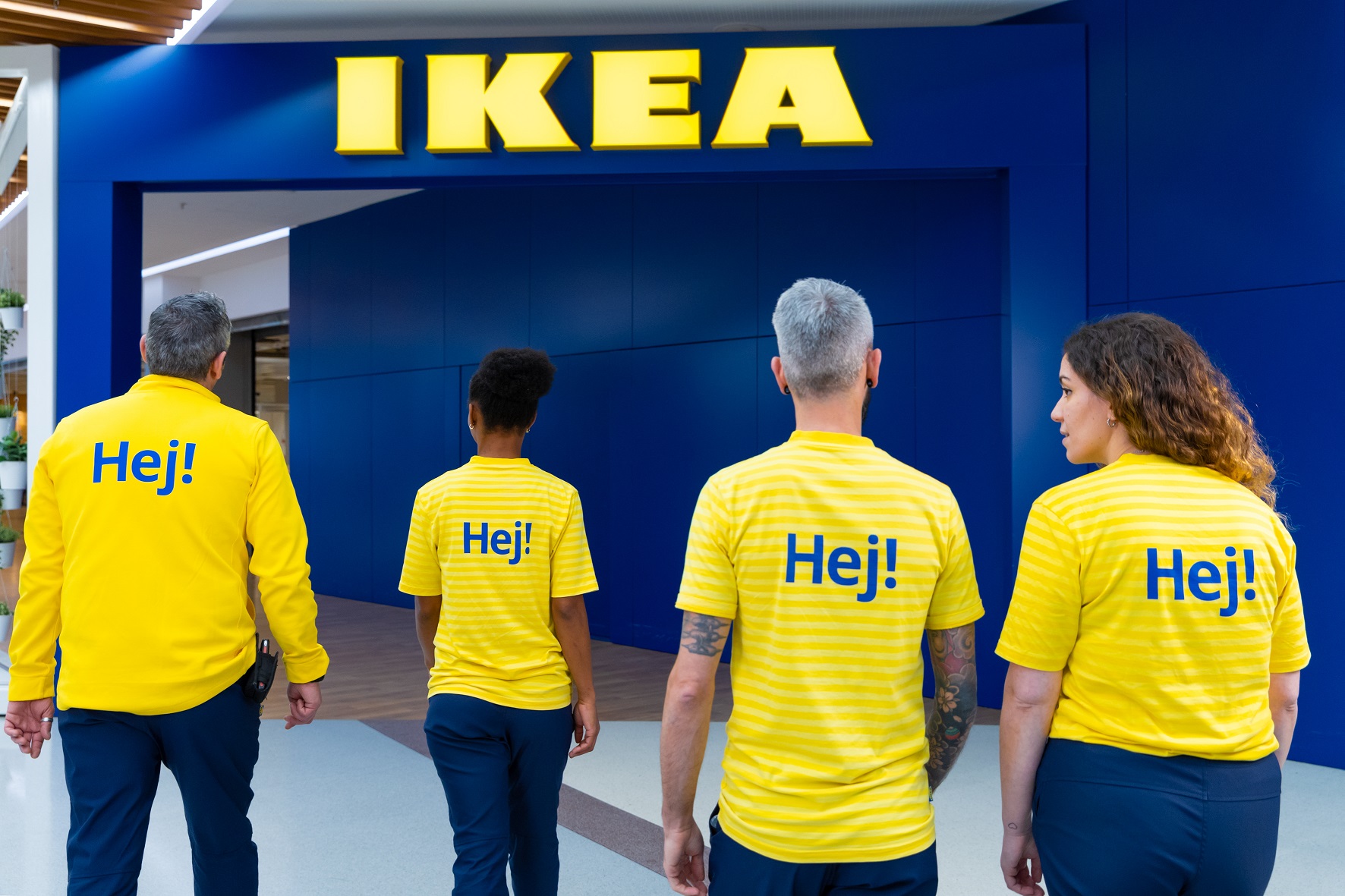
'It was not just about the number, but ensuring that we build a lifelong relationship with our coworkers,' says HR leader Tanja Fratangeli

Recently, in announcing its financial results for the year, IKEA Canada highlighted a notable metric: The company’s turnover rate had decreased from 35% to 24.5%.
That’s well below Canada’s retail industry average of 37.4% for 2023 and slightly below the rate for 2024 of 26%, according to Mercer.
It’s also the lowest turnover rate seen by IKEA Canada in a decade.
“We had a goal where we really felt it was important to be better than the industry average. And, for us, it was not just about the number, but really around ensuring that we build a lifelong relationship with our coworkers, and that they choose to stay with IKEA,” says Tanja Fratangeli, chief people officer at IKEA Canada, adding this achievement reflects a deep cultural shift in leadership accountability and co-worker well-being.
Feedback fuels retention strategies
High employee turnover is a common challenge in retail due to the nature of the business, which often relies on part-time or temporary workers to cover long operating hours.
The answer to many of the challenges faced by organizations lies with employees, says Fratangeli, who has worked at IKEA Canada for nearly six years.
“If I listen to what's important to them, and then I bring it back and develop strategies, then I'm going to be able to better meet the needs of the coworkers.”
IKEA Canada does that through an annual engagement survey, along with regular pulse surveys. But more importantly, there are “people councils” as part of the governance model, she says.
Fratangeli is chair of the people council, which meets every six weeks.
“That's the iterative process, and we've actually developed working groups that are representative of our coworker base to help us build the solutions. So, it's ongoing, because then it gives me an opportunity to be much more agile in the event that we have to shift.”
Costs of employee turnover
Some level of employee turnover can be healthy, especially if organizations expand into other areas or set a new strategic direction, according to Ezaque Lopes, chief revenue officer at Gallagher in Toronto.
“However, it can also be very disruptive if the turnover is unexpected or key contributors are leaving due to an unhealthy culture. This requires careful attention to ensure that the appropriate or anticipated levels of turnover are not exceeded.”
And the turnover can be costly in several ways — beyond the cost of hiring and training a replacement, he says.
“It can place an added burden on the employer to perhaps consider whether their programs are competitive enough to retain the employees they have, especially those considered high performers, but also attract individuals who may be needed to replace those who have made the decision to leave.”
Boosting compensation to boost retention
Compensation has been a critical focus in IKEA Canada’s efforts to reduce employee turnover. According to Fratangeli, the company recognized early on that their pay structure was not market-competitive.
Initially, the company’s strategy revolved around meeting minimum wage requirements across different provinces. However, this approach was unsustainable, particularly in the face of rising living costs and accelerated wage hikes at the provincial level.
Fratangeli describes the earlier method as feeling like “we were chasing our tail, we were always trying to keep up… we were constantly taking on cost, as opposed to being more planful,” she says.
“That was one of the biggest shifts that we embarked on as a team and people and culture, and then really getting our management team aligned with us.”
This compensation overhaul also addressed issues like wage compression, where longer-tenured employees could find themselves earning similar wages to new hires, and equity adjustments.
It was also about changing the mindset within the company, says Fratangeli.
“The most important thing for me was not necessarily that work, because that work is actually pretty easy to do — you get your information, you create the structure — it was around the mindset shift in the organization, and that we weren't just going to talk about it, but we were going to do it.”
Gallagher’s Canadian Benefits Strategy & Benchmarking Survey shows that compensation (69.2%) is the top factor impacting turnover rate by retailer participants, according to Lopes.
Building accountability among leaders at IKEA
A significant part of IKEA Canada’s strategy for reducing turnover lies in leadership development. Fratangeli highlights the company’s investment in a learning program for front-line managers to better support their teams.
“We quickly realized that we had maybe not afforded our leaders the right amount of time to be able to really perform two things: one, develop their coworkers and two, really develop the business,” she says.
In looking at the costs of employee turnover, of course there are those related to hiring and training someone new – but there’s also the cost of a seat that is empty, with people putting in extra hours – and the impact on leadership, says Marie-Pier Bédard, executive vice president at Randstad Canada.
“There’s also a cost that I don't think we measure enough, and that is the impact on the leadership… the more turnover you have inside of a team, the more pressure there is on the leadership team. And it's exhausting, having always to rebuild the team every time.”
And IKEA Canada has seen a “direct correlation” between leadership development and lower turnover rates, says Fratangeli.
“It wasn't a one-size-fits-all [program]; it's about creating guidelines and giving them the flexibility and the tools so that they can do their job the best way that they know how,” she says.
“It was not just about the number, but it was about the mindset that shifted with regards to accountability from all of our leaders in taking ownership and responsibility for turnover.”
As further proof of its success, Canada’s leadership development program has now been adopted globally at IKEA.
Confronting turnover with mental health and wellness
IKEA Canada’s focus on wellness has also played a vital role in reducing turnover. Fratangeli notes that the company introduced wellness days, shifting the focus from minimizing sick days to promoting overall well-being. These allow employees to take time off not just for illness but for other personal reasons, such as volunteering or a mental health day.
“We plan for 100% [usage] of their wellness days... we want you to take that time so that you have the chance to recharge and come back to your job,” she says.
Previously, the strategy was about minimizing the number of sick days, so Fratangeli admits it was a challenge to convince people that greater use of wellness days “translates into other successes, which includes our turnover.
“Because then you're not taking the cost in terms of replacing people, you're not taking the cost in terms of them being out of the business for a significant period of time. Also, if they can plan their time off, then you are in a better position to provide backup, and then we can schedule better.”
Ultimately, the change has led to a reduction in short-term disability claims and better overall employee satisfaction, she says.
Bédard links wellness among younger retail workers to work-life balance.
“[It’s about] making sure that they have personal time, that they can invest in themselves,” she says, adding that an inclusive environment is also important to this generation, along with psychological safety.
One of the most effective ways to combat turnover is to ensure that employees understand what they have available to them from their employer, according to Lopes.
“Many employees decide to change employers for an increase in compensation alone without realizing that they may be getting more in the way of benefit coverage or saving programs that are partially funded by the employer. The more you know about what the employer is offering you in these areas, the more you value them.”
Career development and learning opportunities
Fratangeli acknowledges that, in the past, high turnover during the pandemic particularly affected the company's core sales teams, which faced a 50% turnover rate.
Recognizing the correlation between turnover and sales performance, IKEA Canada has invested in providing additional learning hours to ensure employees are well-prepared to meet customer needs, she says.
“We recognized that the commitment to competence development was the next phase,” says Fratangeli.
“We have actually secured 25 additional learning hours on top of the mandatories — which would be like [health and] safety, all those trainings — to dedicated learning for our key areas of the business.”
It’s a smart move, according to Bédard.
“If you want to build a strong retention strategy, you need to be able to offer a clear career path and opportunity to grow. And it's not always about getting a promotion, becoming a leader – [the younger] generation wants to learn, they want to feel that we invest in them, that there's opportunity for them to get upskilled, to get cross-training programs.
“So, I think it's something that the retail space can offer to employees… to make sure that retail is a viable, long-term career option.”
And Fratangeli says she is now working to tie that together with an ROI, to correlate it to the results of the business “so that we can continue to secure — just like I've done with the wages… that additional learning relative to where we're leaning in… to really ensure that we prepare our coworkers to best meet the customer, especially with our business evolving.”
And it’s important to remember that IKEA is not just in Canada, it's global, she says.
“If we can start to convey through storytelling that there are opportunities beyond what might be obvious, then there is more of the motivation to stay with us and explore those opportunities.”
It’s a continuing strategy from a retention perspective, showing employees the potential for career growth at IKEA.
“That's the next part of our journey, which I'm super excited [about],” says Fratangeli.