
Canadian HR director explains why fertility benefits make sense – as survey shows impact on mental health, careers for women struggling with fertility journey

For Gibson Energy, the decision to introduce fertility benefits was about leading with purpose, according to Riccardo Silvestro. In 2021, the Calgary-based company started offering employees up to $30,000 for adoption, surrogacy or fertility treatments, with an additional $5,000 earmarked for fertility medications.
It’s a deliberate move to reflect changing family structures and support employees where they need it most, says the director of HR.
“Building a family looks a little bit different these days… and that, sometimes, comes with challenges,” says Silvestro, citing the fact that many people are starting families later in life or are same-sex couples.
“The traditional methods have evolved.”
Gibson Energy wanted to address that for employees and their families.
“We branded it as the family-building benefit, so really looking at inclusivity,” he says, adding there are three categories: adoption, surrogacy and fertility.
And usage is not really important, says Silvestro: “If this impacts four lives in our 500-employee base, that’s huge... it’s all worth it.”
Declining fertility rates in Canada
Currently, there is no national plan covering IVF in Canada. Coverage for in-vitro fertilization (IVF) and other fertility treatments varies greatly across the country. Some provinces and territories cover certain fertility-related medical procedures while others do not.
Roughly one in six couples are experiencing infertility in Canada, and fertility rates have hit a record low, according to Jennifer Foubert, head of product, group benefits, at Manulife in Toronto.
“They are now among the lowest in nations globally,” she says. “We certainly do see an overall trend with more Canadian women who are seeking this [fertility] treatment.”
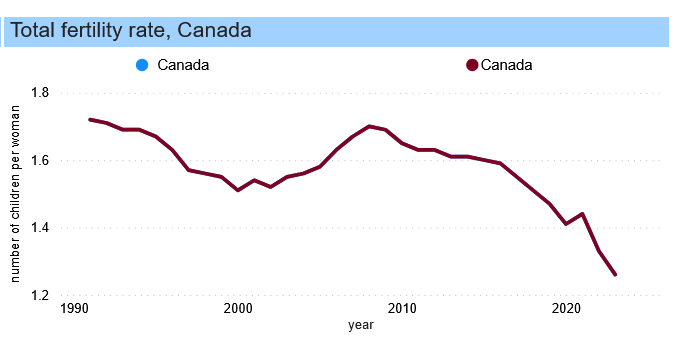
Source: StatCan
According to claims data from Manulife, fertility drug usage increased by 14.57 per cent in 2024 compared to the year prior.
And while 53 per cent of Canadian employers offer coverage for fertility drugs, fewer than one per cent of those with a Manulife group benefits plan offer coverage for fertility clinic treatments, she says.
Heavy financial burden to fertility care
Recent findings from Maven Clinic spotlight the stark financial toll of fertility care. Nearly three-quarters of people in the U.S. navigating fertility say it causes financial strain, and for one in three women, expenses exceed US$50,000. In addition, 46% of the more than 1,000 respondents reported feeling unprepared for these costs.
This aligns with the rationale behind Gibson’s investment in fertility benefits.
“We went on that top end... and we just had to be okay with it,” Silvestro says. “There's quite a process to make sure claims are legitimate, of course, so we’re not going to have any abuse into the program. But it's one of those benefits that people aren't just doing for fun.”
The $30,000 is a lump sum, he says, and can cover expenses such as legal fees, home evaluations for an adoption, surrogacy fees and IVF treatments.
“We don't see a ton of that high usage — which was expected. So, in justifying the cost, it goes back to our benefit strategy. We decide to put dollars in areas that we know are going to be impactful for people, and represent our company, Gibson Energy, as what we stand for,” says Silvestro.
“It's costly, and it could weigh heavily on stress and mental wellbeing, [with] the financial burden of it… so, we wanted to address it.”
Emotional and career impacts of fertility journey
Without employer support, the stakes are high. According to the Maven Clinic data, 83% of respondents had to cut back on other expenses, and 52% used savings intended for life milestones like home ownership or retirement to fund fertility care.
Plus, 91% of respondents said fertility struggles affected their mental health. More than three-quarters limited social interactions due to emotional stress, and 65% felt they bore the brunt of the journey alone.
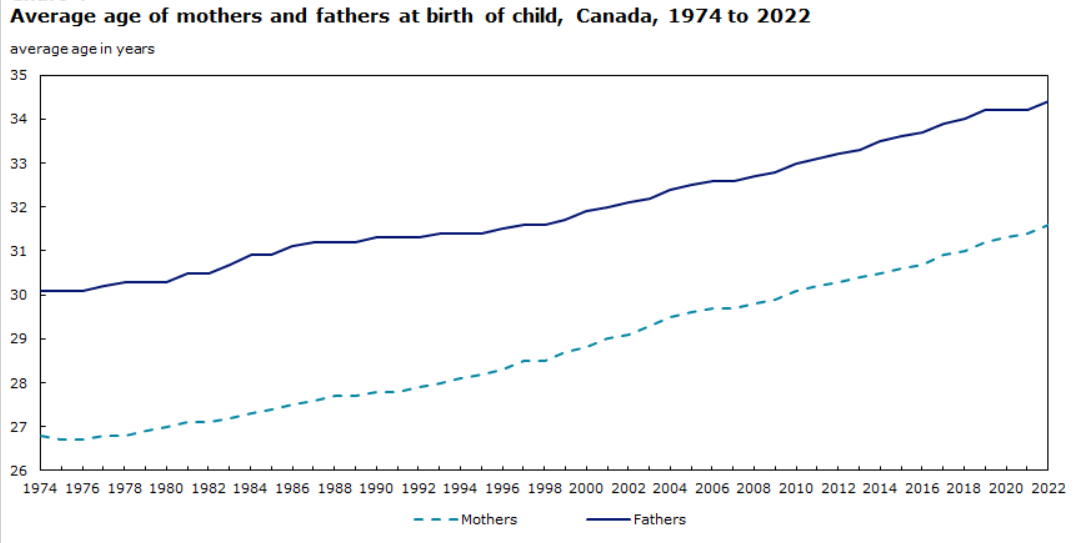
Source: StatCan
Beyond the funding for fertility care, Gibson embedded support for mental health, offering $15,000 annually per household in psychological services.
“We’re very proud of our leading-edge mental health benefits,” says Silvestro. “We know that we’re on the top end, definitely, of the market… it was something where our organization feels very strongly. We’ve been driving it for a long time, mental health awareness and the benefits of maintaining mental wellbeing.”
Still, stigma lingers. Even as benefits improve, 77% of women say they’ve hidden or downplayed fertility treatments at work, according to Maven Clinic. This underscores the importance of fostering an open, supportive culture.
“There's substantial stressors that come along with proceeding down the path and seeking fertility treatments. Financially, the costs associated can be really, really expensive, and that is adding additional pressure at a time typically when folks are advised to reduce their stress, to assist in their success of proceeding,” says Foubert
“Between fertility drugs, the procedures, the storage, the visits, much of this can be out of pocket, which adds further stress and strain. So, enhancing access to and emphasizing pathways to connect with emotional support and mental health support is extremely important.”
Business case for fertility benefits at Gibson
That emotional toll carries over into the workplace. Forty-four percent of women reported declining promotions or new roles to prioritize treatment schedules, while 59% of couples had one partner take on extra work to fund care, found Maven Clinic.
Despite these challenges, employer support pays off: Among respondents with fertility benefits, 81% reported higher engagement and productivity at work.
Gibson has seen the results firsthand with all employees: “Even if they’re never going to use [the benefit]... they are so proud to just know that their co-workers might get it.”
That goodwill that’s generated factors into the cost, he says, and translates to real-world advantages in recruitment and retention, particularly in traditionally male-dominated sectors like oil and gas.
“It does bring in a diverse population... and it catches their attention right away,” says Silvestro.
“It's a way to demonstrate, right off the bat, to a new hire or someone we're trying to attract, what we care about and how we demonstrate that care.”
It’s all part of the company’s total rewards strategy, he says.
“Our strategy, or main pillar, is to be curating benefits that are unique, benefits that set us apart too from other employers. And they [represent] a competitive package and enhance that employee value proposition.”

Work isn't just work anymore, and employees have high expectations of their employers when it comes to benefits and their overall total compensation, says Foubert.
“For an employer and a sponsor, it is really important to consider these things in terms of emerging needs of their members and their employees, and certainly understanding that this can assist greatly with retention, but also talent attraction and how to differentiate relative to competition.”
And fertility challenges are not restricted to women, she says: “This is something that anyone can require treatment for. So, it is really important that organizations are considering this with the lens.”
Navigating fertility: Advice for employers
Designing fertility benefits isn’t without its challenges, but help is available for employers.
“I would encourage them to leverage their partners,” Foubert says, noting that insurers and consultants can assist in customizing plans to fit organizational goals.
“There's certainly opportunities to progressively enhance your offer over a period of time... There are certainly flexible options that employers can consider to start on that journey of adding more robustness coverage to their plans.”
At Gibson Energy, the initiative was homegrown. Silvestro’s HR team took the lead on program development, conducting in-house research and collaborating with Sun Life to bring the benefit to life.
“It can be complex. And I think, for a lot of reasons, employers do hesitate,” says Silvestro. “Like anything else, once you start to peel back the onion, you start to learn the layers, and then you understand what we can do and what's possible and create something that may be setting the path for others.”
Flexibility, too, plays a crucial role. Foubert encourages companies to consider paid time off and adaptable work arrangements to accommodate treatment needs.
“The process can be extensive, and in in many instances require a large time commitment and flexibility. There can be multiple appointments, procedures, and in particular, timing is often critical. And so, for employers, it's important to recognize the extent of the process and the requirements and that it can interfere with an individual's career trajectory if an organization does not recognize and provide some of that flexibility or understanding.”
Broader implications for women’s health
Foubert frames fertility support as a long-overdue update to legacy benefit models.
“Workplace benefits were originally designed with men in mind, reflecting that predominantly male workforce of the mid-20th century. Today, women make up almost half of the workforce, so it's certainly past time for us to be moving forward with evolutions in the plans,” she says.
“We're very much advocating for plan sponsors to enhance and evolve their offering.”
Fertility support is, of course, part of a bigger picture. Manulife’s broader findings indicate a need for greater support for women at work.
In a 2021 survey of Canadian mothers who had taken a maternity leave in the prior 10 years, 95% reported that they did not receive any formal support from their employer during the maternity leave transition, and 40% considered quitting their jobs during the return-to-work process, says Foubert.
“There's certainly lots of opportunity to close the gaps, to improve women's health and quality of life, and empower them to contribute fully to the workforce,” she says, adding that investments in women’s health also contribute to overall economic growth for Canada.



