'Coming out of the pandemic, mental health is still a challenge,' says HR leader at University of Manitoba, touting mental health benefits, EFAP

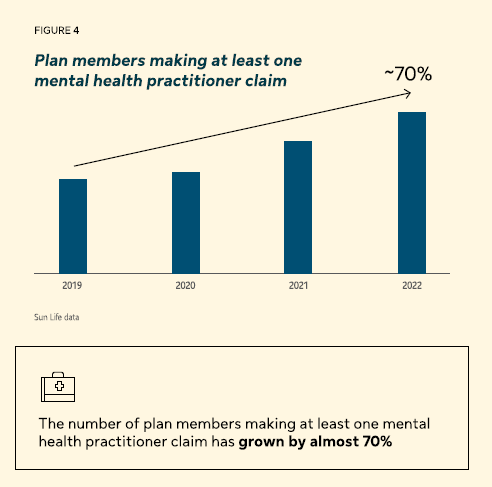
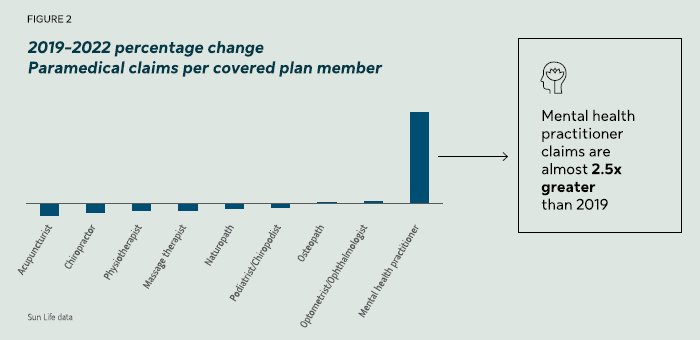
Mental health claims by Canadian employees have increased by 132% since the onset of the pandemic, resulting in an average of 12 days lost per employee per year, according to a new report.
Employees want more accessible mental health services and more holistic approaches, the GreenShield report states.
To that end, the University of Manitoba revamped its benefits offering this spring, making major changes to the services it provides to staff, faculty and students according to surveys and feedback, including offering a wider suite of practitioners, and more sessions covered – from six to 14.
“Finding a counsellor or therapist, a lot of it has to do with that right fit, and you want to have that good connection with your therapist or counsellor, and previously, it may not have fit in that small box,” says Rene Oullette, associate vice-president for human resources at the University of Manitoba.
“Now we've got that expanded suite of practitioners, and that's awesome. Staff are happy.”
Changes to benefits after employee feedback
Starting with switching to a new provider (Kii, a cloud-based platform), the university focused on increasing its mental health services in impactful, immediate ways after it received “brutally honest” feedback from faculty and staff expressing that they needed more mental health support.
“Coming out of the pandemic, still, mental health is a challenge,” says Oullette.
“With everything going on, with the increase in inflation, cost of living – all that has a toll on our faculty, staff as well as students, but our benefits and enhancements really impact our faculty and staff.”
Through its Employee and Family Assistance Program, the university is now offering $1,000 in an annual mental health budget for members, an increase from $500. Plus, six counselling sessions used to be offered to members, but have been increased to 14, again in response to feedback.
A wider suite of culturally appropriate mental health practitioners have also been offered to members, a change that has been received well, says Oullette, “for Indigenous faculty and staff, BIPOC, the LGBTQ+ community … it's looking at a provider that can offer services that better fit and better match our faculty and staff.”
EAPs valuable for mental health care
Services such as Employee Assistance Programs (EAPs) are powerful tools for rounding out mental health care – especially for women, who make up 70% of EAP users, according to the GreenShield report.
But many employers are not meeting the call, according to experts, who say that too many HR departments are dropping services like EAPs on their workforces without following up to see if they’re actually using them.
It’s a lost opportunity, says Chris Gory, president of Orchard Benefits in Etobicoke.
“It's a double-edged sword, because you want to provide this support to everyone that they need. But then, of course, your costs are going to go up too. If you don't provide the support for mental health practitioners, you're going to see an increase in disability claims.”
Although employers generally budget about 80% employee uptake for EAPs, some companies only achieve 20%, he says. However, the costs of investing in EAP programs for employees is “a drop in the bucket” compared to the returns in the form of prevented disability claims, Gory says.
“I've had some companies who implemented an EAP and they didn't tell the employees as part of their onboarding, and they would go a whole year without any EAP usage at all,” he says. “I think it's very important that they have a buy-in from the top down to promote it to the team.”
 Source: Sun Life
Confidentiality is also a common barrier to employee uptake of EAPs, he added, as some individuals worry their employer will have access to their EAP activity.
“People have to be sure that is completely confidential, that it's 24-7, and that it's available in a slew of languages. But it has to start at the top-down – so many companies do not do a good job of promoting it, whether it be through onboarding, quarterly all-hands meetings, whatever the case is.”
Ensuring accessibility to EAPs, mental health benefits
Not all employees are the same, which means they access EAPs and other mental health services differently, says Pascale Mapleston, CEO of The Benefit Code.
Barriers such as registrations that require too much personal information or take too long to complete can cause employees to check out before they even begin, she says. It’s important to meet employees where they are at, and ensure they are receiving benefits that are specifically useful to them, or they won’t be used.
Source: Sun Life
Access to apps and services should be immediate and round-the-clock, she says.
“Also, [it’s about] making sure that your resources give the employees choice on what's going to work for them best,” says Mapleston. “That might be self-directed, it might be online, virtual, or it might be in-person … we know that the program needs to resonate with each individual, so that they use it and it actually becomes a tool.”
Financial considerations can also be a barrier for employees, as many organizations offer limited spending budgets for mental health care, such as $500 per year.
“When counsellors charge $220 per session, that goes really quickly. So even if you have that benefit, you need to make sure that you've got some wraparound free services,” Mapleston says.