New guidance for Canada reinforcing carcinogenic risks raises questions for HR when it comes to social events, client meetings
At many workplaces, alcohol is a staple — if not a must-have — when it comes to after-hours socializing, team-building and connecting with customers at off-site events or business lunches.
But with the release of new Canadian guidelines that sound the alarm about the risks of alcohol consumption, experts are calling for changes to the way people perceive and consume the substance — raising questions for HR when it comes to workplace habits.
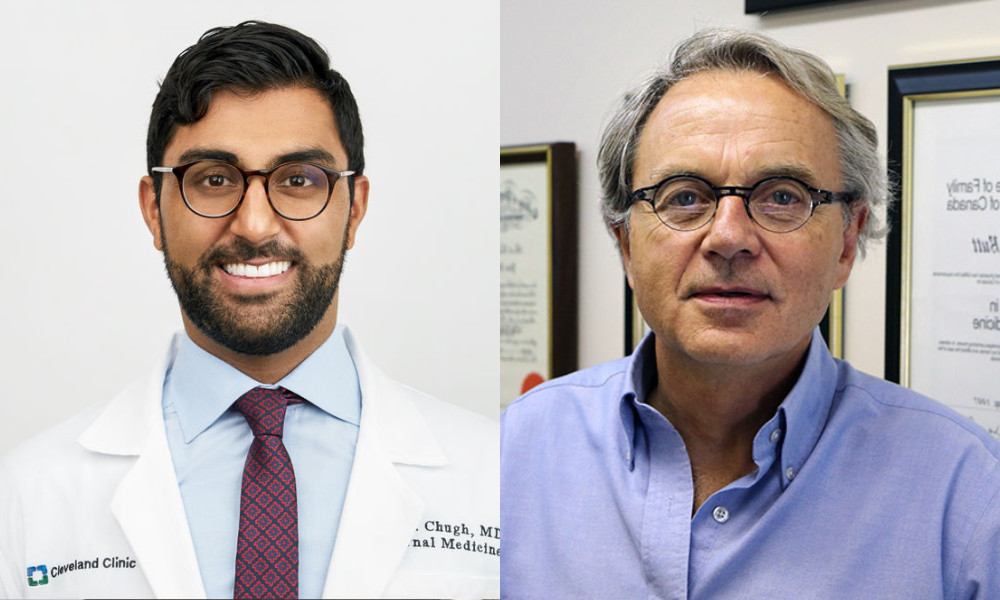
“In the past, alcohol intake became normalized as a way to bond and network at workplace events… ‘Let's grab some drinks after work.’ And the objective of this really was to build morale by hosting events where there was unlimited amounts of alcohol, and it was just felt like it was the right way to do things,” says Dr. Shaan Chugh, a physician at Cleveland Clinic Canada and chief medical director at Purolator.
“The big question in my mind is how do you take away the spirit of this, which is building a stronger team and improving workplace morale, by decreasing the reliance on alcohol?”
Updated rules for low-risk alcohol consumption
The Canadian Centre on Substance Use and Addiction (CCSA) unveiled the new guidance related to alcohol consumption in early 2023.
In stating that the more people drink, the more they are at risk of seven types of cancer, cardiovascular diseases, liver disease and violence, the report also made some stark suggestions.
Ultimately, the authors said that:
- one to two standard drinks per week is low risk
- three to six standard drinks per week is a moderate risk
- seven or more standard drinks per week is an increasingly high risk.
Canada’s Guidance on Alcohol and Health replaces 2011 guidelines which recommended no more than 10 drinks per week or two per day for women and 15 drinks per week or three drinks per day for men.
It was time for an update, according to Peter Butt — associate professor at the College of Medicine at the University of Saskatchewan, and co-chair of the new guidance — citing advances in research and work done in the U.K., Canada and Australia.
“There was indication that, in fact, people were probably coming to harm if they were drinking within the old lowest drinking guidelines. So we really felt it was imperative to review the evidence and update,” he says.
“However, we didn't expect the evidence to be as strong with regards to the health impacts of alcohol… it really is quite profound.”
The new recommendations came about after a two-year research project that looked at nearly 6,000 peer-reviewed studies and involved an expert panel of 23 scientists representing 16 organizations. The guidance also incorporated findings from focus groups and consultations with the public and stakeholders.
Ultimately, the message is Canadians should consider reducing their alcohol use, says Butt.
“In order to make that more actionable, we presented the continuum of risk. So although there's no absolutely safe level of alcohol use, one to two standard drinks we determined to be at a low risk… and then three standard drinks to six standard drinks a week would be considered moderate risk… and then when you get to above six standard drinks a week seven plus you're in an increasingly high-risk zone where there's more and more evidence of people coming to harm.”
While some might say it’s too much “it’s guidance, it’s not a strict rule,” he says.
‘The way in which we think about alcohol really needs to change’
This is definitely a big shift from previous guidelines, says Chugh.
“The point is that the way in which we think about alcohol really needs to change, and things that we've been doing in the past have not been working. What we're starting to realize in the medical community is that alcohol-related presentations are often not an isolated diagnosis.”
Many people may not be aware that we’re starting to see a rise in the rates of colorectal cancer among young individuals in Canada, and a likely risk factor is excessive alcohol consumption during the pandemic, he says, highlighting the risks of binge drinking.
“As an internal medicine physician working on the front lines, we are starting to see that the rates of individuals presenting with alcohol intoxication, alcohol withdrawal, alcohol-related heart issues is also starting to rise.
“We're really at this critical juncture where we need to start thinking about alcohol misuse in a more holistic way.”
In addition, mental health issues often underlie an individual's excessive alcohol intake, says Chugh.
“It's time we really start focusing on removing the stigma as it relates to mental health, and start having an open conversation about things like depression and anxiety, even in the workplace, and how this actually links to alcoholism.”
The norms of alcohol consumption at work
One of the big challenges for employers is the normalcy of drinking alcohol at work-related social events. While tobacco use has been banned from the workplace because of the dire health effects, the same compunction is not true for alcohol at this point.
“Our relationship with alcohol is deeply ingrained. It's how we mark transitions from the workweek to the weekend, transitions in terms of births and deaths and celebrations, achievements in life,” says Butt.
And the pandemic didn’t help, with many people coping with the stress by upping their alcohol intake or suffering from alcohol withdrawal when retail outlets had to close. This also helped further normalize day drinking, he says.
“[People] didn't have the workplace contact to prevent them from drinking first thing in the morning or drinking during the day… They could get away with it up to a certain point.”
How HR can try to reduce the focus on alcohol
So, what can be done to make for a healthier workplace?
“It requires a cultural shift, just like wearing seatbelts, just like smoking cessation… and having a culture that's focused more on how we interact and socialize as opposed to how much we drink,” says Butt, adding this will have a greater impact on men than women because of the link between masculinity and alcohol. “There's a lot of work to be done.”
People are interested in drinking less, but they still want to socialize — and that's fine, just reduce the consumption, he says.
“Let's move beyond this being about alcohol and more about how we relate to socializing.”
Luckily, coming out of the pandemic, there’s been a greater focus on health and wellness, says Chugh.
“Progressive corporations are also starting to normalize a shift away from activities which focus on alcohol as the real driver that brings people together,” he says. “Companies are really starting to turn their mind to workplace events, and the role that alcohol plays in them.”
And there are indications younger people are becoming less interested in consuming alcohol, which could help with the transition.
Obviously, making people aware of the health risks related to alcohol — which are much more serious than previously realized — is a big part of the work that needs to be done, says Butt.
“It's important that we reach out to people and say, ‘Look, there are ways of reducing how much you drink. This isn't about prohibition, it's not about abstinence. If you want to reduce your alcohol-related risk, alternate an alcoholic beverage with a non-alcoholic beverage, make sure that you're eating before you drink and while you're drinking. Consider low-alcohol-content beverages.’”
Clearly the best advice is to avoid intoxication, he says.
“If you’re drinking whilst working and in terms of a business lunch, or if there's a social event that's sponsored by the workplace, it’s best to avoid intoxication — and companies have a responsibility, because once people become intoxicated, behaviour unravels.”
Setting the right tone for reducing alcohol intake at work
To make the message resonate with employees, and leaders, it’s important to set the right tone in the messaging. This was also apparent in the focus groups for the new guidance, says Butt.
“It was clear from that that they didn't want to be told what to do… They wanted the information and they wanted it delivered in a very actionable way, a way that they could implement it.”
Setting the tone in a lighter way could potentially improve engagement and buy-in and allow for an open flow type of conversation that is bidirectional, says Chugh.
“I think that for corporations to have a sustainable impact, it cannot be this authoritarian type of conversation. Otherwise, it just won't work.”
A town hall can be a great venue for people to ask questions of leaders in the organization, and HR might want to have a health professional on hand to answer questions about alcoholism.
“Pulse surveys are also a great way to get insight as to how people are actually thinking about their health, and one question may be around alcohol,” he says.
“There are different ways in which the conversation can be started in the workplace, and really knowing what works for your people, because every company is going to be different… it's important to take a tailored approach, and matching the strategies to the actual demographics of that company.”
New types of events, employee benefits
Employers may be surprised to learn from employee that many are OK with daytime events that don't actually involve alcohol to a significant degree, says Chugh.
“At a practical level, some companies may actually provide non-alcoholic beverages as an option at these events. So things like sparkling water, cold-brew coffee, tea,” he says.
“Social committees at companies are really a great way to stay disciplined and intentional about the ‘why’ behind the events, and not just defer to after-work happy hour, by really engaging in a new and fresh way to build team morale.”
It's also “of paramount importance” to ensure there is role modeling at the leadership level is, says Chugh, citing the “symbolic aspect.”
Finally, employers can empower individuals who struggle with alcohol misuse to start thinking strategically about alcohol when they're out at events or even at home. And making people aware of employee benefit programs and mental health supports such as EAPs can also make a difference, he says.