
'My hope is that this can reduce some of men's fears about connecting with women, networking with women'
The #MeToo movement shone a spotlight on the dark corners of sexual harassment, where men with power misbehaved with women who had less power.
But what about men with less or low power? Do they also engage in sexual behaviour at the workplace?
Yes, according to a new study that suggests men may be especially likely to engage in social sexual behaviour (SSB) when seeking to compensate for low situational power.
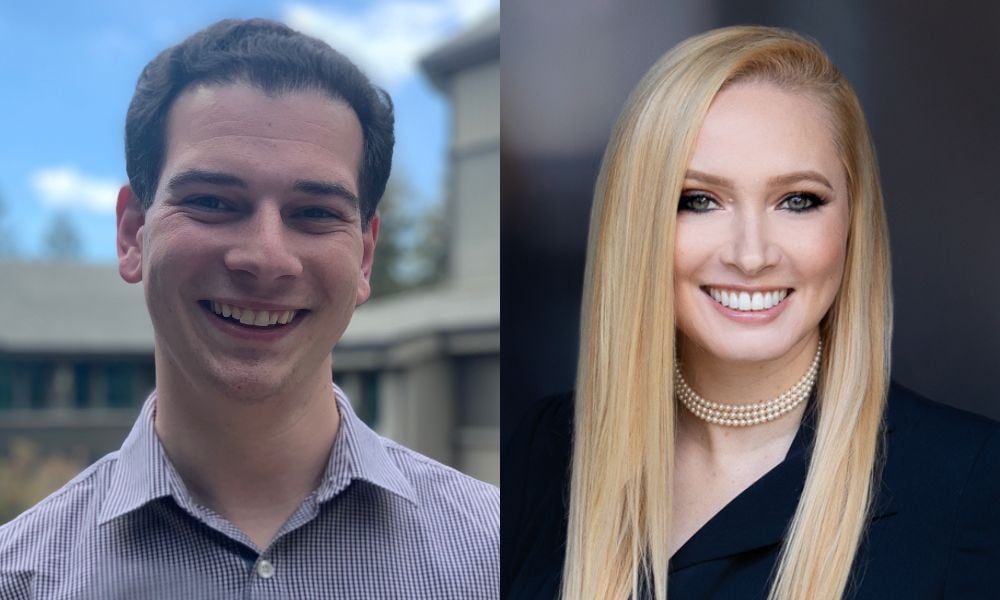
“By flirting or using social sexual behavior with a female, other partner, it seems to be the case that men believe — and to some extent, they're right — that by doing this, they will be seen as higher in terms of power than they otherwise would be,” says Michael Rosenblum, postdoctoral research scholar at the Leonard N. Stern School of Business at NYU, who co-authored the study.
6 studies provide answers
In six studies involving almost 500 participants, the researchers looked at the area of social sexual identity (SSI), “a self-definition as a person who leverages sex appeal in pursuit of personally valued gains” — or people who consider themselves flirts, says Rosenblum.
“What we find is that, in general, men have a higher social sexual identity. And this helps to predict when individuals are going to partake in social sexual behaviour.”
But the goals or motivations for that behaviour are also important, he says, citing “self-enhancement,” such as the desire for power or being perceived by others as powerful, versus “self-transcendence,” which is about affiliation or wanting to get close to other people.
The researchers found that self-enhancement leads to more social sexual behaviour (SSB) than self-transcendence.
“We typically think of the male boss and how they might be engaging in sexual social behaviour, but we find this interesting case where low power men… exhibit more social sexual behavior in the circumstances that we looked at,” says Rosenblum.
Men are more likely to identify as flirts, and the more likely that someone is to identify as flirt — meaning a higher social sexual identity — that predicts more social sexual behaviour, he says.
“There's this gender difference at that level; there's also this gender difference in behaviour,” say Rosenblum.
“Our results call into question seminal theories proposing high power as a central cause of inappropriate SSB.”
When people hold power, they can act in selfish, exploitative ways, and that's consistent with what people saw with the #MeToo movement, says Jessica Kennedy, associate professor of management at the Owen Graduate School of Management at Vanderbilt University, and co-author of the study.
“We found that it was holding low power which activated desire for power that led to the gender difference and the behaviour… it's about, as far as we know, creating an image in the eyes of others of power,” she says.
“Men have a strong power motive, which actually looks like it's more common when they're in low power position — they don't feel powerful.”
On the other hand, when it comes to affiliative motives and people who hold high power positions, those differences go away, says Kennedy, citing the findings of the study “Who do they think they are?: A social-cognitive account of gender differences in social sexual identity and behavior at work,” whose lead author is Laura Kray, faculty director at the Center for Equity, Gender, and Leadership at the University of California.
Takeaways for HR
One of the big takeaways from the study is the importance of avoiding blind spots, says Rosenblum.
“This kind of behaviour of sexual harassment, it's not just top-down, it can also come bottom-up. So [it’s about] just being aware of that.”
In addition, think about the types of goals are in play, be they intrinsic or explicit, he says.
“If… your number one goal is to be seen as the most powerful person in this room, that might have some implications for the type of behaviour that's undertaken, versus highlighting, ‘We need to affiliate, we need to be closer together’ — that can, based on our work, reduce some of these behaviours”.
If employers and HR can promote affiliative motives instead of self-enhancing power motives, in an organizational culture, we should see less of this, says Kennedy.
“My hope is that it can also reduce some of men's fears about connecting with women, networking with women, having relationships with women, because it really isn't flirting gone wrong or liking gone wrong or attraction,” she says. “That's something that we as researchers probably need to help correct in the minds of men to eliminate some of these unintended consequences of #MeToo.”



