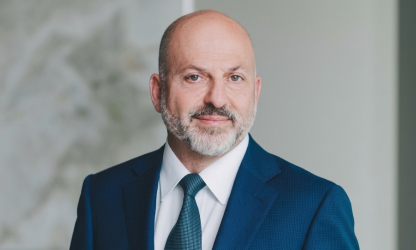
'It's the HR folks who are the toxic handlers – they're wearing the hazmat suits before they go into that person's office'

In early May, it was widely reported that Tesla's top HR executive had departed the automotive firm amid job cuts at the organisation.
Allie Arebalo was the senior director and head of North America HR, having assumed the position in February 2023 and worked at Tesla for over six years, according to her LinkedIn profile.
She was one of the most senior women at the firm, reporting directly to CEO Elon Musk.
And while it’s not clear whether Arebalo left of her own accord or was dismissed, it’s likely her experience at Tesla was a challenging one, given the controversial leadership of Musk. Described as innovative, a visionary, and dedicated, he’s also known as being a micromanager, polarizing, highly demanding and outspoken.
Musk is of course not the only company leader to make headlines, or to generate controversy — both internally or externally. But it raises the question: How should a senior HR leader such as a CHRO or CPO best handle this kind of leadership?
“Often, it's the HR folks who are the toxic handlers — they're wearing the hazmat suits before they go into that person's office because they're often the carriers of culture, of process, of policy,” says Melissa Sonberg, professor of practice, organizational behaviour, at McGill University.
“So, it becomes even more difficult if you're in that HR leadership role to have a CEO who's demonstrating that kind of behaviour.”
‘Nowhere to hide’ – but ‘rot from the top’ continues
While Musk is the latest “poster boy” for toxic leadership, there have been many others, says Sonberg. What’s different today is people expect better of their leaders, and are willing to challenge them.
“We're in less of a command-and-control environment, and [now it’s] much more collaborative and participative styles of leadership. And so when someone comes across as really over the top in terms of their demands, in terms of their disrespectful behaviour, in terms of setting their own rules — even in a culture that might ostensibly espouse different ways of being — the context has changed.”
These days, “there's nowhere to hide,” she says. “It’s amplified incredibly now with social media.”
But David Taffet, venture builder and executive whisperer at JukeStrat, says many people don’t necessarily recognize the “rot at the top.”
“I feel that we have been subjected to such heinous behaviour that is lauded as strong so that we often don't recognize it as toxic. And I think it's showing up in our families, our politics, our businesses, and that people don't know how to express the pain points that they're feeling and often elevate the people because… that's impressive, even if it's ruthless or harsh.
“Somehow, they think that's how you get to the top. And so they’re forgiven.”
And often when people do speak out, they’re silenced or there’s retribution, he adds.
Perils of toxic leadership
If an employer espouses a culture that’s inclusive and collaborative and trust-based — basically a psychologically safe environment, “throwing someone like that into the mix, who has a lot of power, it messes up the whole apple cart,” says Sonberg.
And if you as an HR leader try to ignore the problem, that leaves it up to others to patch things up, and they throw resources at getting the right outcomes, rather than doing their own jobs, she says.
“Ignoring rarely is a good solution… It ends up costing a lot of time and energy and is wasteful.”
There’s also the risk of “toxic loyalty,” says Taffet, which is dangerous both to the leader and the people who subscribe to it, the sycophants.
“That loyalty to their lives and to the leadership, which is toxic and awful, is harming others around them… it’s like watching a cancer ravage your body… you need to bring radiation, you have to bring chemo. And, unfortunately, there's going to be some effect that affects the healthy part of the organization. But you've got to cut out the cancer — it will not respond to kindness.”
How should an HR leader handle a toxic CEO?
So, what's an HR leader to do? There are choices, says Sonberg, but it depends on the situation. If, for example, it's an owner-operator type situation, and that CEO does not feel that they report to anyone, “that's going to be a challenging change mandate.”
Sometimes, the HR leader becomes the individual who can get through to the company leader and lay everything out in a way the CEO understands. For example, if there’s a blind spot, she says, “which is a very benign way to ascribe it to a real deep narcissism that doesn't allow us to accept other perceptions.”
If there is a someone in the C-suite who has the trust of the toxic leader, says Sonberg, “that's probably the lever required to try and change behaviour… But if that individual is isolated and doesn't have any kind of trusted colleagues who can… ‘speak truth to power,’ it's very hard.”
It may be that the board or members of the board take action and “have hopefully a certain level of influence or at least respect of, if it's a CEO, to be the voice of reason,” she says.
“As long as someone can find the voice that that individual will listen to, that opens up a whole world of opportunity for changing behaviour.”
Giving the toxic leader an idea of how they’re having a negative impact can be effective, says Sonberg.
“Sometimes, it's the HR leader who literally has to do jujitsu with that toxic source to try and first help the individual figure out their impact on the rest of the company. Because, at the end of the day, even Elon Musk isn't going to want to hear that ‘We're losing our smartest people because they're afraid to walk into your office.’
“Because losing your smartest people is losing sources of innovation, is losing new products, is losing market share — all the bad things that that no leader is going to want to be responsible for unleashing on an organization.”
Another option? Change the CEO’s role by focusing on their strengths and having them walk away from weaknesses such as public-facing responsibilities.
“If you've been able to establish a process where the individual understands the… negative impact they're having, and is now ready to take responsibility for that, then you move into ‘So what do we do about it?’” she says.
“And absolutely, [that can mean] taking the parts of the job that they're inherently not good at and finding another way to get that done.”
Can a problematic leader be coached?
As to whether a toxic executive can actually be coached, there are several caveats, says Sonberg.
“Do they care enough about the consequences of their behaviour to be willing to change their behaviour? Someone's got to paint the picture of consequences that are more negative than the way they perceive they are allowed to act.
“Absent of that, then you’ve got to say, ‘Who would be a trusted voice?’ Because the magic of coaching is really the dynamic between the coach and the coachee, and the person being coached needs to feel safe and needs to feel understood. And needs to feel that they can trust their coach. And only when all those conditions are met is it going to work… But when it does, it could be magical.”
If you have the ability to facilitate buyin to different behaviour by playing to that individual's ego, then you may be able to facilitate better actions, says Taffet.
“But if you really try to understand them, and they're not willing to be understood, it will be seen as insubordination, inappropriate, manipulative, and people who are like that generally are not ready to be vulnerable and humble and coached and aren’t apt to share. They'll just exercise their authority.
“And a lot of people in that place use a command-and-control kind of management style, which creates the distance between themselves and others because they're not there to be analyzed. They're there to dictate.”
Coachability comes down to whether a leader can be “shaken” to see themselves as others see them, as opposed to how they want to be seen — or avoid being seen, says Taffet.
“And it takes humility, it takes vulnerability, it takes courage for someone to be coached. It takes a high level of trust, and a really important relationship. And you can take the most heinous people, and if you can shake them to see the effect they're having, and they truly care and want to change, they're coachable.
“But then you can take people that are just your mundane level of toxicity, who have such a level of arrogance and inability to really be sensitive to their effect on others, and they're not coachable.”
Supporting HR in handling toxicity
If HR can get the board onside with their concerns about leadership, that can definitely be effective. But bringing in an independent group to do a “pulse check” can also be a good strategy, says Taffet.
This looks at issues such as psychological safety and fairness in an organization, he says.
“The way it's done for the leadership, you can't turn a blind eye to the results you get, because it gives you a ‘heat map’ of exactly the effect you're having. And it also gives the individuals in that company a voice anonymously to articulate where their problems are by the person's name.”
With that kind of report, HR can present “a groundswell of protest” that can’t be ignored, says Taffet.
“And HR is in a difficult place. Because I think that, often, they become focused on avoiding liability and ensuring compliance where, indeed, if they took that next step of ‘No, our goal is to create a healthy society for the people who work here,’ it's something that the HR group has to negotiate themselves, and then be able to show in empirical ways that are just undeniable that ‘We have a problem here. And here's how we know where the problem lies.’
“But then you’ve got to have someone who's willing to listen and act on it.”