
We talk to 5 HR leaders about the events of this past year -- and what's in the works for 2021
“People started talking a lot more about their personal well-being because of the impact of the pandemic — the isolation, the pressure, just being afraid... Many leaders really started to see why it was so critical because it impacts presenteeism and absenteeism, productivity — there were so many reasons why we needed to focus on it.”
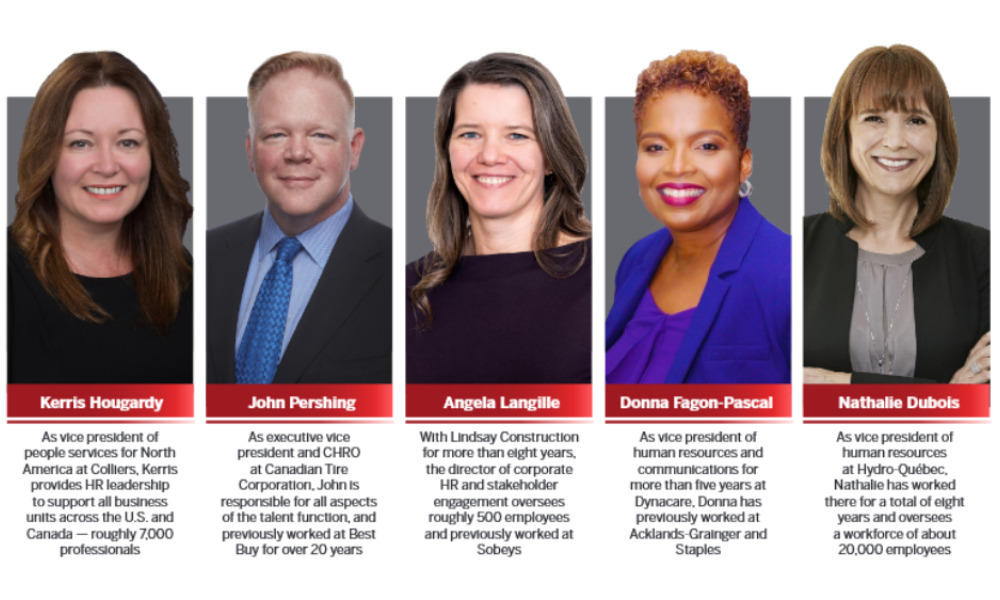
KERRIS HOUGARDY, vice president of people services for North America at Colliers International in Vancouver
The 2,500-employee real estate company has offices in Vancouver, Toronto, Montreal and Calgary
 No doubt, 2020 has been a crazy year, says Kerris Hougardy, vice president of people services for North America at Colliers International in Vancouver.
But if there’s one silver lining, it’s that all the hard work from human resources has elevated recognition of the profession and what it can do for organizations.
“HR has been thrust into the spotlight throughout this past year, more than any other department or team in any organization. And they've had to deal with so many unknowns, so many changes,” she says.
These range from workplace health and safety, the shift to the remote work environment, planning a workforce in a downturn economy, elevating diversity and inclusion with the rise of Black Lives Matter movement and the mental health of employees, says Hougardy.
“There's been some incredibly heroic efforts from HR departments right across the globe. It's been incredibly stressful, really uncertain, often very emotional, but they've risen to the challenge ― HR has just been phenomenal. And I think that if organizations hadn't recognized before, I'm sure they most certainly do now, that there is a strong strategic partner in HR for a leader and a really valuable resource for employees.”
HR teams will continue to have to be more agile going forward in terms of how they adapt and flex, because there's so many more changes to come, she says.
“Agility, flexibility and adaptability going forward are absolutely key skills for any HR team to adopt. It’s certainly something we're going to be investing in in 2021 around agile methodologies, work processes, skills ― it's going to be so important.”
“If we say, ‘Yes, you can be based remotely’ but actually the technology or the platform or the leadership isn't right to enable that working environment, then we're going to set somebody up for failure.”
Kerris Hougardy, Colliers International
Lessons from 2020
One of the biggest lessons of the year is how absolutely critical communication is, says Hougardy.
“Transparent and authentic communication, regardless of who it's from and the format that it's in, has been one of the key ways that we've been able to really function as an organization across a number of different levels.”
Whether it's an email from a leader, a webinar, town hall, team meeting, coffee chat or virtual social, “being able to connect people who were feeling scared, uncertain, anxious, stressed, overworked, sometimes overwhelmed… has been absolutely critical,” she says.
The importance of employee well-being also came to the forefront, says Hougardy.
“It's become abundantly apparent throughout this process that our role in our workforce's lives is not just there to provide equipment or resources to be able to do their jobs effectively from a skills perspective, or from a performance management perspective, it's as well to provide a broader well-being program or platform for them to be able to tap into.”
As part of that, Colliers updated its paid time-off policy by giving employees two “BE” days so people can be whatever they want to be, she says.
“That enables people to take time out, to focus on their mental health or to volunteer in their community or to recognize a religious holiday that maybe isn't recognized by our stat holidays or go to the spa for the day to… look after yourself.”
Last summer, the company also worked with a Vancouver startup to provide employees with access to online virtual experiential learning for their young kids.
“The feedback we got was phenomenal. The parents felt that they could take two hours out of their day to be able to do some work or do some laundry or something that was really piling up,” says Hougardy.
As for training initiatives, Colliers had already rolled out online learning to staff in February 2020.
“Our ability to be able to train and develop individuals virtually with the adoption of digital training programs like LinkedIn Learning and others that we can access, as well as creating small workshops or focus groups through Zoom and [Microsoft] Teams, is something that we've become a lot more proficient in and people are a lot more accepting of,” she says.
Remote work and the return to work
With the massive rise in remote work, there’s been a big shift at Colliers in recognizing that employees don’t have to be at the workplace to do work, she says.
“We've had to help people understand: How can you manage the performance of individuals when you can't see them? How do you manage teams when they're not physically present? And it's really shifting that mindset from being in the office, [which] is a big check from a performance perspective, to what are the outcomes and deliverables you're actually looking to achieve, and have they achieved those, regardless of where they're working?”
Colliers has also recognized that just because a person can work remotely doesn't mean that the organization is ready to support the move, says Hougardy.
“The managers or the leaders might need new skills, they might need to change that culture in which they've worked for many, many years, that's focused on [being present]. So, it’s important to do that in parallel,” she says.
“If we say, ‘Yes, you can be based remotely’ but actually the technology or the platform or the leadership isn't right to enable that working environment, then we're going to set somebody up for failure.”
In contemplating the return to work, the company has surveyed staff and held focus groups and workshops to dig deeper into the data about what people want and how they work, both before COVID and during the pandemic. That means looking at what is and isn’t effective, who they're interacting with and how, and what kind of communications are most prevalent, both internally and externally, says Hougardy.
What’s certain is that everyone is different, and it’s difficult for a large organization like Colliers where professionals range from property managers and building engineers to brokers, sales professionals, data analysts and payroll staff, she says.
“You've got very different job tasks and role responsibilities that have different requirements so a one-size-fits-all approach doesn't work… We do need to be flexible; we need to provide adapted working environments.”
JOHN PERSHING, executive vice president and CHRO at Canadian Tire Corporation in Toronto
The retail company has about 30,000 employees in retail, office and distribution centres
 Silver linings. Focusing on silver linings was one of the ways Canadian Tire helped employees cope during the tough times of the pandemic. For 10 minutes in a meeting, people would be encouraged to share some good news, such as a marriage proposal or new pet.
“At first, it sounded like it’d be a practice that was highly uncomfortable based on work in this normal sense. Instead, it became one of our most popular parts of our town halls because I think it’s [about] creating community and a connectedness that wasn’t there before,” says John Pershing, executive vice president and CHRO at Canadian Tire.
In some ways, the chaos of COVID-19 and its aftermath have brought employees closer, he says.
“We’re sharing more personally. I mean, literally, we’re in each other’s homes via video.”
To that end, people are encouraged to use video often, says Pershing.
“We don't want to complain about not being able to be with others because of the pandemic [so] turn the camera on: Let's see each other and connect eye to eye and have a conversation and be in it together ― we're really pushing that hard and I believe it's made the difference.”
As an example, Pershing hired two vice presidents in HR in November, and while they’ve never met in person, “it’s as though we’re together in the office,” he says. “We've been running the business for almost a year now like this and we're getting the outcomes in different ways, but we're still getting the outcomes.”
Communicating support
The pandemic challenges for the retailer were amplified with the arrival of a new CEO in March of 2020.
“Having that happen at the same time as massive disruption and a worldwide pandemic, we decided to hit both of those at the same time and start sharing a little bit about who's our new CEO,” says Pershing.
“We had a good opportunity right upfront to assess: ‘What would we do with a new CEO in a role which would be high on communication, high on connection, high on vision of the future?… What does he stand for? What is his vision for the future value system and beliefs?’ And we overlaid that right on to the pandemic communication.”
Frequent communication from leadership served the company well, in talking about the health and safety of people, along with having a vibrant business, he says. It was about the message: “Take care of yourself, take care of family, we’re going to do everything we possibly can to meet people where they’re at as we all work through this together and get more information and data to guide our decisions… We’re going to be transparent and stay in it together.”
The efforts have paid off, judging by engagement surveys, which are up by double digits, says Pershing.
“Co-ordination, connection, empathy, care for the individual are all way up in our surveys. So, I think what we set out to do is coming to fruition based on... keeping the ‘what’ but we're changing the ‘how we do it,’ which I think has made all the difference.”
The company has also tried to build in agility, creativity and innovation in its initiatives, he says.
“You'll see, over the course of the last year, those words specifically popping up in all of our communication, really being held up as visions of good for what we believe success is in this current environment… We're being very choiceful about our words and how we use them and the consistency of the usage of them as we continue to shape the culture to meet the demands of this pandemic, especially since it's still very open-ended.”
“The words ‘When we go back to work’ actually sting my ears at this point. I think it takes away [from] and invalidates all the incredible work that has been done this past year.”
John Pershing, Canadian Tire
Looking ahead
Virtual tools have also worked well with in the areas of recruiting, hiring and onboarding, largely because Canadian Tire was already using them.
“Now, we’re just savvy about how we’re leaning into creating relationships virtually onscreen. And we still do assessments where it makes sense to do assessments for key roles; we still do multiple interviews; we still do panel interviews where necessary,” he says. “We may be using different methods to get there, but we're clear in the outcomes we're trying to get. And we're just getting the outcomes differently.”
It’s more than likely many of the developments through the pandemic will remain in place, says Pershing.
“The words ‘When we go back to work’ actually sting my ears at this point. I think it takes away [from] and invalidates all the incredible work that has been done this past year, that kept us very much in a place where we are. We've been successful in many areas and it's due to the work that's just being done differently.”
To that end, Canadian Tire is assessing how roughly 5,000 office employees will work once the pandemic has subsided. A recent survey found that 20 per cent prefer to stay home full time while 20 per cent are keen to work at the office full time, and the other 60 per cent like a hybrid approach, he says.
“We're trying to solve for that. We don't have answers, but we're taking in as much data as we possibly can right now for how others have been piloting and trying to solve for that, as we know that we'll have that opportunity again, at some point, hopefully this year. So, we're looking for ways to do hybrid, it's very much on our radar screen.”
Looking ahead, safety, talent and culture will all be top of mind for Canadian Tire and its other brands, including Mark’s and Sport Chek, along with shaping leadership and expectations to deal with an ever-changing environment, says Pershing.
“Those that can adapt and change to meet the now and future are the ones who are going to thrive on the other side of this. So, [it’s about] how do we build a culture here at Canadian Tire Corporation that's adaptive, that has that flexibility in its DNA, that can continue to take the challenges that it's faced with and potentially maximize the opportunities that this disruption creates?” he says.
“It's a mindset shift and driven by HR and culture and certainly leadership.”
DONNA FAGON-PASCAL, senior director and HR business partner at Dynacare in Brampton, Ont.
The medical laboratory services company has about 3,000 employees
 When the pandemic first hit and everything was shut down in March, Dynacare’s business came to a standstill.
“Really, there wasn’t a lot of information. So, we quickly galvanized and we started to figure out how we were going to continue to have business continuity and keep our employees safe,” says Donna Fagon-Pascal, senior director and HR business partner at Dynacare in Brampton, Ont., which provides health-care support to the medical system, including diagnostic and forensic testing and medical courier delivery services across multiple provinces.
Focusing on engagement and well-being
There was a lot of fear and concern among employees, but Dynacare worked hard to keep people informed and prepared with appropriate personal protective equipment. That included a big focus on communication, she says.
“We meet with our front-line employees twice monthly, through a virtual means,” says Fagon-Pascal. “That’s really helped connect our employees to: What’s the direction the company is going? What’s going on? What are the priorities?”
The company has also focused on having its leaders create a great experience for staff in the midst of the crisis and engaging both those on the front lines and those working from home. That’s meant more creative communications and celebrations of accomplishments through rewards and recognition, she says.
“We’ve done a lot of great work trying to recognize people in a way to make them know we really appreciate the efforts that they’re making during this time, because they’re going above and beyond.”
Dynacare is also focusing on physical and mental health, including virtual exercise programs, meditation and childcare support. And employee advisory committees provide regular feedback about “the mood on the floor,” in terms of the problems people are facing, the kinds of supports they need and then looking collaboratively for solutions, says Fagon-Pascal.
“That group has been phenomenal in keeping us very much connected to the pulse: Where do we need to fix things? Where do we need to provide more support?”
And health and safety committees have done a great job in supporting front-line employees dealing with people who have been exposed to, or may even have, the COVID-19 virus. That’s included technology improvements such as touchless tools in the labs, helping people cope with their fears through education, support and science, and bringing in experts to go over the safety measures, she says.
As for the 600 or so employees working from home, Dynacare has carried out engagement surveys to make sure people feel engaged and supported.
“People started talking a lot more about their personal well-being because of the impact of the pandemic, the isolation, the pressure, just being afraid… [so] well-being was always part of our critical experience that we wanted to focus on. Many leaders really started to see why it was so critical because it impacts presenteeism and absenteeism, productivity — there were so many reasons why we needed to focus on it,” says Fagon-Pascal.
“It’s really picked up momentum around designing work in a way that you’re focusing on the well-being and balancing that with the work that people have to do.”
“For our comp planning, we had to be very nimble in 2020 to address the shift in market demands throughout the various provinces.”
Donna Fagon-Pascal, Dynacare
Recruitment soars
Dynacare also decided to transform its business by providing PCR (polymerase chain reaction) testing. But that meant new equipment, new talent and new training, along with innovating new processes and partnering with government and private clients, she says.
“We had to focus on a very different kind of business. It was very much in our wheelhouse but different because we had to start from scratch and build it up with talent and leadership and infrastructure to support the demands,” says Fagon-Pascal.
“That put a lot of amazing challenges in front of us in terms of the talent challenge, in terms of health and safety. So, it definitely created some opportunities for us to problem solve and figure out a way to provide different experiences for employees.”
The company has had to boost recruitment by 50 per cent, she says. Many of the new hires are specialized lab technologists, who are in limited supply, especially during the pandemic.
“That created a lot of wage pressure for businesses like our own. So, we had to invest in wages in order to respond to the labour market situation there. For our comp planning, we had to be very nimble in 2020 to address the shift in market demands throughout the various provinces,” says Fagon-Pascal.
Along with that has been a boost in virtual recruitment and onboarding. But Dynacare was able to leverage the virtual work it had already rolled out in 2019 because it was hiring across the country and doesn’t have HR people in every province.
“It’s sometimes challenging because of the technology, internet support, but the team has come up with very creative [solutions] and we’ve really worked on trying to figure out how do we make virtual interactive,” she says. “We take a lot of great feedback, we learn from each session and then we modify and adjust accordingly.”
ANGELA LANGILLE, director of corporate HR and stakeholder engagement at Lindsay Construction
The Dartmouth, N.S.-based construction company has roughly 500 employees
 When COVID hit the east coast, Lindsay Construction was largely focused on worker health and safety and following public health guidelines. That meant, for example, figuring out how carpenters, labourers and supervisors could effectively do their jobs while staying two metres apart from each other.
"You had to figure out how to safely perform tasks and figure out how your organization is going to meet what public health and the government is telling [you] to do. Especially in construction, the industry here really stepped up and we helped each other out. But HR was a big part of that," says Angela Langille, director of corporate HR and stakeholder engagement.
“Once we figured it out, we were up and running again, we didn’t close or stop operations,” she says. “We definitely had a bit of a slowdown, though, just in terms of delayed project starts and that type of thing.”
About two-thirds of the company’s workforce is on-site while the remainder are in offices throughout Atlantic Canada, and the head office is in Dartmouth. About 70 per cent of people worked from home for the first few months of the pandemic to try to reduce social density, she says.
Challenges for HR
When the pandemic first took effect, HR had to quickly become a subject matter expert on the virus, even though it was hearing and watching the same things as everyone else and trying to figure out how to meet public health and government guidelines, says Langille.
“We really had to focus on ensuring that employees know what we’re doing to keep them safe. That had to be emphasized day after day after day.”
While HR always has to handle a lot of employee communications, with this crisis, the response had to be fast and there was little time for reviewing or refining the message, she says.
“You had to do it and do it as best as you could the first time around. And then, if something maybe wasn’t right, then you had to be OK with correcting it.”
On the compensation side, planning has been tough. The company did carry out layoffs and brought most people back, but it didn’t provide across-the-board salary increases in 2020 and, as of January, was not yet sure of its plans for 2021.
“It’s hard to plan. We feel thankful and fortunate that we’ve kept operating, but we’re not out of the woods. So, we’re cautious but optimistic,” says Langille.
“[It was about] being constantly available for the questions that would come up because we’re all trying to figure it out together… Those were some of the key leadership messages.”
Angela Langille, Lindsay Construction
Communications take centre stage
Like many, the construction firm put out a steady stream of communication, especially at the start of the pandemic with all the new restrictions. That also meant keeping union representatives up to date on any changes. But it was also about two-way communication, she says.
“[It was about] being constantly available for the questions that would come up because we’re all trying to figure it out together… Those were some of the key leadership messages.”
The CEO also held weekly team meetings where anyone could connect with him privately to ask questions, which was well received, says Langille.
Lindsay Construction also set up an emergency response team comprised of HR, a regional director, the COO, director of safety and quality and director of construction to consult with other teams and communicate out decisions and solutions.
That was because often a situation would arise in one region that was similar to another — such as an issue around COVID exposure — so the same issues didn’t have to be dealt with over and over.
“That worked out pretty well for us and for the employee asking the question or voicing the concern. It’s the first time probably that they have come across [the issue], but for our team, it wasn’t… We already had our decision-making framework in place,” she says.
The company has also had a lot of conversations around employees struggling during the pandemic and “reminding folks to be mindful of that when they’re interacting with their employees… especially if folks are virtual, how important checkins are — someone might not be OK just because you don’t hear from them,” says Langille.
Onboarding and training have definitely become more virtual.
“We will get into more virtual onboarding, I think, in terms of having to not necessarily sit face to face with someone and review documents."
That one-on-one touch is still really important, says Langille, "but I think we can do more of it virtually as well in terms of getting individuals up to speed with the requirements of their specific departments,” she says. “We will do in-person [training] where it makes sense, but a lot of it will be virtual, which will enable us to provide a little bit more consistency as well.”
Focusing on flexibility, diversity in the future
Nowadays, most of the workforce is back in the office, and Lindsay Construction has become well versed with Microsoft Teams and similar tools, which helped “everyone get up and running immediately,” says Langille.
Looking ahead, the company will be “testing the waters” when it comes to boosting flexibility around some of its policies, such as working from home and accommodating people’s lives outside of work, she says.
“It’s something that we will be looking at in terms of being a bit more proactive moving forward… I don’t know that we would be 100-per-cent remote, but I think we’ll get to more of a mix.”
The importance of diversity and inclusion will also be a priority, as well as trying to incorporate corporate social responsibility into the overall employee experience.
The construction industry needs to grow and develop its workforce, says Langille, “and we need to really draw from underrepresented groups to do that… The conversations are happening now, which is great, and I think a lot more will happen within the next year.
“For six to eight or 10 months, March onwards, I think most [initiatives] probably dropped off; especially if you’re a small or medium-sized company, you’re just trying to keep the lights on. But we will have to start thinking about the future. And this is an importance piece that I think is going to ensure success for everybody.”
HR has had a seat at the table through all of the turmoil, having to provide prompt answers that could impact the whole company, says Langille. And, hopefully, that role will continue once the crisis subsides.
“Keeping in mind that the nuts and bolts and administration are still really important and can’t not be done, but having a seat at the leadership table is really important as well,” she says.
NATHALIE DUBOIS, vice president of human resources at Hydro-Québec
 The Montreal-based public utility has about 20,000 employees
When the COVID crisis hit, Hydro-Québec sent 12,000 office workers to work from home. That included Nathalie Dubois, vice president of HR, who had to set up a temporary office in her bedroom.
And while the situation caught the organization by surprise, being in the energy sector, it knows that emergencies can happen and it had to keep the electricity going, which meant the 8,000 field employees would be busy.
“We struggled at the beginning with the health issues and the health orientation from either the government or public health,” says Dubois. “I don’t know if you remember, but [at the start], it was one-metre [distance] and then it ended up being two metres. So, the logistics around that was phenomenal.”
Hydro-Québec faced an additional challenge in the spring of 2020: a new CEO, Sophie Brochu, who came onboard in April, virtually. The new leader was very strong in establishing relationships, says Dubois, and was determined to speak to all of the organization’s 20,000 employees. Impressively, the IT department made it happen, and the new CEO spoke with all employees twice a week during the worst of the crisis.
Focus on well-being
Well-being also came front and centre, not just mental health but physical health, with people cooped up inside because of curfews and cold weather, she says.
“We saw some exhaustion and fatigue just prior to the holidays.”
Hydro-Québec did spot surveys with employees to keep tabs on their well-being, and management was encouraged to communicate often with the virtual workforce.
“People want to make sure what they’re doing is making sense: ‘Am I part of this journey, of the mission, the organization, the objectives?’ And some people just don’t know because they don’t have that conversation. So, we, with the management team and Sophie, we put a lot of energy on communication, just touching base,” says Dubois.
On the compensation side, the utility was less challenged than others because 85 per cent of its workforce is unionized, and it renewed collective agreements a couple of years ago so they’re good until 2023 and 2024. But there were some “difficult discussions” on the labour relations side at first as some of the changes brought in because of the pandemic were not in the agreements. In the end, “they were really good business partners,” she says.
New ways of doing work
Going forward, the utility’s workforce won’t be going back full time, and people might work at the office three days a week while participating in key projects, in collective areas, for example.
Even before the pandemic, HR had been pushing for a more flexible organization that included working from home, getting out of that nine-to-five approach, and that trend accelerated with the pandemic, says Dubois.
“Technology was a game-changer,” she says, and any colleagues who were skeptical that people could still be efficient working from home were proven wrong. “This for me was really revealing.”
The pandemic has also put the area of talent development and succession planning into perspective.
“It was more like sharing and a community of shared best practices amongst the managers... But it was tough for some managers to manage it with empathy.”
Nathalie Dubois, Hydro-Québec
“It’s a great opportunity to [consider] ‘How do we build those small teams?’” says Dubois. “We’re thinking about ‘How do we take advantage [of all this] and the lessons learned and the capabilities that we saw turn into our organization?...’ ‘How do we manage the change management that’s coming out?’ So, for us, it was a good acid test.”
While the technical skillsets of the organization are very strong, HR decided to focus more on the soft skills with management. That meant, for example, telling them that it’s OK to acknowledge if they’re struggling, she says.
“It was more like sharing and a community of shared best practices amongst the managers, and creating those moments…. But it was tough for some managers to manage it with empathy.”
Another big change has been around training. Before, roughly 80 per cent of it was done in class, while 20 per cent was virtual, says Dubois. Of course, that all changed overnight with the pandemic and virtual training became a top priority.
“Instead of hiring somebody and having like two or three months of intense training ― because it’s [about] the health and safety in our business, and you end up retaining 10 per cent of what you were trying to understand over a few months in class ― when it’s integrated with the technology and virtually as you do the task, you do on-the-job training,” she says. “And you can do it on your own time at your own pace.”
Overall, the COVID crisis has put the spotlight on HR, with similarities to the 2008 financial recession, says Dubois.
“There’s a greater appreciation of human resources.”



