‘The business case isn’t such a tough sell anymore’: researchers explain why employers should adopt neurodivergent-inclusive competency models for hiring

A Canadian research team has translated autistic professionals’ real workplace experiences into a new competency model that challenges hiring practices built around neurotypical norms and vague ideas of “fit.”
The aim, say the researchers, is to provide employers with a behaviour-based guide to make recruiting and performance management more likely to result in successful hiring and retention of neurodivergent employees.
Based on interviews with autistic professionals in large corporate and public-sector organizations, the group identified 12 competencies – from communication and collaboration to self-control and flexibility – each defined by concrete behavioural indicators.
According to research co-author Braxton Hartman, York University PhD student, the motivation for creating the model was simple: “What competencies do successful autistic people demonstrate in the workplace, and can we develop a competency model off of that?”
Why traditional models miss autistic talent
The problem with many existing competency frameworks is that they are built to assess and highlight neurotypical norms – leading to the inadvertent screening out of autistic individuals due to apparent failures to achieve these competencies.
In the paper, the researchers note that selection processes often place “disproportionate weight on construct-irrelevant social behaviors,” rather than job-relevant skills.
“They're implicitly encoding neurotypical communication and behavior norms, which can end up emphasizing things that are actually irrelevant to the success of autistic people and how they're able to be successful in the job,” B. Hartman says.
“That can lead to this situation where an autistic employee is actually performing well at their job, or would have the capacity to do so if hired, but they appear weaker in evaluation systems that were designed around a different sort of person.”
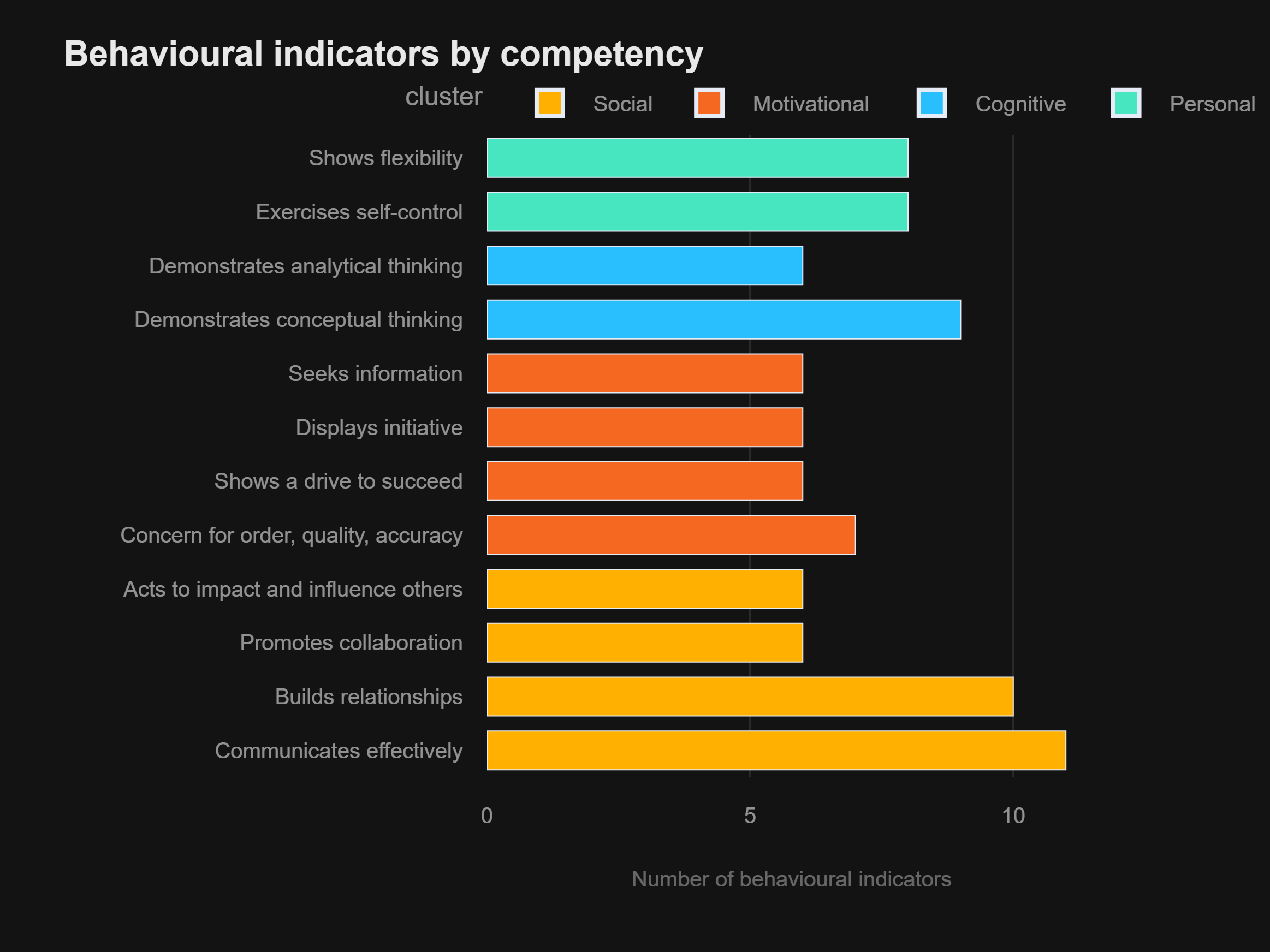
Autism-based competencies
‘A more functional, behaviour-based approach’
Lorne Hartman, primary researcher of the project (along with second researcher Samantha Hancock of Western University and PhD student Samuel Plotnick), says their autism-based competency model uses familiar labels, but grounds them in autistic workers’ real workplace experiences and strengths.
This can be effective for autistic job candidates and eventual employees because it gives them a realistic idea of what expectations will be for the role they’re applying for, leading to better job role fit and less turnover.
“It specifically speaks to the kinds of challenges that autistic employees experience … dealing with communication issues, cognitive overload, maintaining their composure in the workplace, L. Hartman says.
“Yes, the employer has needs and skills that they're looking for, but it's also important for job candidates to be able to get a realistic sense of what the actual job looks like, in terms of behaviours and competencies.”
The competencies can then be integrated into selection assessments and used to develop performance management methodologies, he adds, wherein managers can base their feedback on demonstrable competencies.
“So it's a much more functional, behaviorally based approach,” he says.
“Competent HR managers will develop these kinds of tools and selection assessments, only after they've done a rigorous analysis of what the actual behaviours are that people need to demonstrate to be successful.”
Gen Z and the rise of the neuro-majority
According to research collaborator Tracy Powell-Rudy, VP of corporate engagement at Integrate Autism Employment Advisors, the timing of this work aligns with a demographic shift employers can’t afford to ignore.
A 2025 report by Integrate looking into inclusion of neurodivergent employees, more than half (53%) of Gen Z individuals currently identify as neurodivergent, and by 2030, the group “will dominate the workforce.”
Powell-Rudy adds that Gen Z are statistically less likely to apply for jobs at companies that don’t provide mental health support for neurodivergent employees, and that many of them are in the workforce now experiencing that lack of support.
“They'll be the neuro-majority in four years,” she says. “Companies need to start thinking this way. This is a business imperative for them, to be able to successfully attract and retain this talent.”
The Integrate report, Autism Employment Advisors’ 2025 report, Future-Proofing Your Business: The Case for Neuroinclusion, also states that Gen Z is shaping job design along similar lines that the autistic employee competency model suggests: “78% of Gen Z prioritize workplace flexibility—a common neurodivergent accommodation” the report says, along with clearer expectations and structured hiring practices: “The business case isn’t such a tough sell anymore.”
With Gen Z scoring high on the neurodiversity scale, and quickly becoming the dominant demographic group in the workplace, employers should be adopting neurodivergent-aware practices now, Powell-Rudy explains.
“There's an opportunity cost … there's the loss of productivity that you're having, and the replacement costs when these individuals are not successful in their environment,” she says.
“This is going to happen organically as well, but the companies that adopt these things, these competencies, that read this research, that incorporate this into their processes now, they're going to have a competitive advantage.”
Business case – and leadership
The Integrate report describes a “war for talent” in which “75-85% of autistic individuals are unemployed or underemployed” even as employers struggle to fill roles, and concludes that companies that invest in neurodivergent hiring tap “an underutilized, highly skilled workforce” while improving retention.
Inside organizations, B. Hartman frames the business rationale in terms of better decisions, and not just for neurodivergent employees. Non-autistic individuals, he says, can also appreciate and benefit from clearer communication practices, such as written follow-ups after meetings and more explicitly-stated expectations.
Therefore, the neurodivergent employee competency model can be universally applied, the researchers believe.
“Compared to implicit social cues or behaviors associated with self-control … it emphasized planned breaks, or management of cognitive load, and I have to believe that's not just helpful for autistic people,” B. Hartman says.
“I think ‘normal’ neurotypical people would also benefit from explicit written instructions, or planned break times … the idea here is not to set up some sort of separate hiring pathway for autistic people, or a separate accommodation environment. I think there's an opportunity here for universal design.”