
'I think a lot of men are feeling threatened, and… we're feeling a kickback,' says expert offering insights, tips on balancing inclusivity and competitiveness
Mark Zuckerberg caused a stir recently when he promoted the need for more "masculine energy" in the workplace.
The Meta CEO talked about the corporate world being “culturally neutered” and while he mentioned he has three sisters and three daughters, Zuckerberg said “masculine energy… is good… but I think corporate culture [is] really trying to get away from it.”
“Having a culture that celebrates the aggression a bit more has its own merits that are really positive.”
While the Facebook founder admitted to podcaster Joe Rogan that both feminine and masculine energy are important, he also said the idea that “masculinity is bad” is taking things too far.
“We kind of swung culturally to that part of the… spectrum where it's all, ‘Okay, masculinity is toxic, we have to get rid of it completely.’”
Zuckerberg’s comments follow a wave of media coverage and social media posts over the past couple of years covering the rise of “toxic masculinity.”
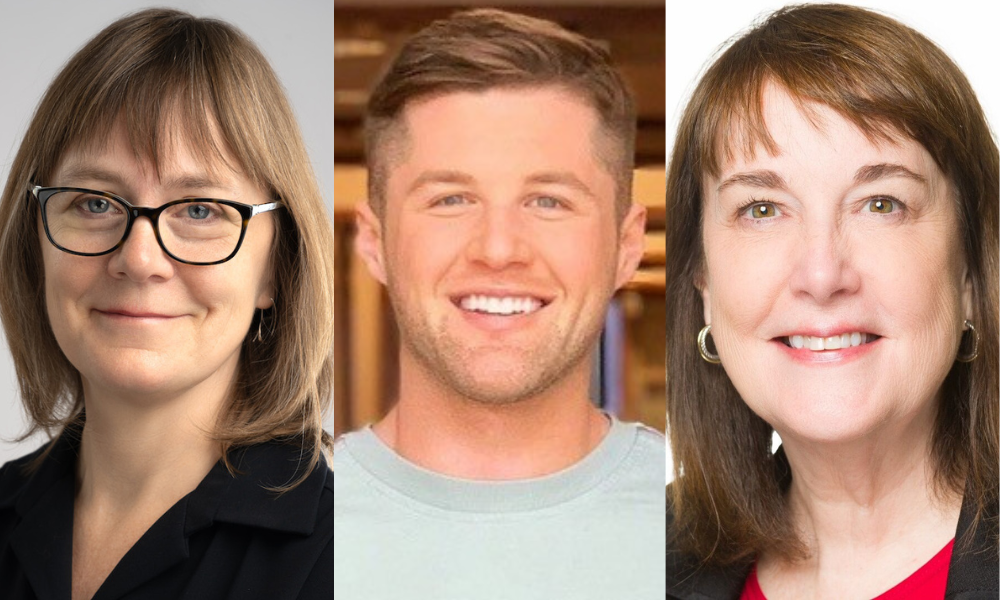
To better understand the implications for workplace culture and leadership, we spoke with three experts—Jennifer Berdahl, Adam Stanaland, and Ellen Taaffe—for insights on the challenges organizations face in balancing competition and inclusivity, as well as the ways HR and leadership can foster healthier work environments.
Why masculinity is being reasserted
In trying to understand what’s behind the heightened focus on masculinity, Jennifer Berdahl suggests this trend is part of a broader backlash.
“I guess researchers would just call it backlash… against DEI programs and growing awareness of inequality and discrimination and how it manifests and perpetuates itself,” says the professor of sociology at the University of British Columbia.
“The backlash is triggered by the progress that has been made, in some respects.”
These DEI programs suggest those with privilege should be sensitive to other people's experiences and positions, she says.
“That must be really frustrating, it must feel like being gagged. If you're used to being able to just say and do whatever you want as you grow up, and then you enter the workplace, and, suddenly, you can't just be an insensitive jerk.”
Berdahl further notes that some of this backlash stems from the way DEI programs are implemented.
“The most cynical implementation of a DEI program is to just put somebody in as window dressing, or not necessarily prioritize merit, but prioritize identity, and particularly an identity that might not be qualified for a position, but might still signal the willingness to do the bidding of those in power.
“That generates resentment against these programs by underrepresented groups as well because they're being cynically implemented.”
‘Precarious manhood’: Men feeling pressure
There’s also the concept of “precarious manhood,” which is the notion of a status that men and boys must earn, and any insults to their masculinity can lead to aggression, says Adam Stanaland, assistant professor of psychology at the University of Richmond.
“The flip side of that is that research has found that people consider womanhood to be more biologically ingrained. That's not to say that certain women's femininity can't be threatened, but when you ask, ‘What does it mean to be a woman?’ people mention things like ‘Oh, to be a mother’ but for men, it's more about this social proving concept.”
There’s a pressure being felt by a lot of men, which lead to fragile masculinity, he says.
“I think a lot of men are feeling threatened, and I think combined with these pressures to continue to be the person who's supposed to be the provider, the protector of the family unit, all of that accompanied with women and racial minorities moving into these leadership roles at increasing rates, we're feeling now a kickback.”
The challenge of ‘masculine defaults’
Stanaland — among many others — is reluctant to use the term “toxic masculinity,” suggesting it can have the effect of demonizing masculinity and push people away from wanting to change.
However, many workplace cultures still operate under what he describes as a "masculine default."
“It's kind of the opposite of what Zuckerberg is saying [where] the traits and characteristics valued in most workplace organizations are masculine traits.”
In the US, for example, maternal leave tends to be much longer than paternal leave, he says: “That's sending a message right there that there's this gender difference in how we expect men and women to take care of children. So that’s kind of perpetuating these masculine norms… at a policy level.”
Stanaland says that these defaults create challenges for both men and women.
“It pushes women out and makes it kind of a double-edged sword for women, where it's not only harder to conform to those norms, because that's not the way women are socialized, but also, when women do try to engage in those things, they can face challenges because they're violating stereotypical femininity norms.”
Berdahl points out that masculine defaults often extend to workplace social events such after-hours drinks or associating able-bodied people with this idea of masculine strength and athleticism.
“All those defaults are just built into organizational norms and expectations. So, that’s why having a really diverse group of employees helps to break those defaults… [and] also breaks down the privilege associated with traditional forms of masculinity — and thus the backlash,” she says.
“The more you start pointing out ‘Hey, this masculinity has some issues with it,’ then I think there's this huge backlash against that, and this attempt to reassert it and reclaim it and decentralize it.”
‘Masculinity contest culture’ in the workplace
HR professionals and business leaders should be aware of how masculinity contest culture—where dominance, competitiveness, and aggression are rewarded—can shape workplace environments.
“[There’s] the continual pressures on men to prove their manhood at work, and the consequences of that, both for the men and everybody in the organization,” says Berdahl.
“It's kind of like a winner-take-all way of thinking: ‘Your gain is my loss,’ and status and promotions are gained through demonstrations of masculinity, which may or may not be related to what is actually constructive for the work at hand or the organizational mission.”
She explains that these environments reward behaviours that are not necessarily conducive to business success.
“That could be being able to talk over people and dominate in meetings, taking credit for other people's ideas. It could even be physical, like running a marathon or being tall — things that are associated with success and power are conflated with our image of a ‘real man,’ so people start emulating those things, whether it’s whiteness or wealth.”
That masculinity contest is also about suppressing emotions, other than anger and pride, and prioritizing work over everything else, like family or community.
“It’s all about fattening that paycheck and getting that promotion and everything else be damned,” Berdahl says. “These kinds of norms have infused the workplace.”
This can lead to a toxic situation where both men and women report lower job satisfaction, higher rates of burnout and low psychological safety — which is important for creative and innovation, she says.
“Everybody has to try to compete in this masculinity contest. It's just that women don't usually win, and racialized men usually don't win. Anybody with something missing from what's considered the essential ingredient usually doesn't do very well in these contests.”
Promoting psychological safety
To combat these negative trends, Ellen Taaffe emphasizes the importance of psychological safety, where employees feel secure enough to be themselves without fear of repercussions.
“When I hear terms like ‘masculine fragility,’ certainly that might mean someone feels a bit threatened by the changing workforce, but it also might mean that men feel like they're walking on eggshells, and they don't want to make a mistake,” says the clinical associate professor of management and organizations at the Kellogg School of Management.
A majority of men value diversity and value people who are unlike them as well, she says.
“But I think in the changing world, there's some fear of making mistakes, and so [it’s about] creating a safe place where everyone has a shot, there's clear criteria of what it takes to get to the next promoted level, that companies have a clear definition of their values as a company, in that they live them and act upon them, so that all people can fit within that and are valued.”
Taaffe suggests that anonymous employee feedback is a key tool to gauge how people feel, and an emphasis on collaboration is also important for teamwork as we move towards a less hierarchical business model and flatter organizations.
“There's too much happening in the business world. Things are changing too fast. We have to collaborate. We can't do it all on our own. And I think that has been stereotyped as softer, and maybe that means more feminine, but it's really what any leader and great team member needs to succeed in the business world,” she says.
Ultimately, HR professionals and leaders need to balance assertiveness with inclusivity. Taaffe argues for a shift toward leadership styles that incorporate both traditionally masculine and feminine traits — to “take care and take charge.”
“If we work in really stereotypical kinds of associations with the feminine — being other-oriented and maybe being more caring and sensitive and relationship-focused and advocating for others — while men — the masculine energy, stereotypically, is about being more aggressive and task-driven and maybe self-promoting too — in a way, we need all those things.”
Leadership: setting an example
There’s also the challenge of “plurastic ignorance,” in that employees are reluctant to openly admit they don’t like something because that’s the norm, says Berdahl.
“It's kind of like being the guy at the table who tells another guy that the joke was sexist — nobody wants to be that person.”
So it’s about making people feel safe in their work environment, emotionally or psychologically, in terms of expressing new ideas or making mistakes, she says, citing one study that looked at an oil platform workers who weren't comfortable admitting they had made a mistake, which led to accidents.
It’s about creating a culture of collective safety, she says.
“Coming in and just saying, 'Masculinity is bad' isn't going to work, obviously. But, telling people ‘We have this problem in this organization, and we need to get people to feel safe doing this,' would be a much more effective intervention.”
Berdahl notes that leadership has a crucial role to play; for example, in a work environment with sexual harassment.
“If you're trying to prove that you're a man, then one way to do so is by objectifying or telling sexist jokes and doing those kinds of things — leaders can really step in and stop those kinds of practices and norms in a way that other employees can't do. So, [it’s about] signaling that that's just not acceptable, or that's not funny.”
HR can help train leaders on the role they play in debunking some of these norms, or showing their own vulnerability and uncertainty, she says, and “basically … going against some of these norms themselves.”
Consider messaging and masculinity
HR and leadership can also in more broadly is thinking about the messages they are sending to employees, be they explicit or implicit, says Stanaland.
“Companies can sometimes, accidentally or unintentionally, plan events that are centred around men, such as a golf outing or virtual golf outings… which is very masculine coded.”
Or if a man takes parental leave, there may be snide comments from co-workers, he says.
“We have to watch out for the messages that are being sent by supervisors, by co workers and stuff like that, that they aren't perpetuating these masculine defaults in the workplace.”
And having more women in leadership positions is also important for this change to happen, says Stanaland: “When we have equal numbers of men and women in leadership positions, then employees see these gender notions challenged.”
“We know from research that encouraging individual people to take on a diversity of gender characteristics in the workplace is actually what leads to better outcomes.”



