
'People gravitate to somebody that is confident in how they show up and is intentional and consistent'

Personal branding is key to advancement for many women, judging by the results of a recent survey.
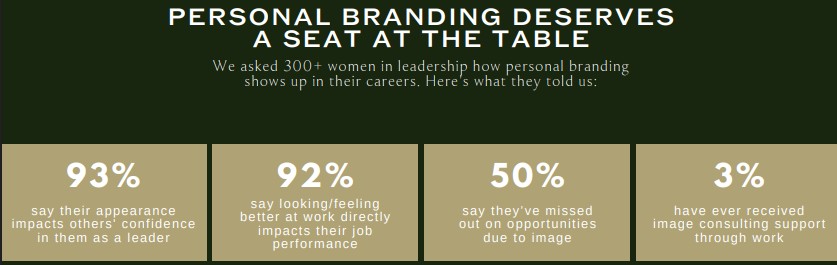
A strong majority (93%) of women say their apperance impacts others' confidence in them as a leader.
Similarly, 92% say looking or feeling better at work directly impacts their job performance.
Another 50% say they've missed out on opportunities due to image, finds a survey of more than 300 women by COSTIGAN, an image consultancy.
A strong personal brand and executive presence are critical tools for women aiming to advance into leadership roles, according to the firm's experts.
“Personal branding or executive presence… is often really dismissed as superficial. But we really believe it’s a strategic tool… the earliest form of the way that you communicate who you are as a leader,” says Julianne Costigan, founder of the image consultancy COSTIGAN, in an interview with Canadian HR Reporter.
Overlooking the importance of this branding can be detrimental to the careers of women navigating career transitions, such as returning from parental leave or stepping into new roles, according to Alexa Espinosa, head of operations-business development at COSTIGAN, in the same interview.
“The consequence of not putting an emphasis on executive presence is that they go unsupported at these companies and their credibility and authority may not be perceived as clearly simply because their image doesn’t yet reflect their leadership or their skill set."
Women are less likely than men to apply for leadership positions when the roles are associated with higher salaries, according to a previous report. And Canadian women are less likely to be managers than those in the U.S., Mexico, France, according to another study.
Personal brand 'signals credibility'
While both experts stress that physical appearance should not be a measure of leadership ability, a consistent and authentic personal brand can “signal that readiness and that credibility and that alignment,” says Costigan.
“People gravitate to somebody that is confident in how they show up and is intentional and consistent.”
While big-name companies are investing in workers’ executive presence, such as Google, Meta, Salesforce, and Scotiabank, says Espinosa, it's still uncommon.
“Very few companies address what leaders—especially women leaders—actually need to really develop that executive presence we’ve been talking about,” she says.
Some of the efforts can include executive presence coaching, styling for career transitions, or brand and image strategy sessions that can be a part of a group activity, according to Espinosa.
“If companies can really start to offer more of those tools for their women leaders, they’re going to really help them and propel them forward and, really, they’re going to feel supported in their roles, and in turn, just become a way stronger leader for themselves, for their team, for the company."
Investing in female leaders
Costigan emphasises the business case for investing in executive presence coaching, noting that only seven per cent of C-suite positions are held by women, so visibility is important.
And that is good for business, says Costigan.
“When employees feel that they’re being invested in and cared for, it naturally makes them feel more loyal, bring their A game, and really eat and breathe the culture, which is such an important part of running a successful business these days.”
The share of women in leadership positions in Canada slowly rose in years past, but it has also dropped to pandemic levels recently, according to separate studies.



