HR leader Rima Toor didn't plan on a career in HR — or mining — but now can't imagine being anywhere else
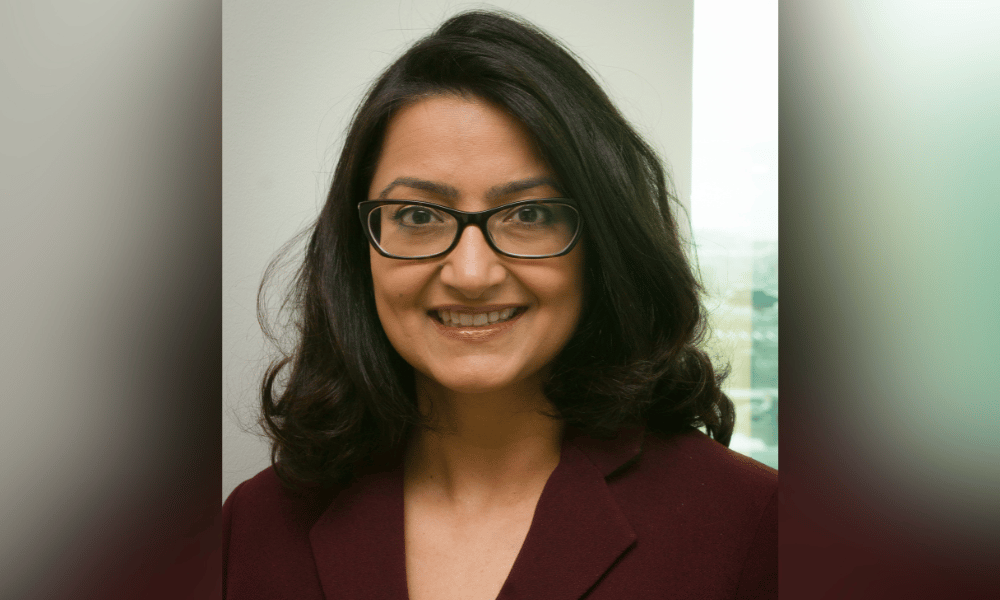
“HR is that piece of the business that no one notices when everything's running smoothly and it is only at a time of crisis or when a problem arises that, all of a sudden, HR is missed,” says Rima Toor, head of HR at KGHM International.
It's an observation shaped by more than two decades in human resources, including leadership roles in consulting, banking, mining and manufacturing, and the COVID-19 pandemic.
During those tough times, HR teams were responsible not only for safety protocols but for employee wellbeing, mental health, family responsibilities and maintaining connections among employees working remotely, she says.
“These are the unspoken activities that HR does that are not at the forefront and are not even noticed until something happens.”
Today, Toor is focused on many of those same fundamentals: ensuring compliance, governance, fair compensation, benefits and strong people practices while helping position the organization for future growth.
But she did not initially plan on a career in human resources. Toor graduated with a Bachelor of Arts degree in sociology during a recession when opportunities for new graduates were scarce. While working on a contract assignment with United Way, she found herself interacting regularly with HR professionals and became curious about the profession.
After conducting informational interviews, Toor was given consistent advice: gain formal HR education and practical experience. That led her to enrol in Humber College's HR program.
Focused on learning
And that focus on learning has remained a constant throughout her career.
“I think continuing education is important not only for HR, but for everybody,” she says. “It is a way that broadens our thinking, our mind, keeps us current with the changing environment and allows us to think in a way that best adds value to the organizations in which we work.”
At the same time, Toor believes many professional development offerings fail to meet the needs of experienced HR leaders.
“There seems to be this gap in the industry for senior-level folks,” says Toor. “People delivering the materials can be junior in role, junior in expertise, and not, I would say, influential and certainly not well-versed in the material.”
While early-career professionals benefit significantly from traditional HR courses and seminars, those programs often do not provide the depth, business perspective or advanced thinking required by senior practitioners, she says, citing the need for more theory and business savviness.
Lessons from consulting
Before moving into senior, in-house HR leadership roles, Toor spent several years in consulting, including with Hay Group and KPMG. The experience shaped how she approaches business and HR leadership today.
“I think everyone should do a stint in consulting, it teaches so many things,” she says, such as client management skills, professional discipline and the ability to communicate complex concepts in practical language.
“For instance, if clients are not HR folks or people who are not familiar with the content that you're presenting, or CEOs or other businesspeople, then you really need to show value for the services that you're providing in a way that everybody understands. So, I think that piece of consulting is fantastic.”
Consulting firms also invest heavily in training and professional development, exposing employees to skills and processes that are difficult to replicate elsewhere, she says.
“I would absolutely not give up my consulting experience. I think it's made me who I am today.”
Variety of HR leadership roles
However, Toor says she prefers to work in-house to build deeper relationships, to add value and to be consistently involved with one particular business.
To that end, she became manager of executive compensation at Scotiabank in 2005 where she worked for six years. That then led to her first stint at KGHM International as manager of total rewards, followed by seven years at Yamana Gold as director of total rewards and employee engagement.
In 2020, Toor joined IAMGOLD as senior director of DEI, employee experience and total rewards for nearly three years. She eventually returned to KGHM to take the HR leadership role in August 2025.
The company’s head office is in Vaughan, Ont. and it has operations in Nevada, Arizona, Ontario and B.C.
Mining ‘suits me very well’
Although Toor says she originally expected to move across different industries throughout her career, circumstances kept bringing her back to mining: “I realized it suits me very well.”
While public discussion often focuses on the environmental and social challenges associated with mining, Toor believes many people overlook both its community contributions and its role in supporting modern life.
“If we want to use a cellphone, then we need to mine; if we want to drive cars and use computers, we need to mine; if we need technological advancements in hospitals, we need to mine — it has become a necessity,” she says.
Part of the attraction is the industry's “dynamic” nature, she says. Mining companies often move through multiple phases of exploration, development, construction and operation, creating new business challenges and opportunities at every stage, according to Toor.
“There are very highly educated, highly talented people who all have a mission.”
While that culture appeals to her, it is the industry's impact on communities that has left the strongest impression. Every mining company she has worked for has invested in improving the communities where it operates, whether through skills development, infrastructure projects, schools or healthcare facilities, according to Toor.
“These are communities that typically would not receive any of that support in any other manner,” she says.
Modernizing mining in Canada
Toor also points to efforts across the sector to increase representation and introduce more progressive workplace practices in communities where such initiatives may not previously have existed.
“Things are changing because mining companies are putting in programs that are advancing representation either by gender or race or ethnicity,” she says.
“There's such good work that mining does and that appeals to me greatly. It makes me proud to be part of the industry.”
Toor says perceptions of mining have not always kept pace with reality. While many people still picture physically demanding work performed with traditional equipment, modern mining operations increasingly rely on technology, automation and advanced systems, she says.
“There are so many opportunities to look at technology and robotics and create mining of the future,” says Toor.
“A person can be sitting behind… multiple screens and controlling three or four trucks that have no drivers.”
Building HR from the ground up
The mining industry presents unique challenges for HR because many companies begin as small exploration ventures with only a handful of employees and no need for HR, according to Toor.
“HR steps in as soon as the number of people start increasing, and that's typically with the development of a project and once it becomes operational,” she says.
As a result, HR leaders often find themselves creating foundational programs and processes from scratch.
“The focus is typically on the critical things. The focus is on fighting fires, day-to-day fires,” Toor says.
Recruitment, onboarding, performance management and other core practices must often be established before organizations can focus on more advanced initiatives such as succession planning and leadership development, she says.
“Many times, there's a lot of the foundational work that needs to be done before one can progress… My list of priorities is very, very long.”
Toor says she’s stepping into a role that was vacant for some time and now there’s a need to continue maintaining HR while also building on it. The immediate focus is ensuring strong governance, compliance and employee support systems while laying the groundwork for future development.
“Are we taking care of the basics? Are people paid fairly, effectively? Do we have benefits in place?” says Toor of her priorities. “Looking at all of those components and reviewing and ensuring we're competitive… are we developing people properly?"
That development also includes first-line managers, says Toor.
“How do we go about doing that while still ensuring that the company is making money and we are operating with the highest health and safety protocols, focusing on advancing our sustainability efforts?” she says.
“The priorities are vast… it's never ending.”