
Dalhousie University causes a stir in targeting visible minorities
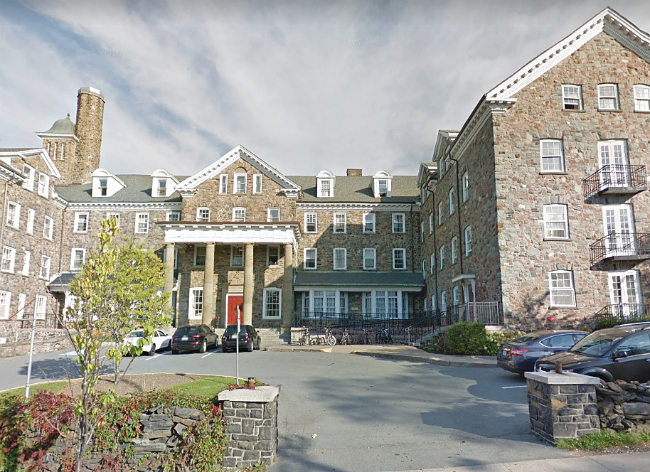
Dalhousie University caused a bit of a stir recently when word got out the Halifax-based school would only choose from job candidates who were minorities in its quest to hire a new vice-provost of student affairs.
“In keeping with the principles of our employment equity policy, and with an aim to increase the representation of under-represented groups at Dalhousie, this search for a new vice-provost (of) student affairs will be restricted to racially visible persons and Aboriginal Peoples at this time,” said Carolyn Watters, provost and vice-president academic chair, in a memo.
The current vice-provost, Arig al Shaibah, is leaving the university in March.
The school’s move was somewhat understandable, given a 2015 census report conducted by the university that found just 11 per cent of employees were racially visible and 1.9 per cent of staff members were classified as Aboriginal.
The data also showed the university had made continued improvement in its workforce representation and the overall numbers of persons with disabilities and women reflected labour market availability, said a 2016 memo from the school.
“However, there remain significant gaps with respect to racially visible persons and Aboriginal persons overall. In addition, gaps continue to exist for all groups (women, racially visible persons, Aboriginal persons, persons with a disability and sexual and gender minority groups) in certain occupational categories.”
Human rights concerns
Clearly, the university wanted to create a more diverse workplace with its latest recruitment effort, but is this kind of targeted effort legal?
Under the Nova Scotia Human Rights Act, this type of measure is protected, according to Gail Gatchalian, partner at Pink Larkin law firm in Halifax.
Other human rights statutes “prohibit discrimination on the basis of, for example, race in employment, but right after that it states that that prohibition does not apply to preclude something like this measure that has as its object the amelioration of the conditions of disadvantaged individuals,” she said.
“The Canadian Charter of Rights has a similar provision in section 15-2 so, in short, employment equity programs that are designed to promote substantive equality are perfectly legal.”
“Racialized and Indigenous people suffer from systemic discrimination in society generally but also in the university you can see the statistics cited about the under-representation of racialized and Indigenous employees at Dalhousie compared to the population, and it gets even worse as you get higher up in management levels,” said Gatchalian.
In Nova Scotia, the act specifically carves out an exception to discriminatory practices “to not preclude a program where activity that has as its objective the amelioration of conditions of disadvantaged individuals or classes of individuals,” said Paul Martin, a partner at Matthew Wilton & Associates in Toronto.
“The university, to my mind, was well within (its) rights to proactively design such an application process.”
While this is true, it cannot be done by any means necessary, according to Sunira Chaudhri, a partner at Levitt Employment and Labour Law in Toronto.
“The step taken to ameliorate a lack of diversity must be reasonable. To exclude a group based on race is the exact opposite of what that provision allows for. It encourages divisiveness rather than inclusion.”
Dalhousie’s hiring scheme might be ripe for a human rights challenge, she said.
“In my view, it is discriminatory and, hence, illegal. Employers are not entitled to discourage candidates from applying for a job based on race.”
While the goal of Dalhousie may be laudable — to increase minority hiring — the university is going about it the wrong way, she said.
“Many employers seek to increase diversity within their ranks. That must be encouraged. It is not the right approach, however, to turn away prospective candidates based on race. Employers should assess their own hiring process if diversity is an issue and determine where racialized barriers exist. Blind screening and employing a more diverse hiring committee are tools more and more employers are using to address lack of diversity.”
However, the chances of a court or tribunal actually declaring the practice illegal are low, said Gatchalian.
“I don’t see a human rights commission taking such a complaint or any such complaint being successful because (of) the exception for employment equity programs — it doesn’t say that in the human rights act, it says, ‘ameliorative’ program,” she said.
Legal precedents
A precedent to this type of discriminatory hiring practice was established in 1987, with CN v. Canada (Canadian Human Rights Commission), where the Supreme Court of Canada considered a complaint against CN Rail about systemic discrimination against women and women being severely underrepresented in blue-collar jobs.
“The human rights tribunal in that case ordered CN to hire one woman for every four jobs until they reached a certain percentage in the workforce,” said Gatchalian.
The Supreme Court also “talked about the importance of providing substantive equality for disadvantaged groups, and upheld that order by the human rights tribunal under the Canadian Human Rights Act,” said Gatchalian.
“This is a movement that will keep going until we achieve acceptable levels of employment equity.”
Dalhousie University wants to get out in front of its staffing issues by only allowing certain individuals to apply, and the courts should back the effort, said Martin.
“It can support what Dalhousie is trying to do as a proactive measure. And we see the courts are certainly prepared to sanction such programs. And I expect any challenge to Dalhousie’s program will not be successful, given the legislation and the court’s desire or inherent authority to order such programs,” he said.
“It’d be odd that a court would not support Dalhousie’s decision when, in the past, they’ve sanctioned these very types of programs.”
Another case that also suggests Dalhousie is well within its rights is the 1999 British Columbia (Public Service Employee Relations Commission) v. BCGSEU or the “Meiorin” case, said Martin.
“In this case, the Supreme Court held that employers designing workplace standards owe an obligation to be aware of both the differences between individuals and differences that characterize groups of individuals. And… the court held that employers must build conceptions of equality into workplace standards,” he said.
“In both of those cases, we have the courts signalling that employers are to take these measures and certainly in the (CN v. Canada) case, the court upheld the Canadian Human Rights Tribunal decision to impose such a hiring program on the employer.”
Governments have also weighed into the debate about establishing more diverse workplaces, said Martin.
“Since 1996, the Employment Equity Act has required employers to take progressive measures, including reviewing barriers and planning to achieve equity for four designated groups that are defined on that act, and those four designated groups are women, Aboriginal people, members of visible minorities and persons with disabilities,” he said.
“They have a commitment to compliance with the Federal Contractors Program which falls under the Employment Equity Act and this program requires employers with at least 100 employees who do business of $1 million or more with the federal government to achieve and maintain a workforce that is reactive of the labour market for the four designated groups.”
Excluding candidates
But could otherwise qualified candidates be excluded if Dalhousie continues this practice?
Absolutely, said Chaudhri.
“My guess is that leadership positions at Canadian universities are scarce and that there are a limited number of candidates that are even qualified to apply. The goal of increasing diversity should run parallel and not in opposition to finding the best candidate for the role. Revisiting selection criteria and encouraging more candidates to apply with more diverse backgrounds is likely the better approach.”
But this targeted approach will benefit the university, said Gatchalian.
“It’s only going to attract and retain employees and students from racialized and Indigenous groups, if those individuals in those groups can see themselves reflected in the workforce and, in particular, in the leadership of the university.”
It’s an appropriate response, said Martin.
“It shows that Dalhousie certainly takes seriously these types of issues, and is willing to take proactive steps to remedy these types of situations and I think that they should be applauded for doing so.”



