Panel of experts at HRFest Canada say domestic talent alone cannot sustain Canada's workforce
"Were it not for immigration, we'd be seeing a workforce and a population in decline."
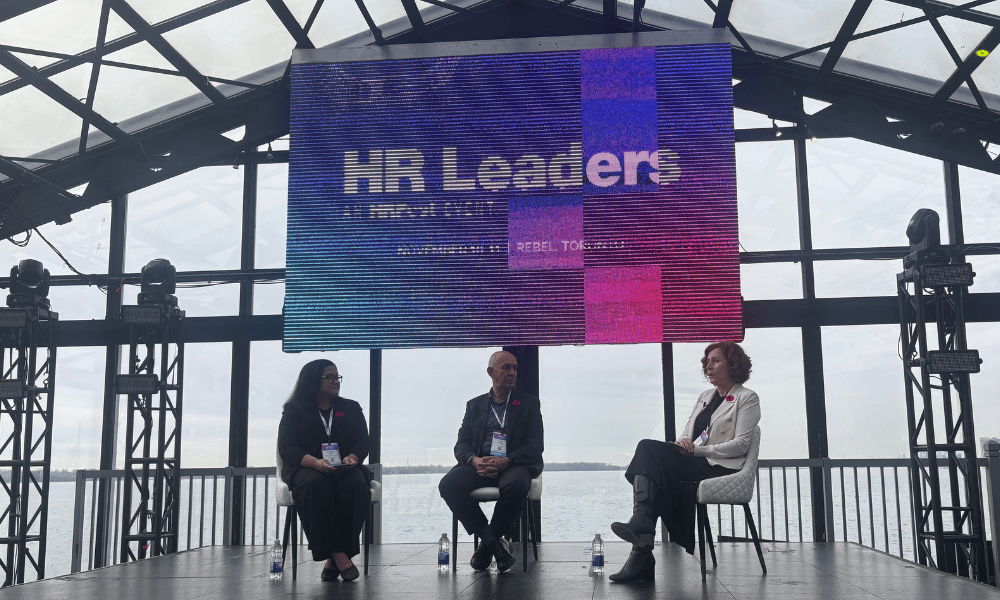
So said Pedro Antunes, chief economist at Signal49 Research in Toronto, at HRFest Canada, held Nov. 11 at Rebel in Toronto.
With about 300,000 baby boomers exiting the labour market annually for retirement alone, and the country losing more people than it is replacing through domestic growth, immigration has become a critical part of workforce planning, Antunes says.
He joined Cosmina Morariu, managing partner at Fragomen, for the session "Immigration and Global Talent: From Policy Shock to Strategic Advantage," moderated by Elizabeth Navia, director of global mobility and human resources governance at Great-West Lifeco Inc., to discuss what employers need to think about when it comes to immigration and workforce planning.
Domestic talent shortage
Antunes points to the government's shifting decisions around non-permanent residents as a key example of the pressure employers are facing.
He says the government at one point had plans to bring down the 7.6 per cent of foreign workers, international students and refugees to five per cent, exiting close to one million people. Realizing the strain that would put on employers, Canada's immigration levels plan has since changed, Antunes says.
The recent federal budget now plans to transition over 380,000 non-permanent residents into permanent status in the next three years.
While that transition is underway, there is still a gap for higher-skilled workers in Canada, Antunes says.
"You don't necessarily have Canadian school leavers wanting to take those roles. So, there's all this pressure happening there — and then there's AI, and the implications on higher-level roles like professional services roles.”
Canada's credentialing problem
But accessing those talent pipelines comes with its own challenge — especially around credentialing in Canadian immigration policy, Antunes says.
There has been a longstanding issue with accepting people into the country due to the point system Canada requires — something he calls a disconnect, especially when there is a push for non-permanent residents to fill what are permanent job roles.
According to the government of Canada, the Comprehensive Ranking System (CRS) is a points-based system used to assess and rank candidates in the Express Entry pool. The system considers factors such as education, language ability and work experience, and those who rank out 1,200 points may be invited to apply for permanent residency.
"I think we need more flexibility all around — given how the labour market is going to change with AI adoption and the growth agenda, we need to be less biased about getting a university degree versus getting skilled trades," he says.
With new jobs constantly being created — especially through AI — and displacement happening across sectors, that flexibility is needed more than ever, Antunes says.
"We need to be more effective. We need to be just to people. If we need people with lower skills, then allow them to come up through the permanent residence stream."
HR mobility needs to be reactive
For HR leaders, the question is not whether immigration is necessary but whether organizations are ready to act on it, Morariu says.
In today's climate, HR mobility is no longer about recruitment — it is about building resilience, she says.
"HR and mobility used to come after a business decision was made — now it needs to be before".
For talent shortages and immigration specifically, that means HR needs to be asking the right questions early — such as where is the talent, how do we get it, and is the business process resilient enough to sustain it, Morariu says.
"Do you have a crisis management team in place to address any issues that are coming up? Are you looking at your workforce 12, 24, 36 months in advance — or are you just recruiting for vacancies?"
Why real-time workforce data matters
Crisis management is especially important during times of geopolitical tension, Morariu says. Part of that resilience is having the data and knowing where the organization's talent is at any given time — whether employees have proper work authorization and whether expiry dates are being tracked.
For example, if an organization has full staff in Ukraine, do they have the capability to send a team to get everybody out into a safer location?
"What would be that safer location? Do you have access to the international data to move them to another location that is much safer?" she says.
Without that data, HR cannot make informed business decisions or assist leaders with the decision-making process.
Being intentional about international talent
The door to international talent is always open — but the challenge for employers is being more intentional about which workers they bring in, Morariu says.
"For employers, it actually means moving from 'Do I need a permit for this candidate?' to 'Do I have the talent pipeline to sustain my growth, and where do I find that talent pipeline, and am I diversifying enough my talent pipeline?'" she says.
Even when companies look to international talent, they often overlook other pools — such as displaced talent, meaning people who have been forced to leave their home countries.
"They have the right skills, they can play a role in this, and the vacancy is very hard," Morariu says.
Part of that intentionality means employers have to question whether bias is shaping their hiring decisions, she says. "People need to move past that negative labeling and really act as if they are hiring anybody else."
Being selective about talent is more important than ever since Canada is not the only country competing for global talent, Morariu says.
We as a country are competing for talent with other countries. So, who gets to the end result faster? That's where we need to be more agile when it comes to change.”