
‘Our new normal says we are not going to forget about what happened in the past, but use it to build a better future’: Experts provide tips for post-trauma support
The tragic school shooting in Tumbler Ridge, B.C. made headlines around the world. Nine people were killed, including a teacher and five students, and 27 were injured following an attack on Feb. 10 by a local teenager who also killed her mother and stepbrother.
This kind of mass shooting is rare for Canada but inevitably raises questions about how people recover in a workplace after such a traumatic event.
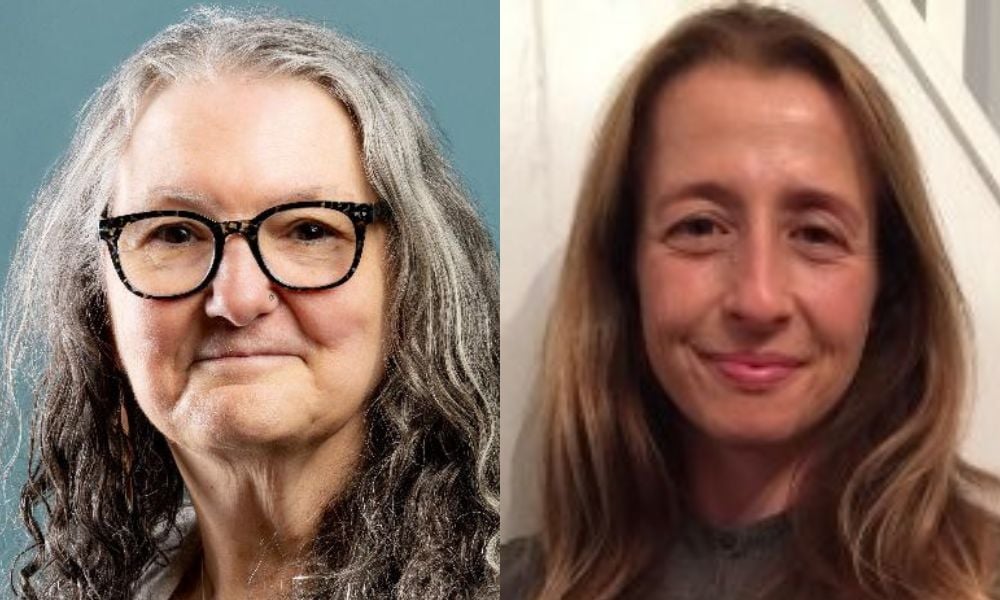
Two researchers talked to Canadian HR Reporter to share their insights on best practices in this regard.
For Jo Billings, professor of psychological trauma and workplace mental health at University College London, the underlying principle is that “people know themselves and we want to allow people's natural recovery mechanisms to really work here.”
Rosemary Reilly, full professor in applied sciences at Concordia University, says this kind of incident can have a destructive force on the community, where people are angry, suspicious and close their doors, from post-traumatic stress.
“The other [response] is post-traumatic growth [where] we are able to grow from this experience. We are able to be better, we're able to leap ahead, not fall behind… And that only happens when people engage openly.”
Something is better than nothing
So, where to begin? When it comes to healing from such traumatic events, there are a variety of interventions. And Billings indicates there are no easy answers in an area that still needs more research.
“Workers certainly value being offered something… when staff have been exposed to a really traumatic event,” says Billings. “To not offer something is seen by staff as the organization not being supportive or validating their distress.”
She says one challenge is that the quality of the research on these interventions isn't great, with many studies using simple pre‑post designs. In those, they give questionnaires to people in the immediate aftermath of a trauma, then deliver the intervention — such as Critical Incident Stress Debriefing (CISD), Trauma Risk Management (TRiM), Psychological First Aid (PFA), cognitive behavioural therapy (CPT) or group counselling — and weeks later, they measure distress, she says.
“As we know, most people are going to be very distressed in the immediate aftermath of something and most people will recover naturally over time,” says Billings.
“Four weeks later, when their scores have gone down, people are saying, ‘Isn't my intervention the best thing because look everyone's got better?’… We're not sure where interventions are necessarily better than just letting people recover naturally over time.”
Recognizing, validating distress
Billings’ team’s work has identified some common elements to successful interventions. For one, after the immediate focus on people’s basic needs, such as food, water and shelter, it’s recommended to take a “light touch” approach in the first few days after a workplace trauma.
That might mean just checking in, she says: “How are you doing? Are you okay? Do you need anything?... How are you sleeping?”
It is about “recognizing and validating the distress that people understandably might be experiencing but also the expectation of recovery,” says Billings.
“A lot of what we're doing in that early space is just facilitating and enhancing people's natural coping mechanisms.”
On the question of whether people should revisit what happened, she says views are divided.
“Some people are quite firmly of the belief that you shouldn't go back over what's happened; some people think that's really important,” says Billings.
“What we've seen in our research is quite interesting is that the people on the ground who've actually been there on the front line exposed to the trauma are more likely to say that they really value the opportunity to share their stories and talk through what's happened.”
Making talking acceptable
Her team has concluded that letting people talk if they want to is helpful, she says.
“But it wouldn't necessarily be the role of the facilitator… to try and elicit some blow‑by‑blow account of what happened or dig too deeply,” says Billings. Instead, sessions should be “very much led by the group or the individual where they're at… to talk at a level and depth that feels acceptable to them.”
Confidentiality is another major concern she has heard repeatedly, both inside and outside an organization. People worry that revealing their struggles may have a negative impact on their job or benefits, for example.
“Thinking about confidentiality is really important… [in] talking to the people you're working with about how confidential information will be maintained, what the limits are to confidentiality.”
A follow‑up within a few weeks also becomes important after people have had time to take stock of the situation because, oftentimes, grief is a delayed response, says Reilly.
“Six months down the line, the leader in an organization may walk into someone's office and they're sitting on the floor sobbing because something happened that just triggered an immediacy of their grief.”
Voluntary vs mandatory interventions
The question of whether to mandate post‑incident sessions is complicated, says Billings.
“On balance, people say being able to attend voluntarily is better,” she says. But when her team dug down into frontline workers, they said maybe it should be mandatory.
“Several people said to us ‘If it wasn't mandatory, I wouldn't go,’” says Billings. “So, it's a bit of a tricky one.”
Her position is that, overall, being voluntary is better, but with strong encouragement and accessibility, so, for example, the sessions are not offered at the end of a 12‑hour shift when people are exhausted or an inconvenient location.
“If someone really, really doesn't want to talk about it, we wouldn’t necessarily intervene straight away, we know that might be problematic. But we would be… encouraging people to use their own social support networks, to use peer support with colleagues, encouraging them to use their natural coping mechanisms as well as possible.”
Reilly says that whenever people are forced to do things, it never turns out well: “The key is to have a variety of services, both therapeutic and non-therapeutic, available.”
She also cautions against a “hierarchy of grief,” where those who are injured or on the front lines are automatically seen as more entitled to trauma support than others.
“How we grieve is very individual. How we experience that hurt and harm is very individual. And it's all valid,” according to Reilly.
Leaders as grief role models
Reilly’s work on the Dawson College shooting in Montreal looked at how institutional leaders helped the community recover.
At the heart of that is “grief leadership,” where people role model “the appropriate expressions of grief,” says Reilly, recalling the actions of a director general after the Dawson shooting who was overwhelmed emotionally.
“We tend to think, ‘Oh, leaders need to be strong, they need to be unemotional.’ And, actually, having leaders show emotion gives people permission that they actually can grieve.”
Without that validation, communities risk what Reilly calls disenfranchised grief — meaning it “isn't valued, it's not socially recognized, it's not supported. And disenfranchised grief has a lot of both physical, mental and emotional difficulties that emerge when it's not allowed to be expressed,” she says.
HR’s role with grief support
And the experts say HR cannot shoulder that responsibility by itself after incidents such as that at Tumbler Ridge.
“One compassionate, authentic HR person cannot hold the grief of an entire organization. They will burn out and experience what is called compassion fatigue,” says Reilly, adding that even trained psychologists are taught to expect they will be “completely overwhelmed.”
Reilly adds that the burden of care must be shared across the organization. Those allies don't have to be trained psychologists, but they can be good peer helpers, “trained in compassionate listening,” she says, “to sit with a person and just hold the space while that person expresses their grief.”
People who have been through grief often say that was the most powerful thing, says Reilly: “They just let me cry. They just let me fall apart. They just let me talk about the person I lost."
She does not believe everyone needs a rigorous, two-year training program or a degree in psychology, but argues they should be aware of the different kinds of grief, understand the appropriate responses to people's grief, and, above all, be “authentic and genuine.”
“They could be trained in compassionate listening. They can be trained to just be able to sit with a person… while that person expresses their grief. They don’t have to do anything except witness it,” says Reilly.
If they do not know what to say, she suggests they say, “I don't know, but I want to know how things are doing with you.”
Leaders may fear that asking someone about their loss will make someone feel worse, but the opposite is true, says Reilly. “They're thinking about it all the time… And when you don't ask about it, it's like you're not recognizing it. You're not acknowledging it. You're not valuing the fact that this person is grieving.”
Creating spaces and rituals to grieve
Reilly says grief leadership is not just about visible emotion from the top — it is also about designing spaces and rituals for the whole community.
This means grief leaders “support the creation of rituals, of gatherings, placing flowers or teddy bears, or some kind of marking at the site of the trauma,” she says.
In practice, that can look like prayer vigils or secular gatherings “where people mark the occasion and say that it is OK for us to be sad. It is OK for us to grieve. It is OK for us as a community to acknowledge that we are hurting,” she says.
Reilly stresses the importance of doing so “with professionals who can support psychologically the holding of that space [and] religious leaders who can help support the holding of that space.”
“Creating those kinds of spaces and allowing those that kind of grief to be acknowledged is very important,” she says.
From creative healing to a ‘new normal’
When it comes to “getting back to normal,” Reilly argues that the timing and conditions matter.
“It becomes part of the conversation that happens after there are alternate methods of healing that are put into place,” she says, such as “non‑stigmatizing rituals or activities” that can help people process what has happened.
That could mean creative activities that allow people to express their feelings and how they're experiencing the situation, such as poetry groups or cooking meals together.
“All of these kinds of things can lead to healing,” says Reilly. “And then once that healing happens, then it's like, ‘Well, how can we get back to our new normal?’”
For her, the “new normal” is also built by acting on lessons learned from the traumatic event, such as the need for more mental health services, anti‑bullying programs and compassionate peer programs.
“Putting those into place can then help us go to a new normal because our new normal says that we are not going to forget about what happened in the past, but we are going to use it to build a better future,” she says. “And that comes from people who feel as if they're healing and have put into place those things that may address some of the issues that kind of led to what happened.”



