
Advance approval process meant to streamline access for workers without safety risks, not those with potential impairment and accommodation considerations: tribunal
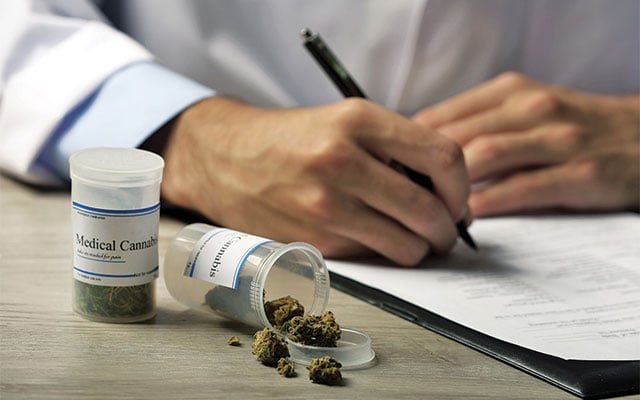
The Alberta Human Rights Tribunal has dismissed a worker’s discrimination complaint stemming from his rejection from a program designed to give workers pre-approval for access to worksites due to a failed drug test. The tribunal found there was no need to even investigate accommodation options, as this would present too much of a safety risk and undermine the purpose of the program.
Brad Everitt was a construction worker in Alberta who often worked on industrial and oilsands worksites that were considered safety sensitive.
For projects at these types of worksites, it’s standard procedure for the owners to require all workers to pass a drug and alcohol screening test — referred to as a pre-access test — before they are permitted to work on the sites.
Workers must undergo a pre-access test before entering each site on which they work.
Because such testing involves waiting for the results, it sometimes causes delays in workers reaching the worksites. This led to several stakeholders in the industry to develop a rapid site access program (RSAP) — a voluntary program that provides pre-qualification to workers to get them on safety-sensitive worksites more quickly.
The RSAP is run by Homewood Health, a provider of addiction treatment and employee assistance programs.
To enroll in the RSAP, there are various requirements including passing an enrolment drug and alcohol test and then agreeing to random testing whenever they are working on a worksite. Those who pass the enrolment requirements are given active dispatch status and worksite owners waive their pre-access test.
Workers who don’t qualify for the RSAP or don’t participate are equally eligible for jobs on safety-sensitive worksites, but they must go through the regular pre-access test to gain access to the sites.
Worker consumed medical cannabis
Everitt decided to enrol in the RSAP, but when he took the pre-enrolment drug and alcohol test, his results were well over the allowable limit for tetrahydrocannabinol (THC), the psychoactive ingredient in cannabis. The threshold for the test was 50 nanograms per millilitre and Everitt tested over 1,200. Everitt had arthritis and he was given medical authorization to use cannabis to treat the symptoms, but he was denied enrolment in the RSAP because of the test.
Everitt had used cannabis recreationally for 25 years and for more than a decade had used it to help with his arthritis pain. After his regular family doctor wouldn’t prescribe it, Everitt sought out a physician who was willing to do so.
The physician saw him for brief visits and based his prescription on Everitt’s description of his pain, prescribing 600 grams of the drug — though the Health Canada guideline was 150 grams.
Everitt filed a human rights complaint, claiming that Homewood discriminated against him based on his medical disability when it refused to enrol him in the RSAP.
He argued that his positive drug test was the result of medical cannabis for his arthritis, meaning his medical condition was a factor in the decision to keep him out of the pre-authorization process for worksites.
Everitt acknowledged that he would have to stop consuming cannabis to attend worksites and workcamps and had done so before to procure work, but having to take the pre-access test before starting every job could be a problem.
He also testified that he wanted to enrol in the RSAP so he could avoid pre-access tests and hoped Homewood wouldn’t conduct random testing while he was on a worksite.
Everitt also argued that Homewood should have attempted to accommodate him based on his disability with an individual assessment into what he was capable of doing while consuming medical cannabis. As a regular long-term user of cannabis, Everitt believed he was capable of performing his job duties while consuming medical cannabis and he had never had an accident.
‘Reasonable and justifiable’
The tribunal found that there was no discrimination because it was “reasonable and justifiable” for Homewood to determine eligibility for the RSAP based on the worker’s drug test due to safety concerns.
The goals of the RSAP were “to efficiently get workers onto safety-sensitive sites while assuring site owners that these workers will meet the site owners’ expectations about safety,” said the tribunal.
In pursuit of this goal, the enrolment standard for the program and its drug testing threshold were to meet the safety requirements, make it easier for workers who didn’t present a safety risk to reach worksites and assure potential employers that the worker already passed a screening test with no need for additional assessment.
While Homewood made no attempt to accommodate Everitt with an individual assessment and adopted a “blanket policy” toward all applicants, “the nature and context of the RSAP” meant that substantive accommodation wasn’t possible, said the tribunal. To try to accommodate a worker who tested positive for drugs and presented a risk of impairment on worksites was undue hardship and created an unacceptable safety risk on safety-sensitive worksites.
The tribunal pointed out that the RSAP was a voluntary program and being a part of it wasn’t a condition of employment by any contractor or a condition of membership in any union in the industry.
The program wasn’t a requirement for a worker to be considered for a job and it didn’t give those who successfully enrolled any kind of preferential status. All the RSAP did was streamline the process for some workers to be approved as safe workers, where it made sense to do so.
Balanced approach
In Everitt’s case, it didn’t make sense to accommodate him in the RSAP, said the tribunal in Everitt v. Homewood Health Inc., 2019 AHRC 36 (Alta. Human Rights Trib.). If he needed and wanted an individualized assessment, Everitt could choose not to participate in the RSAP and go through the regular pre-access test process — where individualized assessments are done when positive drug tests occur.
In such instances, a medical review officer reviews the test results and considers factors related to prescription medication and the worker’s responsibilities at the worksite.
The outcome of such assessments could result in no access to the worksite, full access to the worksite or access with a safety advisory and restrictions.
This approach allowed a balance between any accommodation considerations and the safety of the worksite.
In addition, the tribunal noted that providing individualized assessments in the RSAP would also be undue hardship because the program had no ability to assess the safety risk of a worker without a job description or knowledge of the working conditions.
“While it is reasonable to assume that the worker will be dispatched to a safety-sensitive workplace, nothing is known at the enrolment stage about environmental conditions, hours of work, type of equipment the worker will be operating, specific responsibilities and so on,” said the tribunal.
“[Homewood’s] pre-approval of a participant worker with a safety advisory would not be meaningful for addressing safety risks because [Homewood] does not have critical, relevant job information in order to conduct the assessment necessary.”
The tribunal determined that accommodation with an individualized assessment was “at odds with the RSAP’s streamlined process,” which was “to get workers on site faster without sacrificing safety.”
Any possible ways to accommodate Everitt or any other worker who failed a drug test would put safety at risk, particularly since accommodation was available in the regular pre-access testing process.
Normally, some exploration of accommodation options would have to be made before undue hardship could be proven, said the tribunal, but this was “one of the rare situations where the evidence supported that no substantive accommodation was possible without incurring undue hardship.”
There was no doubt that cannabis was an impairing substance and worksite owners could not be guaranteed that a worker was safe if a user was allowed to skip the regular pre-access testing — especially someone who tested so much over the limit.
Alhough Everitt may have believed that he was safe to work while consuming medical cannabis and had done so without incident in the past, that lack of an accident didn’t mean he wasn’t a risk, said the tribunal.
“[Everitt’s] cannabis use posed an unacceptable safety risk in the circumstances,” said the tribunal in dismissing Everitt’s human rights complaint.
“Accordingly, [Homewood] could not have accommodated [Everitt] by enrolling him in the RSAP without incurring undue hardship.”



