Automaker seeks injunction over alleged blockade at idled Brampton plant as sale to Roshel nears
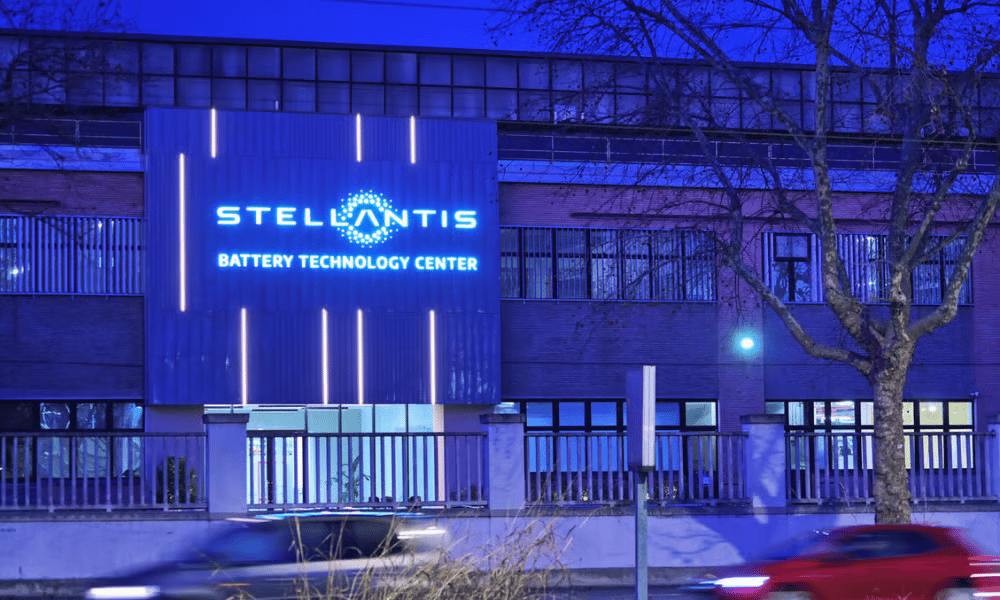
Stellantis has gone to court to force Unifor away from the gates of its idled Brampton, Ont. assembly plant, turning a months-long fight over the facility's sale into a legal test.
The Stellantis lawsuit, filed Nov. 19 in the Ontario Superior Court of Justice, seeks an injunction ordering Unifor to stop blocking access to the automaker's idled Brampton, Ont. assembly plant.
The claim targets the union, Unifor National President Lana Payne and Unifor Local 1285 plant chairperson Ardis Snow, plus two unnamed alleged participants, according to the Canadian Press (CP).
None of the allegations has been tested in court.
What the statement of claim alleges
At the heart of the claim is an environmental assessment tied to the plant's sale to Roshel, a Canadian armoured vehicle manufacturer, which retained consulting firm Pinchin Ltd. to begin the work on Nov. 9.
On that first morning, Stellantis alleges, union representatives "blocked entrances with trucks, pylons and individuals carrying Unifor flags" and declined to leave after the company called police, as quoted by CTV News.
The company says the obstruction has not let up. "To date, Unifor has continued to obstruct access by persons associated with the environmental work, and Pinchin has not been permitted to perform the environmental work," the claim states.
As a result, Stellantis wants the court to declare that the union trespassed and "obstructed the lawful entrance to and exit from the premises," according to CBC News. It argues it "is suffering and will continue to suffer irreparable harm and other losses," CP reported. Further delay, it says, threatens a deal expected to close in mid-December 2026.
How the Brampton dispute reached court
The court action is the latest turn in a dispute building for more than a year. Canadian HR Reporter (CHRR) covered Unifor's warning that Canadians stand to lose jobs as Stellantis moves Jeep production to the United States.
Tensions sharpened after Stellantis signed a memorandum of understanding with Roshel on Sept. 11, 2026, as Unifor pressed Ottawa over its role in the Stellantis Brampton sale. That report noted Roshel chief executive officer Roman Shimonov's pledge of first consideration for laid-off Unifor members.
Unifor then secured a strike mandate over the Stellantis Brampton plant dispute.
Unifor, Ottawa and Stellantis dig in
Each side is standing firm. "Unifor is currently blocking access to the Stellantis Brampton Assembly Plant, preventing scheduled environmental assessment work at the site," Stellantis spokesperson LouAnn Gosselin told CTV News.
Payne countered that the union is protesting, not obstructing. "Unifor has been demonstrating in support of Canadian jobs at the Brampton plant throughout the past year," she said, adding, "The sale of the plant to Roshel is unacceptable to our union," according to CP. Caught in the middle are the more than 2,200 workers who remain on lay-off pay, CTV News reported.
Stellantis also faces pressure from Ottawa. On Nov. 12, 2026, Industry Minister Mélanie Joly served Stellantis with a notice of default under its 2022 federal funding agreement. "Basically they have 30 days or else, of course, we'll sue them," Joly told reporters, CP reported.
What the Stellantis lawsuit means for HR leaders
Courts weighing such requests apply well-established principles. David Doorey, a professor of work law and labour relations at York University in Toronto, has written that "all picketing is lawful unless it is done in a manner that is unlawful."
Doorey analyzed a 2023 injunction granted to Metro against a Unifor warehouse blockade. He explained that Ontario's Courts of Justice Act generally requires an employer to seek police help before a labour injunction can issue, and that courts weigh irreparable harm, among other factors.
The Stellantis claim cites both a call to police and irreparable harm.
The Metro order did not ban picketing outright. Doorey noted it still allowed picketers to delay trucks for up to five minutes to share information, which he described as an example of how courts balance the Charter-protected right to picket against others' right to be free of unlawful conduct.