Two Canadian HR leaders say backup alert systems, phone calls and in-person conversations kept work moving — while some workers appreciated break from tech
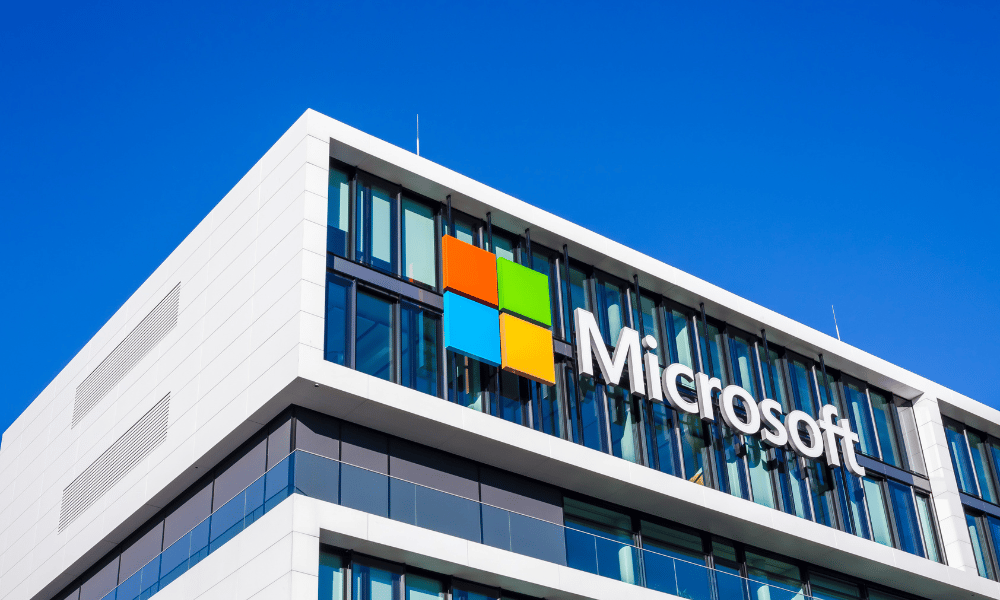
Microsoft has declared a "Code Red" to overhaul how it prevents and responds to major service failures, after an outage on Nov. 12 and 13 left many of its customers without email for a full day, Reuters reported.
Two employers told Canadian HR Reporter that independent alert tools, phone calls and face-to-face contact filled the gap, and that core HR processes such as payroll and job offers carried on.
"It was certainly a reminder of how much we rely on technology in today's workplace, but also that sometimes the simplest forms of communication can be incredibly effective," says Peter Halder, head of people at BASF Canada.
What went wrong for Microsoft
The outage hit governments from Australia and Japan to the United States, delayed trading firms and disrupted airline communications, according to Reuters. It took down Exchange Online, Microsoft's cloud-based email service, along with Outlook, Teams, the Copilot AI assistant and other Microsoft 365 products.
Microsoft blamed the failure on an undetected Windows scalability defect introduced in July, and said the incident was not related to cyber activity or AI agents. CEO Satya Nadella publicly apologized for the disruption.
It was the most customer-impacting incident in the history of Exchange Online, Jason Henderson, president of Microsoft's M365 Core group, said in a memo to staff, according to Reuters. Never before had so many customers been without email for so long, he wrote.
Inside Microsoft's 'Code Red'
"Code Red means that this is the highest priority work for our team," Henderson wrote in the memo, sent on Friday, Nov. 20.
"Unfortunately, all the work we have done over the years was not sufficient to protect us on Thursday," he said, adding that he had conducted an extensive review of the organizational and structural issues behind the failures, said Reuters.
In a separate memo on Monday, Amanda Silver, Microsoft's corporate vice president overseeing M365 Core and Work IQ, said engineers had to work through a "fog of war" as the outage unfolded. Responders exchanged more than 11,000 messages across 11 Teams chats and struggled to keep a cohesive picture of hypotheses and decisions, because diagnostic data was scattered across fragmented internal tracking systems, she said, according to Reuters.
Microsoft has set a target of worldwide resolution within an hour in future incidents, and plans to use AI agents to help engineers diagnose system health data more quickly.
BASF Canada: teams adapt quickly
At BASF Canada, which has just over 1,000 employees at 10 sites across the country, the outage caused some disruption, but teams adapted quickly, Halder told Canadian HR Reporter.
"Our independent internal alert system allowed us to keep employees informed through pop-up notifications and messaging on our intranet," he says.
Employees stayed in touch by phone and, because of the company's hybrid work model, through in-person conversations and meetings. Some meetings and interviews were rescheduled.
"Our core HR processes were not delayed, as these systems operate independently from Outlook," says Halder.
High Liner Foods: plants keep running
At High Liner Foods, the Lunenburg, N.S.-based frozen seafood processor, the impact was mostly limited to corporate offices, and work continued as usual in its plants, Sarah Rajmoolie, vice-president of human resources, tells Canadian HR Reporter.
"Our people are at the heart of everything we do, so our focus was on keeping employees informed and supported," she says.
The company used processes and tools designed to reach employees when its usual channels go down, sharing updates as the situation developed. Its HR processes, including payroll approvals and job offers, were not affected, says Rajmoolie.
While some work could continue, employees also connected with colleagues in person, used office amenities or took a change of pace while they waited for updates.
"Time away from screens to recharge and connect can also be an important part of a balanced workday," she says.
Break from inbox
Halder also saw an upside to a day without email.
"While some may have welcomed a brief break from their inbox, it also created an opportunity to focus on the work at hand without the usual stream of email notifications and responses," says Halder.
At High Liner, the plan is to learn from the experience.
"Ultimately, disruptions like this help us strengthen our approach, and we will continue building on what worked, so our teams stay connected and resilient," says Rajmoolie.