
Case involved two men working for different employers at same construction site
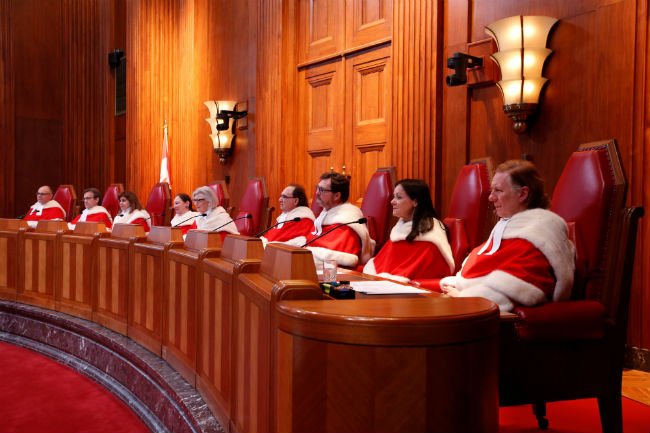
As the modern workplace continues to evolve, employers might want to take note of a recent decision by the Supreme Court of Canada that seems to expand protections against discrimination.
In essence, the court said the Human Rights Code in British Columbia is not limited to protecting employees solely from discriminatory harassment by their superiors in the workplace. In fact, it “prohibits discrimination against employees whenever that discrimination has a sufficient nexus within the employment context... This may include discrimination by their co-workers, even when those co-workers have a different employer.”
In addition, the court spoke of “employee vulnerability (that) stems not only from economic subordination to their employers, but also from being a captive audience to other perpetrators of discrimination, such as a harassing co-worker.”
The case is important in that is “preserves a wider scope of jurisdiction” for the Human Rights Code, and it keeps the code more relevant to the kinds of workplaces that are out there, according to Margot Young, professor at the Peter A. Allard School of Law at the University of British Columbia in Vancouver.
“It’s less rigid a notion of how power circulates in the workplace, in a way that affects how people experience that workplace in terms of dignity and rights and flourishing.”
There’s a recognition of the changing nature of the workplace, where non-traditional relationships are, nonetheless, subject to prohibition against discrimination, she said.
“The nature of the Canadian workplace is evolving, and the gig economy, and we see much more of these non-formal connections experienced by co-workers on the same workplace site. And there doesn’t have to be this traditional employer-employee relationship for powers that reflect ongoing inequities in our society like race, sexual orientation, abilities, culture, and so on, to be deployed against individuals in a really damaging way.”
The Supreme Court is showing it understands the different way power dynamics can work in the workplace, said Robin Gage, partner at Arvay Finlay in Victoria, “so the vulnerability of an employee to discrimination and harassment can take a lot of forms, and both gendered power and racialized power, all those different kinds of things, as well as who the perpetrator might be.”
This decision is hugely important within the context of what’s happening in society right now, particularly with the greater focus on harassment, said Sandra Guarascio, a partner at Roper Greyell in Vancouver.
“This case increases the prospect of liability and responsibility for the things that come up.”
However, to be clear, the case “does not say an employer of a perpetrator is automatically responsible for the actions of its employees or the perpetrators,” she said.
“In fact, this particular case is specifically about an individual perpetrator being held accountable for his actions, and not being able to hide behind the fact that he works for a different employer than the complainant.”
Two employers, one worksite
The case involved “S-M,” who worked for Omega and Associates Engineering in 2013 as a civil engineer on a road improvement project. Omega had certain supervisory powers over employees of Clemas Construction, the primary construction contractor on the project.
Clemas employed Edward Schrenk as a site foreman and superintendent, however, he made racist and homophobic statements against S-M on the worksite. When S-M complained to Omega, it asked Clemas to remove Schrenk from the site, and Clemas did so. But Schrenk continued to be involved on the project in some capacity, and the harassment continued, so his employment was terminated.
S-M then chose to file a complaint against Schrenk before the British Columbia Human Rights Tribunal, alleging discrimination on the basis of religion, place of origin and sexual orientation. But Schrenk said the Human Rights Code had no application because the two men were not in an employment relationship.
The tribunal disagreed and denied Schrenk’s application, as did the British Columbia Supreme Court. But the Court of Appeal allowed Schrenk’s appeal and said the tribunal erred in law by concluding it had jurisdiction over the complaint.
Most recently, in its Dec. 15 decision, the majority of the Supreme Court of Canada disagreed with the Court of Appeal.
In essence, the Supreme Court said the Human Rights Code was not limited to protecting employees solely from discriminatory harassment by their superiors in the workplace. In fact, section 13 “prohibits discrimination against employees whenever that discrimination has a sufficient nexus within the employment context,” said the court.
“This may include discrimination by their co-workers, even when those co-workers have a different employer.”
In determining if there is a sufficient nexus, the Human Rights Tribunal must conduct a contextual analysis that considers: whether the respondent was integral to the complainant’s workplace; whether the impugned conduct occurred in the complainant’s workplace; and whether the complainant’s work performance or work environment was negatively affected.
“The contextual interpretation furthers the purposes of the code by recognizing how employee vulnerability stems not only from economic subordination to their employers, but also from being a captive audience to other perpetrators of discrimination, such as a harassing co-worker,” said the court.
To be clear, the issue is not whether Schrenk’s alleged conduct would amount to discrimination, said the court.
“No one disputes this. Rather, the question in this appeal is whether such discrimination was ‘regarding employment.’”
Determining whether conduct amounts to discrimination “regarding employment” is supported by the text, scheme and purpose of the code, it said. And the words “regarding employment” indicate that the discrimination at issue “must be related to the employment context in some way, without solely prohibiting discrimination within hierarchical relationships.”
Consequently, the tribunal did not err in concluding Schrenk’s conduct was covered by the Human Rights Code, even though he was not S-M’s employer or superior.
“As the foreman of the worksite, (Schrenk) was an integral and unavoidable part of S-M’s work environment. (Schrenk’s) discriminatory behaviour had a detrimental impact on the workplace because it forced S-M to contend with repeated affronts to his dignity. This conduct amounted to discrimination regarding employment: It was perpetrated against an employee by someone integral to his employment context.”
It should be noted three of the nine Supreme Court judges dissented with this decision, saying the workplace discrimination prohibition in the Human Rights Code applied only to employer-employee or similar relationships.
Shifting power dynamics
It’s about the power dynamic between a perpetrator and the complainant, which may be economic, as between a supervisor and an employee, or may involve another issue, said Gage.
“There does have to be a power issue, I think that’s what it’s aimed at, but it’s taking a broader look at what power could mean, and all of that it going to be contextual,” she said.
“The complainant still has to be an employee, and it has to be in the employment context, so there has to be that sufficient nexus, as the court calls it, between the behaviour being complained of and their employment. So the employer is no longer just responsible for the behaviour of their supervisors and the employee specifically, they’re responsible for a much broader category of potential perpetrators, and so who that might be is going to depend on the context and depend on the employment situation.”
If the dissent had been successful and read the phrase “regarding employment” narrowly — so it only covered people who are in a formal relationship with economic power like that between an employer and employee — the scope or coverage of the protection against discrimination would be considerably reduced, said Young.
“This tells us the majority of the court understands that there are other kinds of power that circulate in the workplace, not merely economic power, and that harassment between co-workers, from a worker to an employer, are equally damaging to dignity and well-being in the workplace, and our prohibition against discrimination needs to recognize that.”
It’s a decision that takes account of the context of the modern workplace, she said, “which is that many different kinds of power circulate in our society — power based on race, based on class, not just the formal economic class of someone being your boss — and all of those matter and shape the environment in our workplace.”
Employment law has always looked for situations where there’s a nexus, and an employer has an obligation to pay attention to what’s happening, according to Guarascio.
“In the modern workplace — where you’re looking at shared worksites, online conduct — those things really skew the boundaries of old-school thinking and employment, so it’s completely appropriate that the court is clarifying the breadth of the potential scope of responsibility.”
In this case, the court understands that the source of unwanted conduct could come from anywhere, whether that’s a customer, patron, client, co-worker, supervisor or contractor who’s on the premises, she said.
“The real focus needs to be remedial for the person who’s impacted by the conduct.”
The case says contextual analysis is especially relevant where discriminatory conduct persists, despite the fact that an employer has taken all possible steps to stop it, said Guarascio.
“It’s really looking at individual accountability.”
It also shows that those responsible for workplace conduct can include the employer or multiple employers at a shared worksite, she said, “and the specific individuals perpetrating the conduct are going to be held accountable for their actions or, in the case of employers, for their inaction in addressing the conduct.”
Another aspect of this involves the concept of vicarious liability, which can apply to organizations, and is being further imported into discrimination cases, said Guarascio.
“Vicarious liability applies if an employer sanctions or tasks an employee with doing an act, authorizes them to do it, and then that act is wrongful. But it can also apply in situations where an employee’s act is so connected with their employment duties that it’s considered a way of or a mode of doing their job.”
“So what courts try to get at there is that if a risk for a victim is basically created by the business enterprise of an employer, then the employer can be on the hook for that conduct.”
Lessons for HR
As a result of this kind of decision, employers should be proactive in having a healthy workplace without these forms of discrimination and abuses of power, according to Young.
“It means (employers) need to think seriously about their HR obligations and about cultivating a workplace environment that’s respectful not just between themselves and employees, but between employees, between experts or consultants brought into the office,” she said.
“It also means that co-workers now have some legal responsibilities to each other as well, and so there’s a need to let people know in the workplace that ‘You’re accountable for your discriminatory actions towards another.’”
The decision has applications for other sectors, such as the restaurant industry, said Gage.
“I’m hoping that this will be a note to employers that they should think about the sexualized atmosphere that they often have, and try to take proactive ways to make sure their employees are protected… because they, of course, as the employer, even if it’s their patron who does the discrimination, they may well be responsible themselves.”
While some might think this decision will open the floodgates to further human rights complaints, in some ways it’s actually very helpful for employers if they are diligent, said Guarascio, “because it’s creating space for an employer to establish that it’s not responsible for the conduct if it’s done the right things.”
If an employer provides training, follows policies, addresses inappropriate conduct, provides support to those in need — and it does all this appropriately — then it can say it’s not responsible for this, and it’s the individual’s who’s responsible, she said.



