Lawyers urge ongoing vigilance as legislation continues to take effect

A dramatic surge in requests for information and deadline extensions has marked the first major compliance year under Canada’s federal Pay Equity Act, as employers scramble to meet new obligations.
In looking at the recently released Pay Equity Commissioner’s 2024–2025 Annual Report, there’s been a surge in authorization applications, information requests and formal disputes.
The heightened activity to both the complexity of the legislation and the need for ongoing diligence from organizations, according to Jennifer Hodgins, partner at Norton Rose Fulbright in Toronto.
“I suspect that there's a lot of employers that have questions about not just the initial plan requirements but, going forward, questions about annual reporting requirements, maintenance requirements and even extension requests.”
Complexity and process hurdles
The report documents a 2,000% increase in authorization applications, with 465 requests in 2024–25 compared to just 21 the previous year. Of those, 320 were fully granted, one in part, and only eight denied.
“The majority were requests for an extension of the posting deadline (85%), which indicates a widespread need for flexibility during this initial complex implementation phase,” writes Lori Straznicky, federal pay equity commissioner.
Hodgins notes that the high number of extension requests was anticipated: “I know anecdotally, and certainly from many of those I work with, that… a lot of employers were unable to meet the Sept. 3, 2024 deadline, and so requested extensions — and the vast majority… have been granted.”
The reasons for the surge in extension requests are varied, but much of it comes down to the nature of the legislation, she says.
“The legislation is very prescriptive, not just in terms of the technical aspects of pay equity... but also in terms of the process you have to follow [which] has ended up taking longer for many employers.”
This includes getting a committee together that meets the composition requirements, providing training for the committee to fulfill its duties under the Act, and using external resources, if needed, says Hodgins.
“Many employers found they did need the assistance of external pay equity consultants, particularly given how technical pay equity can be... and then [needed] the committee to meet again and go over any information or outcomes that the consultant was helping with — all of that just takes time.”
'Deadlines might have snuck up on people'
The pay equity plans are a lot of work, agrees Alyssa Johnson, associate at Filion Wakely Thorup Angeletti in Hamilton — especially if you're a larger employer that has to look at all the job classes and figure out job-based information, conduct the analysis, put the plan together, and then allow a 60-day window for employees to review the pay equity plan before it's published.
“It's a lot of work to meet the components, and deadlines might have snuck up on some people, but it's good that these employers are reaching out to the commission and requesting the extensions to meet those deadlines — and it does seem like the commission was receptive to those requests.”
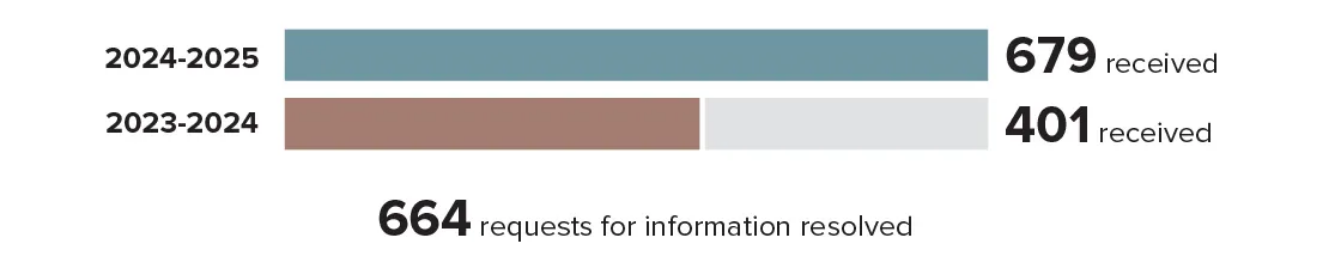
The PEC saw a 69% increase in information requests. In 2023-24, 401 requests were received, compared to 679 requests this fiscal year. Many inquiries centered on the pay equity plan process (35%) and the handling of disputes (32%).
Insights on multiple plans for pay equity
Another well-known reason for the delays is many employers requested authorization for multiple pay equity plans for one workplace.
Most of these requests have been denied, but recent decisions do provide insights, says Hodgins.
For example, successful employers have “very unique structures or very distinct divisions, even in a single entity, and that can be used to demonstrate the appropriateness of multiple plans.”
On the other hand, unsuccessful employers made requests that would divide employees by those represented by a bargaining unit, and those who are not, she says.
“Even in some cases where other workplace parties are in support of separate plans on that basis, the commissioner has been reluctant to and has, in many cases, not granted those types of requests on the basis it's dividing groups of employees in a way that the Act was purposely not created to do.”
The tribunal’s jurisprudence has a pretty high threshold for employers to meet the requirements for multiple plans, says Johnson — who adds a warning.
“One thing for employers to keep in mind is if they're requesting these authorization requests, the timeline continues while those requests are outstanding. So, you should still be taking steps to further your compliance while awaiting a decision from the commission in one way or another.”
Dispute resolution and legal precedents
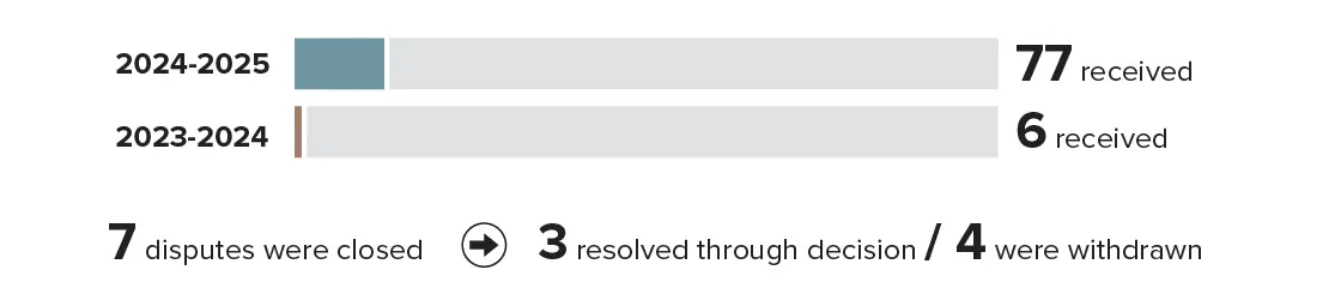
The pay equity commissioner’s report also noted a sharp increase in formal disputes, with 77 filed in 2024–25 compared to just six the previous year.
But the report says legal decisions are helping to clarify the legislative requirements and “carve the path forward in how the Pay Equity Act is applied.”
It points to two case that stand out:
- Public Service Alliance of Canada v. Bank of Canada (2024 PEC 29): Established the framework for what is “bad faith” and clarified employer obligations during pay equity implementation.
- United Steelworkers v. Canadian Imperial Bank of Commerce (2024 PEC 21): Defined “matter in dispute,” creating a framework for dispute resolution when developing pay equity plans.
The cases “illustrate some ambiguities that employers and unions and the workplace parties have had so far with that legislation,” says Johnson.
The first is about the interpretation of bad faith. If a workplace party has reasonable grounds to believe an employer acted in bad faith or in an arbitrary, discriminatory manner in carrying out its obligations under the Act, it can file an application to the Pay Equity Commission, she says.
“Bad faith includes an element of ill will and intention to mislead or deceive; arbitrary can be understood to include actions that are capricious or not based on reason or judgment and then discriminatory.”
In this case, the union alleged the bank limited the union’s participation to one member and an alternative on the pay equity committee — but the PEC found the bank’s conduct did not meet those thresholds, says Johnson.
The second case clarified the limits of the commission’s jurisdiction, she says.
“If the pay equity committee basically goes through the vote process and can't agree on something, or there's a tie, one of the parties can file a matter in dispute with the commission. And [in this case] the employer raised a preliminary objection, saying that the legislation says that the matter at issue… was in the jurisdiction of the pay equity committee to resolve, so that the commission did not actually have jurisdiction over the substance of the matter.”
The commission ultimately agreed with the employer that the act did not apply to that dispute, says Johnson.
Lawyers urge ongoing vigilance and preparation
Both legal experts say the lesson for employers is clear: compliance is not a one-time event.
“I would say employers want to remain aware of not only their initial obligations under the Act, so to post that first pay equity plan, but be cognizant of the ongoing requirements that are there in the legislation, including the requirement to file an annual report and in maintenance obligations,” Hodgins says.
Johnson echoes the need for ongoing attention.
“The first [annual statement] was due June 30 of 2025, and they're due on June 30 every year after the pay equity plan is posted,” she says, citing details that must be included such as: the date the employer became subject to the act; contact information for a specific individual the Pay Equity Commission can reach out to; whether the plan was developed with or without a pay equity committee; and details about the job value, comparison and compensation adjustments that should have been implemented to date.
Five-year deadline for updated pay equity plan
The annual statements and documentation are critical ahead of the next big deadline in five years to post an updated plan, says Johnson.
“If there's any changes in the workplace within that five-year interim — like changes to compensation structure or the duties and responsibility of a job class, elimination of a job class, or something that might affect the pay equity calculations — it may be good to do an update on the full pay equity analysis and make any changes to compensation or those pay equity adjustments at the time, rather than waiting for the end of that five-year period.
“Because at that five-year [mark], all those changes that you're going to have to make will be retroactive to when that change ultimately occurred. So, if you do it as the change happens, you're not backdating the more significant cost.”
That’s been seen in Ontario, for example, with its pay equity legislation and complaints going back decades, she says, so “it’s really hard to find or recreate that documentation.”
Johnson warns that the next compliance milestones will arrive quickly for employers.
“Just like the deadline for the initial posting felt like it came up pretty fast — three years went by very quickly for many — I suspect the five years leading up to the requirement to post an updated plan will also come quite quickly, and employers need to be thinking about that now, because for those that needed to have a committee in place, they will need to also have a committee to prepare the updated plan. They'll need annual snapshots of information.”
PEC: Valuable resources, enforcement
Both lawyers recommend employers make use of a wide array of government resources.
“The government has put out a lot of those information bulletins and guidance on specific subjects about the pay equity compliance, about comparing compensation, developing the pay equity plan, how to do the various steps in the pay equity process,” says Johnson.
Hodgins agrees the free resources are valuable for HR and employers.
“The Pay Equity Commissioner's Office has published a number of reference documents, including a legislative guide, policy and interpretation documents, as well as collaborated with another organization to create a training program on pay equity, on federal pay equity, in particular — all those resources are available on their website and tend to be quite helpful.”
However, there are some areas that are lacking, she adds.
“What is missing, in my view, at the moment, is further guidance on the maintenance requirements; [many of] those employers who have posted their initial plans are now ... turning their minds to maintenance and collecting information as required under the Act and preparing for that requirement to post an updated plan — and my understanding is there will be further guidance published on that, but it hasn't yet been done.”
Looking ahead, Hodgins expects enforcement to ramp up by the commission.
“At this stage, I would expect that they're focusing on encouraging compliance and promoting awareness of the act and obligations under the act. But as time goes on, I expect they will be moving forward with using their enforcement powers, including the ability to impose administrative monetary penalties.”