
Violations deserved discipline but dismissal too harsh: Arbitrator
An Ontario worker who was fired for urinating at work and multiple safety violations was reinstated with a suspension and disciplinary letter.
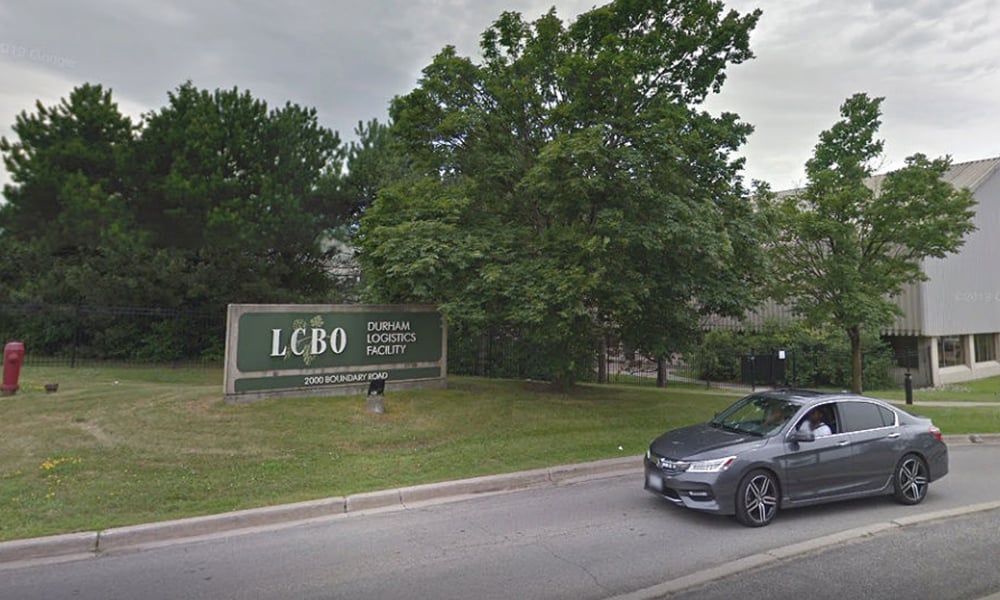
The worker was employed with the Liquor Control Board of Ontario (LCBO) as a seasonal order-filler in its Durham warehouse. He operated a machine known as a tunnel vehicle, which filled orders by travelling to storage bays.
In early November 2014, another operator reported the smell of urine and dampness on the step to enter the tunnel vehicle that the worker had just finished using. A janitor also reported a smell of urine in the area.
The operations supervisor and senior security guard checked video footage from the machine’s cab and saw the worker appearing to use his cellphone multiple times, which was prohibited in the warehouse. The worker also appeared to partially sit on the control arm of the machine, contrary to safety protocol. They also saw a couple of occasions when the worker didn’t attach his safety lanyard — a legislated fall-protection feature.
They didn’t see the worker urinate in the cab, though at one point the worker had his head down and his hands moving with his back to the camera.
A few days later, the supervisor’s boss told him that a car that looked like the worker’s had been driving dangerously in the employee parking lot.
Management met with the worker and the worker provided a doctor’s note explaining he had a medical condition that caused incontinence and he had wet his pants before making it to the washroom.
The worker acknowledged that he listened to music on his cellphone because the radio in the cab was broken. Normally, employees could listen to the radio and the worker said a previous supervisor had granted permission many employees to use their cellphones.
The worker also admitted that he sometimes forgot to reattach his lanyard after breaks, but he always quickly noticed it when he resumed working. He also admitted he had sat with one butt cheek on the control arm occasionally. He denied driving dangerously in the parking lot, as he was driving his cousin’s low-slung BMW. Because of speed bumps, potholes and sewer grates in the lot, he could only drive slowly, he said.
The LCBO determined that the worker had urinated at the entrance to the tunnel vehicle and this, combined with the other safety violations, warranted dismissal. The employer terminated the worker on Nov. 20.
The arbitrator found there was no evidence the worker purposefully urinated in the cab. The actions on the video interpreted as urinating were also consistent with using his cellphone and the worker had medical evidence that he had a condition causing involuntary urination. The only culpability was that the worker didn’t report his problem or tried to clean it up on his own.
The arbitrator found there was evidence — through the video and the worker’s admission — that the worker had worked without a lanyard attached and sat on the control arm. The worker said forgetting the lanyard was an error, but it was “a fundamental requirement of the job to employ the fall-restraint equipment,” said the arbitrator.
The worker’s use of his cellphone was also misconduct, as were stipulated by signs and employee orientation, the arbitrator added.
As for the unsafe driving, no one tried to identify who was driving the car and the worker’s claim that he was in a car that couldn’t do it wasn’t challenged. As a result, the LCBO couldn’t use the incident for discipline, said the arbitrator.
The arbitrator determined that dismissal was excessive and ordered the LCBO to substitute a one-week suspension for each of working without a safety lanyard and failing to report or clean up his unintentional urination, plus a reprimand letter for using his cellphone in the warehouse.
Reference: OPSEU and The Crown in Right of Ontario (Liquor Control Board of Ontario). Daniel Harris — arbitrator. Adrienne Couto for the employer. Ed Holmes for the employee. March 4, 2020.


