
Transit operator didn’t show checks worth privacy invasion
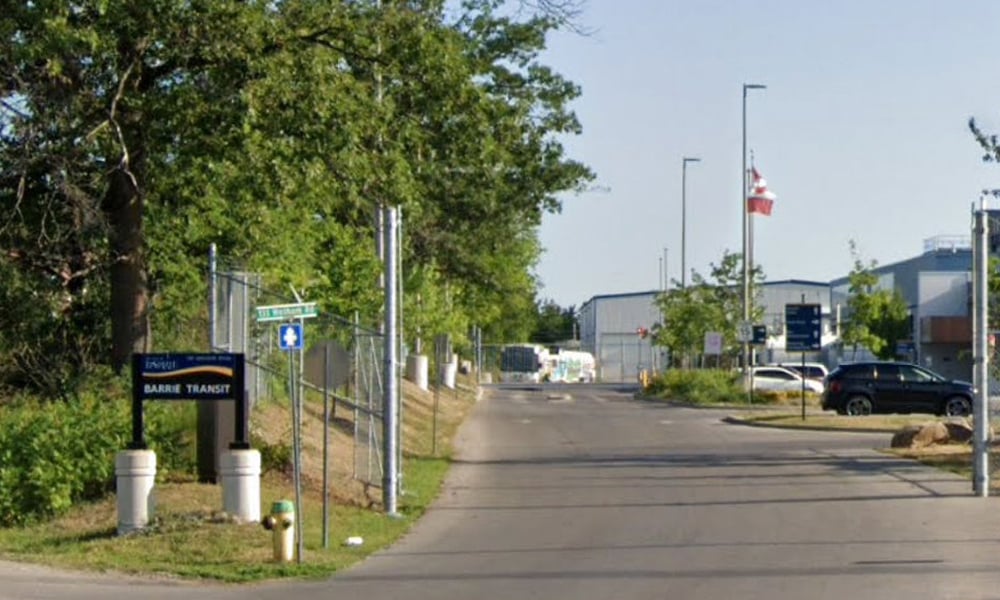
An Ontario transit provider went too far when it required invasive background checks of its employees, an arbitrator has ruled.
MVT is a passenger transportation contracting firm based in Dallas, Texas. In 2015, the company entered into a contract with the City of Barrie, Ont., to provide transit services. It inherited much of its Barrie workforce from a predecessor transit provider.
The contract between MVT and the city included a requirement that all staff who had unsupervised access, handled fares or cash, or had access to confidential information submit to a vulnerable sector check (VSC) or criminal record check (CRC). It also allowed Barrie to “require the renewal of the security or background checks provided” as it reasonably saw fit.
CRCs involve the disclosure of unpardoned criminal convictions along with absolute discharges within the past year and conditional discharges within the past three years. VSCs are more invasive, as they include CRC information along with non-conviction information about sexual or violent offences for which an individual has received a record suspension or pardon. VSCs were created to protect children and vulnerable persons.
Barrie didn’t enforce this requirement until 2018, when it indicated its intention to do so.
On Feb. 21, 2018, MVT sent a policy notice to all staff that said employees hired on or before July 1, 2017 had to renew their VSC or CRC by March 21.
Going forward, non-driver positions had to get a CRC prior to hiring and renew it every five years with an annual declaration, while driver positions had to get a VSC prior to being hired, with a CRC every three years and an annual declaration.
The union grieved the policy, arguing that any criminal background check was “an unjustified invasion of privacy.” MVT countered that employees were involved with the protection and security of people and assets, and bus drivers had significant contact with vulnerable people.
The collective agreement acknowledged that MVT had the right to change “any policies, rules and regulations governing employees” if such changes were needed to comply with the contract with the city.
The arbitrator noted that MVT’s new policy didn’t have any controls over how the information gained from the background checks could be used or protection from misuse of it. This was a significant consideration in assessing the privacy issue.
MVT used contact with vulnerable people as reason for requiring VSCs for bus drivers, but the arbitrator found that public transportation was not a vulnerable sector. The Criminal Records Act’s provision for VSCs defines “vulnerable person” as someone who is in a position of dependency on others and the act only allows those responsible for the well-being of a child or vulnerable person to request a VSC. While some of MVT’s specialty services may transport vulnerable persons, the need for VSCs should be evaluated on a case-by-case basis rather than subjecting all drivers to an “overly broad and wholly unreasonable” requirement,” said the arbitrator.
“While it is arguable that there are drivers who, on occasion, find themselves on a bus with a vulnerable person, there is nothing to suggest that such a circumstance is common or, more importantly, that such a circumstance places the vulnerable person ‘in a position of dependency’ on the driver,” said the arbitrator.
The arbitrator also found that requiring CRCs for existing employees was problematic and could be “a very significant” privacy rights violation without individual allegations of criminal conduct. As for requiring CRCs for job candidates, the arbitrator made no finding, noting that “the act of hiring employees does not fall within the purview of an arbitrator unless the collective agreement expressly deals with same.”
Based on the requirements for VSCs for drivers and CRCs for existing employees, the arbitrator declared the policy to be in breach of the collective agreement.
Reference: MVT and ATU (Vulnerable Sector Checks). Dana Randall — arbitrator. Lisa Stam for employer. Riley Palmer for union. April 21, 2020. 2020 CarswellOnt 6995


