
Two used excessive force, others acknowledged mistakes
A British Columbia arbitrator has upheld the termination of two correctional officers for their role in a violent incident with an inmate but has reinstated another three with suspensions in place of dismissal.
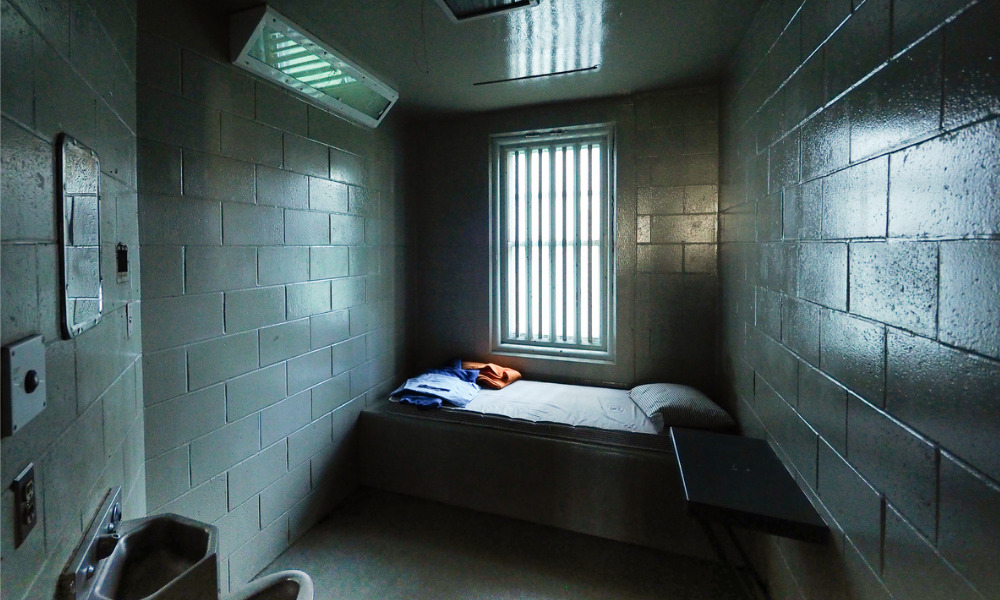
Fraser Regional Correctional Centre (FRCC) houses adult male inmates serving sentences up to two years less a day. On Sept. 18, 2017, there was an incident in the unit for inmates with mental health needs. An inmate physically attacked a correctional officer and the other officer assigned to the unit called a “code yellow staff assault,” which summoned other officers.
The inmate threw a punch at the first officer, who was able to push the inmate to the floor, place his knee on the inmate, and handcuff his right hand. He was unable to apply the second cuff and the struggle continued as four more officers arrived at the scene.
The four arriving officers freed the first officer, and 12 more officers arrived and piled on the inmate, striking him numerous times and applying pressure points. After about three minutes, the inmate was restrained and raised to a standing position. The inmate was escorted away with his hands cuffed behind his back and blood dripping from his head. The inmate was placed in a segregation cell with leg shackles. After about four hours, the inmate received medical treatment for a cut to his forehead and bruises, scrapes, and swelling on his back, shoulders, face, and nose. There were no permanent injuries.
FRCC investigated and determined that the inmate had been subjected to 48 hard strikes by at least four officers in the presence of four supervisors and other staff. It concluded that the officers’ actions were “a brutal beating which was entirely unnecessary and contrary to the policies, principles and training governing the use of force” as well as the standards of conduct for corrections branch employees. On Dec. 11, one correctional officer, one instructor, and three supervisors were suspended without pay while FRCC determined appropriate discipline. They were converted to paid suspensions after the union protested.
On Feb. 21, 2018, the five officers and supervisors were fired. Several other officers were disciplined for the incident and the union grieved the dismissals. It argued that the inmate had not been under control, handcuffing was the priority, and hard strikes were permissible when there was a serious risk to officer safety — something that was consistent with training.
The arbitrator found that one officer and one instructor who each inflicted 10 or more strikes on the inmate acted disproportionately and unreasonably. There was insufficient assessment and planning for the use of force and it wasn’t the minimum necessary force — the inmate wasn’t completely controlled, but there wasn’t a risk of escape and there was a significant number of other officers to help out, said the arbitrator.
“The force options model required communication at all stages, in a form suitable to the circumstances,” said the arbitrator. “Officers should have persisted in trying to communicate and de-escalate, while simultaneously seeking to compress and contain the inmate, as they were doing from the moment of their arrival.”
The arbitrator also found that the “precipitous and excessive application of force,” along with a failure to appropriately communicate with the inmate to try to de-escalate the situation likely prolonged the physical struggle and further compromised officer safety and risk to the inmate.
The arbitrator found that termination was appropriate for the officer and instructor who issued the excessive number of hard strikes and breached the code of conduct. However, the three supervisors who allowed the altercation to continue but acknowledged making mistakes deserved lesser discipline. FRCC was ordered to reinstate them with suspensions of six, five, and three months, respectively, on their record along with a demotion for each.
Reference: British Columbia (Province) and BCGEU. Arne Peltz — arbitrator. Peter Gall, Melanie Vepond, Justina Sebatiampillai for employer. Andrea Davis, Hasan Alam, Dora Tsao for employee. Dec. 16, 2020. 147 C.L.A.S. 35


