
Provision ensures indefinite health benefits for workers on LTD
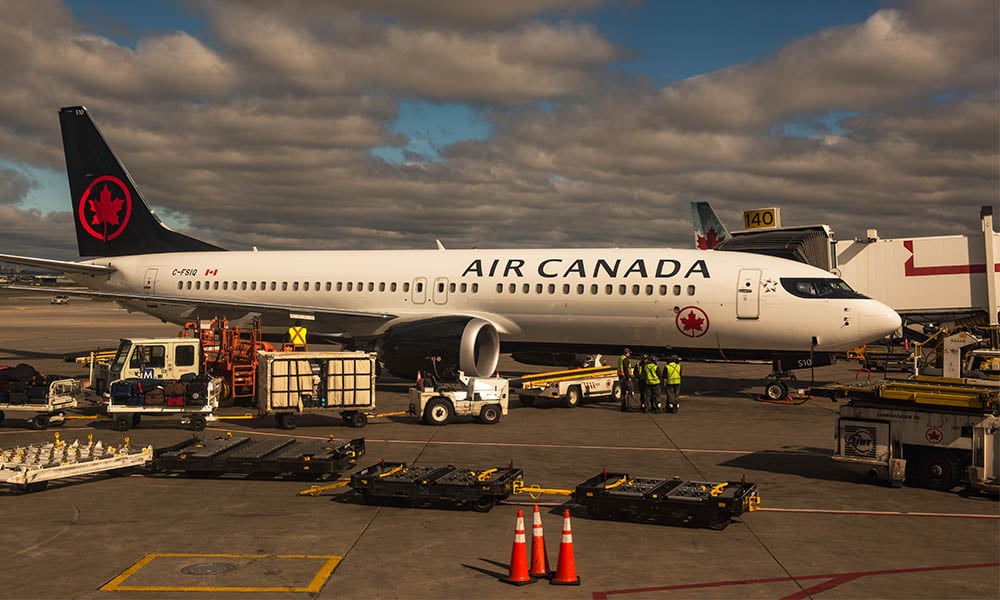
A group of disabled Air Canada employees are protected from termination by a collective agreement provision requiring the airline to continue health benefits indefinitely, an arbitrator has ruled.
Air Canada funded a wage indemnity plan (WIP) that was held by the Canadian Union of Public Employees (CUPE, Air Canada Component) and administered by a third-party provider. The WIP provided weekly indemnity and long-term disability (LTD) benefits — the latter payable until the employee died, resigned, returned to work, or turned 65 and qualified for a pension.
In addition, the collective agreement incorporated the airline’s supplementary health insurance plan into it and expressly provided that Air Canada would continue to provide supplementary health benefits to employees receiving LTD due to “injury or sickness.”
In June 2016, Air Canada contacted 49 employees who were members of CUPE and listed as totally disabled under the WIP. The employees had been on LTD for between three and 30 years and Air Canada wanted to determine whether their disabilities were total or there was a reasonable prospect of a return to work.
If employees were deemed to be unable to return, their employment would be terminated by Air Canada.
None of the employees were expected to return to work, so Air Canada gave them notice of termination — which would end their existing health, dental, and group life and accident insurance benefits as well as ongoing accrual of pensionable service.
The union grieved the terminations, pointing out that termination of the employees in the group would result in the cessation of their health benefits, which was contrary to the collective agreement’s protection of benefits for employees on LTD — union members could not be terminated if the termination deprived them of their contractually entitled benefits, the union said. CUPE also argued that Air Canada had failed to notify it during bargaining of its intention to change long-standing practices of allowing totally disabled employees to continue receiving dental benefits, life and accident insurance, and accrue pensionable service. Air Canada had never attempted to terminate an employee receiving WIP benefits before.
The arbitrator pointed out that “the collective agreement governs” and found that the provision guaranteeing health benefits to employees on LTD essentially precluded termination of those employees, since the effect of the termination would be to deprive them of those benefits. The contractual commitment was for Air Canada to continue health benefits for the period of illness or injury, even if there was no end to that period, said the arbitrator.
“In general, employees on disability can be terminated ending health benefits like those under discussion, but not here because of the incorporation into the collective agreement of language providing for ongoing entitlement while on LTD, a distinguishing feature of this case,” said the arbitrator. “Put another way, members of the affected group — the people on LTD — cannot be terminated so long as their entitlements while on LTD — entitlement to health benefit coverage — are provided for in the collective agreement.”
The arbitrator also found that, though dental benefits, life and accident insurance, and pension accrual weren’t guaranteed in the collective agreement, they were part of long-standing practices that were tied to the collective agreement. After decades of providing these benefits and accruing pensionable service for employees on WIP, Air Canada withdrew them suddenly as part of its attempt to terminate the group of employees. As a result, Air Canada was required to provide notice to CUPE of its termination of these benefits rather than doing so immediately, said the arbitrator, adding that notice had now been provided and it was up to Air Canada and CUPE to decide on the opportunity to bargain this change.
The arbitrator determined that Air Canada could not terminate the members of the WIP group until it negotiated changes to the collective agreement’s entitlement to health benefits coverage.
Reference: Air Canada and CUPE. William Kaplan — arbitrator. Karen Sargeant, Rachel Youman for employer. Megan Reid, Ruben Lindy, Dewart Gleason for union. April 28, 2020. 2020 CarswellNat 1384


