
No formal relocation allowed for nurses in different unit
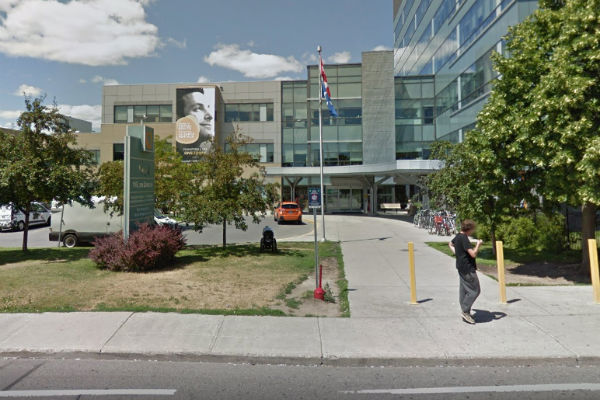
An Ontario hospital violated its collective agreement when it assigned duties normally performed by members of one bargaining unit to those of another, despite the fact the latter occasionally performed those tasks when necessary.
The Royal Ottawa Hospital offers several programs for mental health care, advocacy, research, and education, in which it employs registered nurses (RNs), registered practical nurses (RPNs) and orderlies.
The collective agreement with the Canadian Union of Public Employees (CUPE) includes a provision dealing with the work of the bargaining unit — article 11.01 — that stipulates: “Employees not covered by the terms of this agreement will not perform duties normally assigned to those employees who are covered by this agreement, except for the purposes of instruction, experimentation, or in emergencies when regular employees are not readily available.”
In 2016, the hospital reviewed its “skill mix” with the intention of improving safety, quality of care, staff retention and cost effectiveness. It decided to eliminate or reduce orderly positions in several programs, which resulted in the shifting of duties normally assigned to orderlies — such as assisting with discharges and admissions, directly supervising and helping clients, and helping clients and nurses with routine tasks — to RNs and RPNs, who occasionally performed orderly duties when needed, though some had never been done by RNs. Some RPNs were added to staff as a result of the change.
In September 2018, staff in the mood and anxiety program were told that all duties performed by orderlies would thereafter be “picked up” by the rest of the staff, including RNs and RPNs. RN and RPN assignments were linked to the individual clients under their care each day, with the most unstable or acute clients assigned to RNs.
The union objected to the move as some of the orderly duties were being assigned to RNs — who were members of different collective bargaining unit, the Ontario Nurses’ Association (ONA) — contrary to the collective agreement. This wasn’t an issue for any duties assigned to RPNs, who were CUPE members.
In addition, some RNs and other staff in the mood and anxiety program were concerned that the elimination of orderlies would make it more difficult to de-escalate and restrain clients who lost control or to help with client requests in a timely manner. They also felt it was difficult to focus on individual client care as RNs had to spend more time on tasks “better handled” by orderlies.
The arbitrator noted that the purpose of article 11.01 was to ensure that duties normally assigned to members of the bargaining unit remained in the bargaining unit, and it was clear that the normal duties of orderlies in the mood and anxiety program had been performed by both RNs and RPNs when necessary — though only occasionally by RNs.
However, the arbitrator found that the hospital was assigning the normally assigned duties of the orderlies to both RNs and RPNs without any distinction — which was different than the previous practice of RNs occasionally doing the work. This indicated a “significant shift in duties” normally done by CUPE members to ONA members, which was a breach of article 11.01, said the arbitrator.
The arbitrator also found that RNs performing orderly duties on rare occasions was permitted by the collective agreement and didn’t “erode the bargaining unit,” but formally assigning them a significant number of duties normally done by CUPE members was going too far. It was also fine for RPNs to be assigned the duties, as article 11.01 “protects the work, not the work of any particular classification.”
The arbitrator upheld the grievance but decided not to award damages due to the hospital’s “well-intentioned decisions about how work should be assigned.” Instead, the arbitrator declared a violation of the collective agreement and ordered the hospital to assign orderly duties to members of the CUPE bargaining unit.
Reference: Royal Ottawa Hospital and CUPE, Local 942 (2018-942-RP1). Paula Knopf — arbitrator. Stephen Bird for employer. Wassim Garzouzi for employee. Oct. 11, 2019. 2019 CarswellOnt 17195


