
Profanity, property damage 'rash, impulsive act': Arbitrator
A P.E.I. worker showed remorse but his suspension was reasonable progression from prior discipline, says an arbitrator
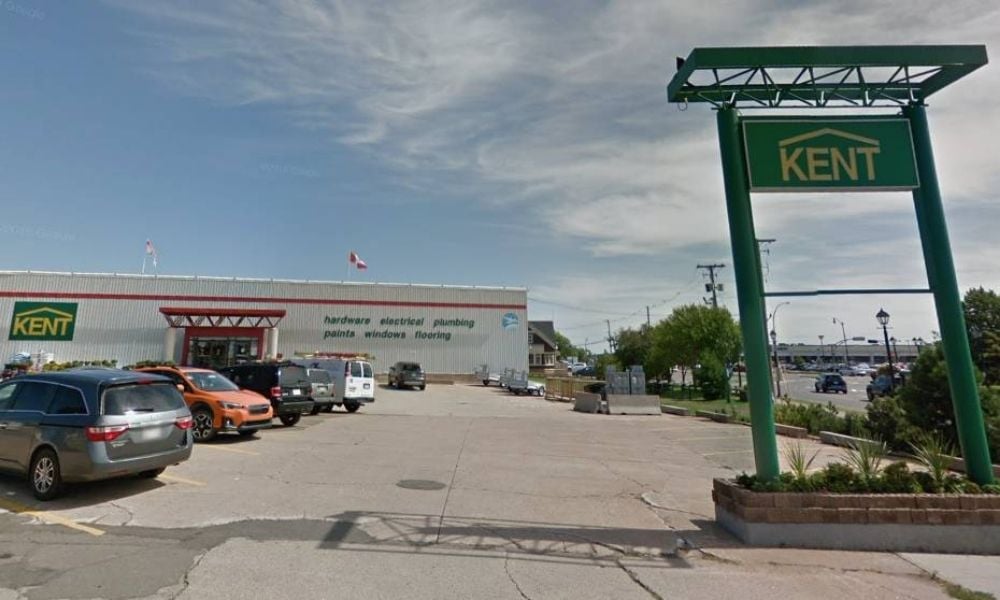
The worker was a forklift operator at a Kent Building Store in Summerside, P.E.I. Hired in 2000, his job involved working in clearance and other areas of the store. He had good relations with customers to the point where some asked specifically for him to assist them.
On Dec. 5, 2019, the worker was moving inventory when a store associate asked him to get several sheets of lattice from an elevated shelf for a customer. The worker was frustrated because the two other forklift operators weren’t as busy as he was and he thought one of them should have been asked instead.
According to some other employees, the worker protested loudly, uttered a string of profanities, and threw a walkie-talkie. He also revved the forklift engine more loudly than normal when he went to get the lattice.
The worker apologized to the manager shortly after the incident, saying that he “hadn’t meant for it to happen” and he threw the walkie-talkie out of frustration. He also apologized to the store associates and later said that “I don’t like that I acted this way.”
The store manager determined that the worker had breached Kent Building Store’s respectful workplace policy. The policy emphasized “courteous conduct” and positive communications” and stated that discipline may follow any breach.
The manager also found that the damage to the walkie-talkie — which cost $300 for a pair — was “deliberate abuse or destruction of company property” that was an “immediate discharge offence” under the collective agreement’s disciplinary rules and penalties.
There was no evidence any customers heard the swearing and no complaints were made against the worker but the company considered the worker’s disciplinary history of two written warnings in 2012 and 2013, a two-day suspension in 2015, and a 2017 incident with a written warning. The latter recorded a two-day suspension that was never imposed. The company also considered five non-disciplinary letters in the worker’s file as part of his full employment record.
On Jan. 24, 2020, the company suspended the worker for five days and warned him that it was his final warning and any further incidents of unsatisfactory behaviour or not following instructions would result in immediate termination of employment. The suspension letter listed the worker’s full record, including the 2017 suspension and non-disciplinary letters.
The union filed a grievance claiming that there were grounds for discipline but a five-day suspension was excessive.
The arbitrator found that it was likely that the company considered incorrect information related to the 2017 two-day suspension when deciding on the level of discipline. The worker’s true disciplinary record amounted to four warnings and one suspension.
“The penalty imposed for the incident that is the subject of this grievance was influenced by an incorrect understanding of [the worker’s] discipline history as including a second two-day suspension,” said the arbitrator.
The arbitrator also found that the worker was truthful at all times and immediately owned up to his misconduct. While the abuse of company property was reckless, the arbitrator believed that the worker didn’t intend to break the walkie-talkie and the value of the broken unit was only about $150. It was a “rash and impulsive act” that was “a far stretch from industrial sabotage,” the arbitrator said.
The arbitrator found that the worker showed “rehabilitative potential” by accepting responsibility and apologizing. In addition, no customers heard the incident, so the company didn’t suffer any reputational damage and the worker’s profanity-laced tirade wasn’t targeted at anyone in particular.
However, even with the 2017 two-day suspension removed from the equation, the worker’s disciplinary history was notable. Although a five-day suspension was at the higher end of discipline, the worker had already received a two-day suspension and this was a reasonable progression of discipline, said the arbitrator in dismissing the grievance.
Reference: IUOE, Local 942 and M.F. Schurman Company. Frank DeMont — arbitrator. James Green for employer. Jason Edwards for employee. Oct. 31, 2021. 2021 CarswellPEI 68


