
Workers weren’t sick but couldn’t come to workplace
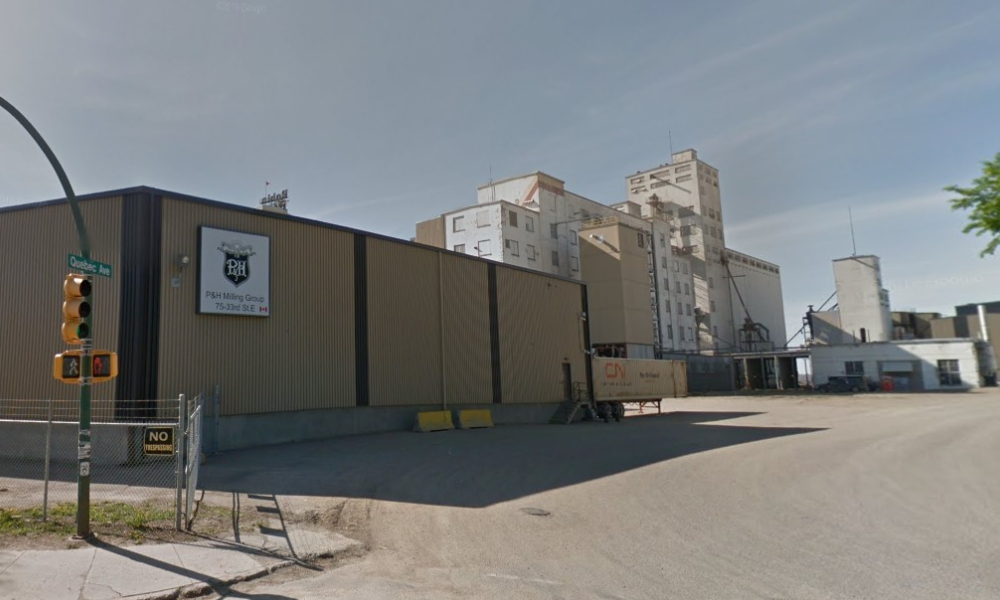
A Saskatchewan company does not have to pay its employees for the two weeks they spent self-isolating due to potential exposure to COVID-19, an arbitrator has ruled.
P&H Milling Group is a milling company that produces flour and cereal products. In March 2020, P&H followed public health directives issued as the COVID-19 pandemic took hold, including requiring any employees who had been potentially exposed to the virus to self-isolate for 14 days before returning to work.
On March 13, P&H informed employees about its COVID-19 prevention policy, stating that “if you are not ill but are required to go into quarantine by law or by public health official, you should contact your supervisor to determine if working from home is possible in your case. If not, you may qualify for EI benefits which have been enacted to assist individuals who have been quarantined due to COVID-19.”
Four employees at the P&H facility in Saskatoon had to self-isolate for various reasons — one had been on vacation in Mexico and was required by law to quarantine, a second had been exposed to someone who had recently travelled outside Canada, a third had participated in a snowmobile rally that became the source of an outbreak, and a fourth’s wife had been exposed to someone at her work who exhibited symptoms.
The employees were told that they could use vacation or personal days to cover lost wages for the self-isolation period or apply for employment insurance (EI) benefits. One applied for the Canada Emergency Response Benefit (CERB), and another used two personal days during his absence.
The union filed a grievance, arguing that the employees self-isolated due to P&H’s expectation augmented by health directives. P&H treated the employees as if they were infected and contagious, so they should be entitled to the benefits of the company’s sick-leave program, said the union, adding that the collective agreement stated that the program’s purpose was “to ensure employees who are unwell do not lose earnings while they are ill and unable to work; and to prevent the spread of illness within the workplace.” Employees shouldn’t be financially penalized for disclosing potential COVID-19 exposure and following the purpose of preventing the spread of illness within the workplace, it said.
P&H disagreed, saying that the collective agreement and the sick-leave program related to sickness — employees had to present a doctor’s certificate to qualify for sick pay. It also pointed out that there were other ways employees could recover income lost while self-isolating such as EI, CERB, vacation and personal days.
The arbitrator noted that the grievance was “essentially about who bears the loss within this workplace” when workers were required to be absent due to COVID-19 isolation requirements. Both employers and employees have obligations under provincial health and safety legislation to help ensure a safe workplace, and “there is no doubt that potentially transmitting COVID-19 to coworkers would constitute a hazard,” said the arbitrator.
The arbitrator also noted that employers aren’t obligated to pay employees who aren’t working unless required by legislation and the common law established that employees aren’t entitled to be paid if they don’t work, subject to contractual modification. In this case, the sick-leave program was specifically meant to “ensure employees who cannot work due to a relatively short-term illness can continue to receive their usual income,” said the arbitrator
The arbitrator found that the collective agreement didn’t require P&H to provide sick pay as there was no illness requiring confirmation by a doctor’s certificate. There was also no legal obligation for P&H to pay employees who weren’t working. There were other options for the employees to recoup at least some of their lost income, about which P&H informed them and at least two of the employees used. The grievance was dismissed.
Reference: UFCW, Local 1400 and P&H Milling Group. Leslie Belloc-Pinder — arbitrator. Dustin Gillanders for employer. Rod Gillies for employee. Jan. 26, 2021. 2021 CarswellNat 311


