
Employer shouldn’t have opened locked boxes: arbitrator
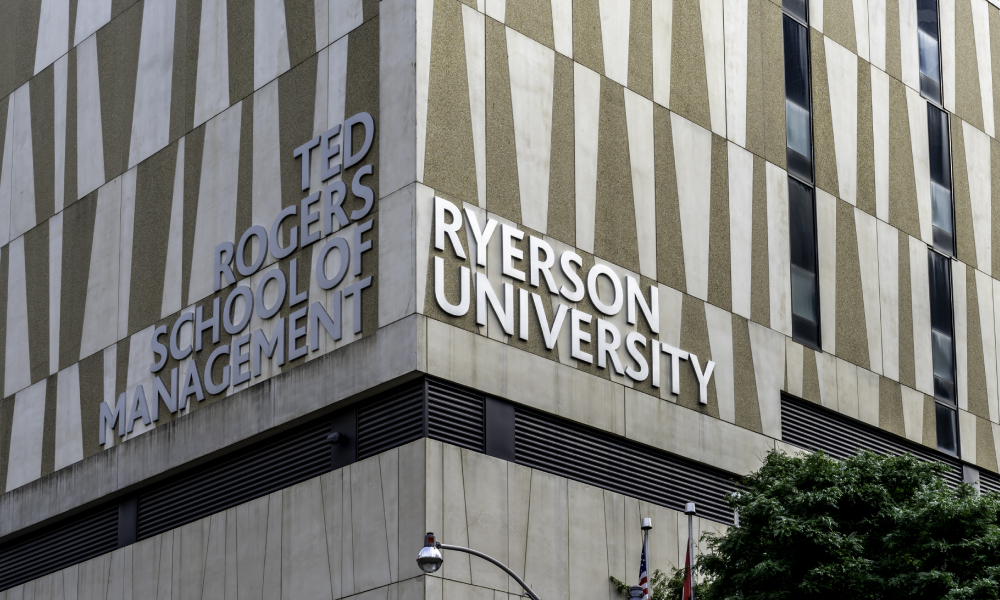
An Ontario university breached the privacy of its faculty members when it opened their locked mailboxes to retrieve hate mail that had been sent to them.
Ryerson University is a university located in Toronto. The university’s faculty members all had individual locked mailboxes on the university’s property, for which each member had a key. The university also kept a master key.
In spring 2019, the president of Ryerson received an anonymous letter saying derogatory things about the record of a senior academic official while she served at another academic institution. The letter also stated that the official was “now negatively infecting your faculty.”
This wasn’t the first time the official had been subject to harassment and defamation — there had been other letters and suspicious behaviour for years. At the official’s previous institution, the police had been involved.
The letter was followed up by several other anonymous letters delivered to the mailboxes of other faculty members in the academic officer’s faculty. Ryerson’s executive director of community safety and security met with the senior academic official, who described the harassment she had been experiencing, both at Ryerson and at her previous institution, which had included two unexplained break-ins at her home. She said she was afraid for her safety and was concerned that the harasser could be in Toronto because she had received a letter that she thought had been pushed under her office door at Ryerson.
Ryerson security contacted the Toronto police, who requested that the letters be retrieved. Ryerson’s director of community safety instructed security officers to open the locked faculty mailboxes with the master key, where they found 47 unopened letters that they gave to police.
The Ryerson Faculty Association (RFA) complained that “the university administration has no right to unilaterally determine what mail will or will not be delivered to the faculty” and argued that the administration’s actions “reflect a profound disregard for the privacy rights of faculty members and staff.”
The university offered to let affected faculty members review the letter that the president had received and informed the RFA that Ryerson security had removed envelopes from the members’ mailboxes at the request of police as part of an ongoing investigation related to the academic official. It noted that security didn’t open the envelopes and the university didn’t know what was inside.
Ryerson followed up with a letter to the RFA saying that it believed that an “imminent threat” was at hand, but going forward it would request a search warrant from police that would authorize such a search of the locked mailboxes. The university also amended its operating procedure relating to the provision of personal information to law enforcement and committed to providing a copy to the RFA. However, the RFA filed a grievance related to the search of the mailboxes.
The arbitrator found that the faculty members had a reasonable expectation that their individual locked mailboxes would not be opened by the university without their permission or a threat to safety, or by police without a warrant. Although the fact that the mailboxes were on Ryerson property and there was a master key reduced that expectation, there was still some reasonable expectation of privacy, particularly in an academic environment “governed by academic freedom,” the arbitrator said.
The arbitrator noted that Ryerson could have sought permission from the faculty members to open their mailboxes or required police to obtain a warrant, but instead unilaterally decided to open the mailboxes and retrieved the letters.
“[Ryerson] failed to protect the privacy interest of the affected faculty and thereby breached the implied restriction upon it under the collective agreement to reasonably exercise its management rights,” said the arbitrator.
Ryerson was ordered to pay $400 in damages to each affected faculty member for the “unreasonable exercise of managerial discretions” that violated the collective agreement.
Reference: Ryerson University and RFA. Kevin Burkett — arbitrator. Gerald Chan for employer. Emma Phillips for employee. Sept. 17, 2020. 2020 CarswellOnt 19711


