'If you're treating employees like responsible adults, they realize this is a privilege'
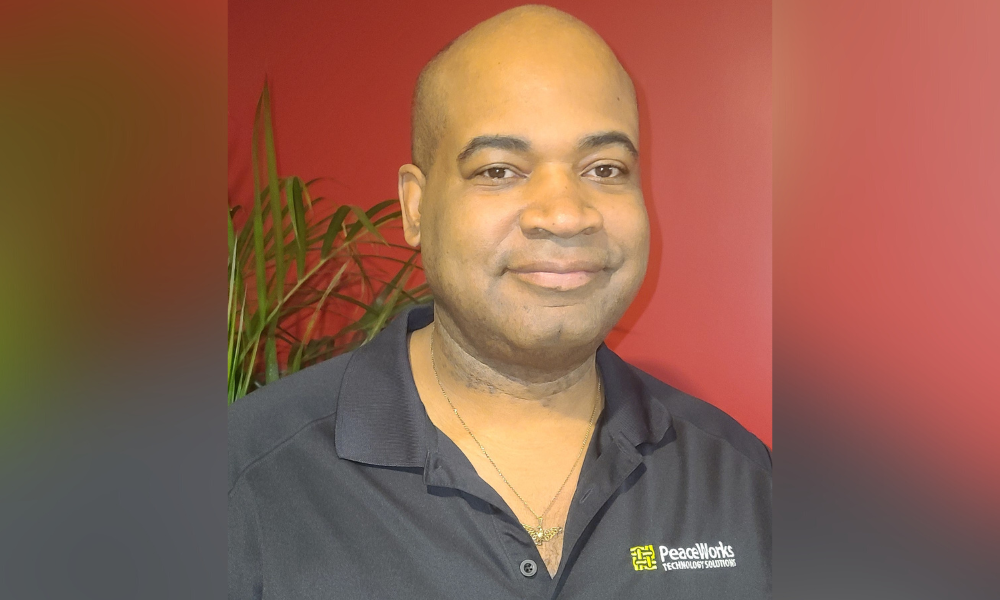
For one tech employer with offices in Ontario and Manitoba, the decision to offer paid sick days is paying off.
“When you have people that are allowed to take paid sick days, they come to work refreshed, energized; they’re not coming to work sick, they’re not getting others sick and we get the best versions of them when they’re alert,” says Ian Kelly, general manager at PeaceWorks Technology Solutions in Waterloo, Ont.
“It’s really a bonus for the employers as well, as far as I’m concerned.”
In addition, there is a positive message put out to potential candidates, says Kelly.
“We offer 10 paid sick days and we don’t police it, so that is in some ways empowerment of the employees; it shows care and consideration for your employees and when they don’t have to come up with stories or make phone calls [saying] ‘I’m sick,’ it’s a breath of relief for them.”
PeaceWorks is a member of the Better Way Alliance (BWA) which recently put out a fact sheet arguing for more paid sick days, pointing to a 2019 study that showed a 6.8-per-cent increase in revenue for employers who offered paid leave.
Besides this, “there’s a retention benefit to employers who provide those basic days as an incentive to keep people onboard and all the benefits that come with lower turnover, lower training costs, and so on,” says Hemingway.
Catching up to other countries
While many employers may be reluctant to provide paid sick days, this benefit not only helps the individual employee, it helps the employer too.
That’s according to Alex Hemingway, senior economist and public finance policy analyst Canadian Centre for Policy Alternatives (CCPA) in Vancouver.
“Having paid sick days obviously allows people — in the most straightforward way possible without worrying about loss of income — to stay home when they’re sick, and to just to follow that general common sense, and as a public health guideline,” he says.
“Beyond that, there’s the lost productivity that can spin out to the point, if a flu or COVID or whatever else, really rips its way through a workplace — that can mean you have to shut down altogether in some cases; it can get that extreme.”
The CCPA recently advocated for Canada to offer more paid days off to put us in line with other countries such as New Zealand and Australia, which offer 10 days per year, while other developed nations such as Sweden offer 14 days and Germany which mandates 30 paid sick days per year.
It offered this argument in October 2021 with an open letter from 84 doctors, health experts and economists to governments in B.C. and Canada.
On Dec. 1, almost one million Canadians of federally regulated industries will receive 10 paid days off per year, and employers need to be prepared for it.
What about abuse?
While the economic arguments appear sound, what about the potential for abuse when this time off is offered?
After state and city governments in the U.S. began offering workers sick leave, employers did express anxiety about the change — but later, “they reported very little disruption or abuse of the paid sick days, and very little, if any, incremental cost to them,” says Hemingway.
And if someone takes a day off because they feel they need it, and not because they have an infectious illness, “that’s not the worst outcome in the world either,” he says.
“That’s good for morale and so as long as it’s happening on a random basis… then there’s not so much to worry about.”
Offering time off actually reduces overall mortality rates, according to new research done at Syracuse University.
Believing the workforce
At PeaceWorks, abuse of paid time off is not really a consideration, says Kelly.
“Realistically, I would say 98 pr cent of our staff use one or two days a year, and they use it when they are actually sick and it comes down to that trust — if you’re treating your employees like responsible adults, they realize that this is a privilege.”
When it came to setting up the procedure, PeaceWorks relied on an online, self-serve system that has resulted in a hands-off approach for the HR department.
“They have full access to how many sick days they’ve taken, how many they have left; vacation days, lieu days, all of that information is right at their fingertips.”
“Because realistically, you hire responsible people — or you’d like to believe your employees are responsible — to give them the tools to allow them to take responsibility for this and make it work. It works very well for us,” says Kelly.
Overall, society can benefit, says Hemingway.
“In some of those U.S. cases where cities brought in paid sick days, they actually saw substantial reductions in influenza rates during flu waves; paid sick days for food-service workers were associated with declines in foodborne illness rates — so there really are some significant societal spin-off benefits to talk about there.”