‘There’s no one recipe for success,’ says expert outlining options, best practices for HR in supporting employees

“People are coming in and say, ‘I want something’ — but they don’t spend enough time thinking about the ‘Why do you want it? And how does it fit with your organization? And what is that you’re trying to achieve?’”
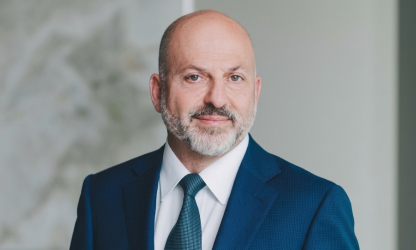
So says Marc-Antoine Morin, head of member engagement at Manulife, in discussing the importance of first steps in setting up or expanding group savings plans for employees.
Less than half of working Canadians are covered by an employer pension. And only one‑third have a retirement plan and savings, found a recent survey by IG Wealth Management, while just 11% know how much annual income they will need in retirement.
Against that backdrop, HR leaders have a menu of group retirement and savings options — from group RRSPs and TFSAs to deferred profit-sharing and defined contribution pension plans — to consider when it comes to supporting their workforce and their balance sheet.
Objectives of group savings plans
So, where to begin? If an employer is considering setting up a group plan, or thinking about expanding its offerings, there are a few factors to consider, according to Morin.
They should start by being clear on why they are offering a plan at all, and asking a lot of questions about what you’re hoping to achieve is key, he says.
“There’s more or less two camps of approach that can be taken; it can be both, obviously, but I think it’s important to have a strong view because it will impact the design of your plan, which tax type you should be selecting and how you’re going to actually communicate that and include that in your HR strategy,” says Morin.
“Are you looking more from an attraction and retention sort of objective by having a pension plan? Or… is it actually a little bit more of a paternalistic-type of approach where [you’re] trying to encourage people to save for retirement, save long term and save for other purposes?”
Getting started on savings
From a design perspective, having an RRSP and TFSA is “the easiest combo” that can be made available, says Morin.
“You get a little bit of everything: you get the tax deferral through the RRSP and you get the more short‑term saving approach through the tax‑free saving account.”
For employers that are a little bit more sophisticated, he points to a deferred profit-sharing plan (DPSP) as a next step, noting it has payroll tax-saving opportunities that makes it a bit more efficient and “creates locking in as well.”
“The best practice there is there's no one recipe of success. There's different ingredients that can be used.”
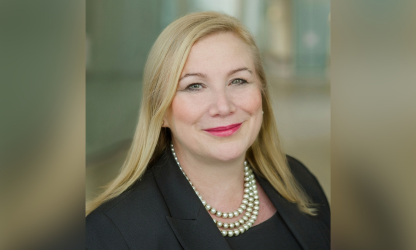
Actuary and retirement specialist Ted Singeris of Sun Life says with affordability being a top issue these days, it’s all about setting up employees for the best outcome. And that means getting them to put money into a capital accumulation plan (CAP) — and doing it early on.
“It’s the power of compound interest,” he says. “Get the money in and let it start working its magic over 25, 30, 40 years.”
DC pensions and RRSPs are set up to be tax-deferred or tax-sheltered, while other plans focus more on flexibility, says Singeris, head of western Canada and vice-president, business development and client Relationships, group retirement services at Sun Life.
“The most important thing is make it available, make it easy. And… just start contributing, whatever you can afford.”
Mix and match: TFSAs, RRSPs, pensions
Offering a mix of vehicles can help match different life stages and goals, according to both experts.
“Employees are in different stages of life and in different circumstances,” says Singeris, calling the TFSA “the superpower of registered vehicles” which is tax‑free when it’s paid out “and people don’t realize how significant that is [after] 20, 30, 40 years.”
It’s the “perfect complement” to an RRSP or defined-contribution pension plan, he says.
DPSPs are “philosophically another way for a plan sponsor to think about how they want to make dollars available to the members,” says Singeris, including aligning payouts with profitability: “The company wins, the employee will win more too.”
Morin points to a shift among larger employers toward a cafeteria-style menu like that seen in the group benefit space, where employees can allocate employer dollars among short- and long-term goals such as RRSPs, TFSAs or DPSPs.
New options include first-home savings accounts, says Morin, because “a lot of new employees are younger, they’re not thinking about long term… this is a great opportunity.”
Pensions continue to lose ground
Defined contribution pension plans (DCPPs) and other registered pension plans still have a place, but Morin says they are increasingly less popular with employers “because the administrative burden is more significant, which is not always well-received.”
DCPPs have more compliance and governance around them, agrees Singeris, as the Canadian Association of Pension Supervisory Authorities (CAPSA) has put a greater focus on these plans.
Pension plans are also less attractive from an employee perspective because they can be considered paternalistic, says Morin.
“Pensions are losing a little bit of their appeal as we’re going more into a flexible saving mindset and a little bit more away from a siloed view of ‘It’s a retirement plan’ — no, it’s more and more ‘savings plan.’”
Auto‑enrolment: big potential, big obstacles
Of course, none of these plan options are going to be a success if employees aren’t taking advantage of them. So, what’s the sweet spot in encouraging participation?
Both experts see auto‑enrolment and auto‑escalation as powerful tools to boost savings — but say the Canadian framework makes them hard to implement.
“Auto-enrolment as we know and hear about it from the United States doesn’t really exist in Canada,” says Morin, citing a lack of regulatory framework and issues with pension legislation, employment standards and the Canada Revenue Agency.
“With all our different legislative and financial bodies, it's creating a lot of problems from an adoption perspective.”
He says it is possible to make some plans mandatory, such as a pension plan, but it’s more challenging to do in an RRSP, with current options often requiring “painful” employment contract changes and only workable for future employees.
Basically, a member cannot be forced to auto-enrol, it requires consent, “which defeats the purpose” of this approach, says Morin. “It’s very unfortunate because there’s tremendous value that it could bring to Canadians.”
The same is true for auto-escalation, where contributions might start at 1% for the first year, for example, and increase each year, he says.
“It would be transformational in the industry if it was widespread.”
Where employers do use auto features, Singeris says actual opt‑out rates are low.
“It’s… the same one or two people that come back and say, ‘No, put me back to my old level’ because they feel they can outperform the market doing what they do outside the plan.”
‘Game-changer’: employer contributions
Without auto‑enrolment, plan design and employer contributions take on even greater importance for participation, says Morin.
“What we’re seeing as a game-changer is the design of the contribution,” he says.
“Getting people to enroll into a plan that doesn’t provide any contribution matching from the employer is a lot more difficult because then you’re just getting into a saving conversation — ‘Please save’ — which is important but if it’s ‘Please save and you’re going to get free money,’ that helps adoption significantly.”
It’s a constant battle to encourage people to not only join a plan, says Singeris, but “engaging them in positive ways so they understand the importance of increasing the contributions.”
Cost predictability and employer matching
When it comes to cost, both experts distinguish between administrative workload and employer contributions.
While the former is fairly steady, the latter has the greater variability, says Morin, as adoption levels can move that needle.
“You might get surprised when you actually set up the plan and you start to promote it with your employees: ‘Am I going to get a 50% adoption rate or an 80% adoption rate?’ That can change as my cost,” he says.
“But once you have that in place, it’s fairly steady — you’re not going to get a significant change,” he says, adding that advisors are in a good position to provide insights and predictions on likely uptake by industry.
For smaller employers that decide to offer a plan, Morin says concern about higher matching costs is less common and they’re hoping for 100% adoption.
In larger organizations with optional plans and, say, 65% adoption, it is natural for a CFO to ask about the cash‑flow impact of a “massive push to try to get from 65% to 75% adoption,” he says, because they need to plan for it from a cash flow and budget perspective.
Singeris says employers have latitude to engineer predictability into the contribution formula.
“That’s all in the design. You can make it completely predictable and you can take out the match,” he says. “You can also design plans where the match is capped — most actually are capped. So, it’s not like there’s this huge volatility of cost.”
And most employers ultimately want to see strong plan usage, says Singeris: “We don’t get this pushback frequently, but if you match as an employer and you push engagement, then the match, the dollar amount increases… but honestly, in something like 95% of cases, the CFO, the CEO, and the CHRO go, ‘No, that’s actually what we want.’”
Communication, liability fears and new digital tools
Asked about risks when employers communicate about enrolling in group savings plans, Morin says “carefulness is always encouraged” but believes the tone of communications has evolved.
“Quite a few years ago, it almost was a lawyer letter to talk about the plan. Now, [there’s] a lot more engaging type of conversations that are going on,” he says, adding employers still need to avoid the pitfalls of “You need to join the plan.”
He points to video and AI as low‑cost ways to personalize explanations of plan design at the employer level.
“You can have a person speak to the benefit of your plan and explain the design of your plan in a video format,” he says, noting that people are more likely to engage with and retain the content that way.
Morin also emphasizes ongoing engagement beyond day‑one onboarding.
“Sometimes there’s maybe a bit too much focus on only trying to get members enrolled when they join the organization,” he says, recounting cases where employees have been with an employer for several years and never joined the plan.
“Never admit defeat, I would say, by trying to get those people back in the plan,” he says, citing life‑stage changes and digital nudges as reasons to persist.
And it’s important to make enrolment straightforward, with language options and an easy plug-and-play approach, says Morin: “You don’t want to get into a situation of ‘choice paralysis.’”
However, the human touch is also important, through word of mouth or informative sessions.
“Continuously reminding, using the levers of digital and a human can help you get above that 60, 70 per cent.”