Create a toolkit for crafting an effective employee compensation strategy. Learn how HR professionals and employers can attract, retain, and reward top talent

A good salary used to be the deciding factor for accepting a job, but not anymore. While pay still counts, benefits and perks that are useful to the employee are becoming more important. So how do you come up with an employee compensation package that stands out?
In this article, we’ll talk about employee compensation and everything that falls under that catch-all phrase. We’ll go over points to consider when drafting a compensation strategy. Finally, we’ll share some tech and trends that influence the benefits and compensation space.
What is employee compensation?
Compensation is not just about salary or wages – it also covers:
- variable pay – bonuses, commissions, other forms of cash incentive
- benefits – leave, paid time off, employer-sponsored insurance
- other perks – flexible working, mental well-being programs, paid subscriptions
These are just some examples. Your company can adapt and expand these options based on what’s most helpful to your workforce.
The key components of a competitive compensation package
Now let’s get into a more detailed look at compensation. Consider this a toolbox of sorts – the more you add, the more competitive your salary and benefits package becomes:
- Base salary – fixed amount an employee receives for the work they contribute. Base pay is influenced by market rates, salary rates within the company, and cost of living per area
- Short-term incentives – includes bonuses and performance-based pay. This can be set to align with the company’s vision and goals
- Long-term incentives – these cover stock options or profit-sharing plans designed to encourage retention and loyalty among employees
- Health and wellness benefits – may cover medical, dental, vision, and mental health support
- Retirement savings plans – matching employee contributions to registered retirement savings plans (RRSP) is a big one. This is especially helpful for older workers stressing out over saving for retirement
- Paid time off – this covers vacation, personal days, and sick leave. Options like unlimited time off and sabbatical leave (both paid and unpaid) are becoming more popular
- Flexible work arrangements – flexible work has been around for years but gained traction during the pandemic. This covers remote/hybrid working, flexible hours, and compressed work weeks
- Professional development – investing in employees’ personal growth and development includes reimbursing tuition and fees and sponsoring leadership programs
- Other perks – HR teams can get creative here: rewards and recognition programs, gym memberships...go with what works for your employees!
Legal requirements for employee compensation in Canada
When drafting or fine-tuning your company’s compensation package, there are some compliance requirements to keep in mind:
- Minimum wage: this varies per province, ranging from $14 to $17 per hour
- Overtime pay: most employees are entitled to time and a half after working more than a set number of hours (usually 40 to 44 per week)
- Vacation pay: employees are entitled to a minimum of two to three weeks of paid vacation yearly. Vacation pay is at least 4 percent to 6 percent of gross wages
- Public holiday pay: employees who qualify must be paid for statutory holidays even if they don’t work that day. They get premium pay if they must work on that day
- Wage deductions: in most cases, only legal deductions (e.g., income tax, CPP, EI) are allowed, but there are some exceptions. Some provinces/territories allow wage deductions for other reasons, but certain conditions apply
These are baseline requirements; your organization is free to improve on these benefits as you see fit. Refer to employment standards for each province or territory as a starting framework.
Details on these benefits are captured in writing through collective agreements, employment contracts, or your company handbook.
Designing an employee compensation strategy that works
There’s no set template or formula for the right approach to employee compensation. It will vary across industries, locations, and business priorities.
Here are some points to consider when crafting an employee compensation strategy:
Align compensation with business goals
Do you want to attract the best out there, or to nurture and reward the talent you already have? Your compensation strategy can focus on recruitment, then shift gears to prioritize retention. Your strategy can flow and evolve over time, just as your business needs change.
What’s important is to have your employee compensation benefits reflect your organization’s current goals and priorities.
Focus on flexibility and personalization
Today’s employees want compensation that fits their needs. Offering benefits no one uses isn’t just a waste of resources — it can also feel like tokenism.
Here’s an example under health benefits. You can offer monthly subsidies to a gym, a Pilates studio, or yoga classes to capture as many employee preferences as possible. Offering options increases uptake, making your compensation package so much more effective.
Bridge the employer-employee perception gap
A 2024 report cited a disconnect between the benefits employees want and what they end up getting. For example, 36 percent of employees prioritize cancer screenings, but only 14 percent of employers offer this benefit.
The solution? Check in with employees to find out what they want. Use pulse surveys or focus groups to stay tuned to what matters most to your people.
Go beyond salary: think total package
This sounds counterintuitive, especially in light of a 2024 survey showing 51 percent of Canadians feel they are underpaid.
Another study, also done in 2024, shows a different picture. Compared to data in 2017, benefits became more of a priority for employees:
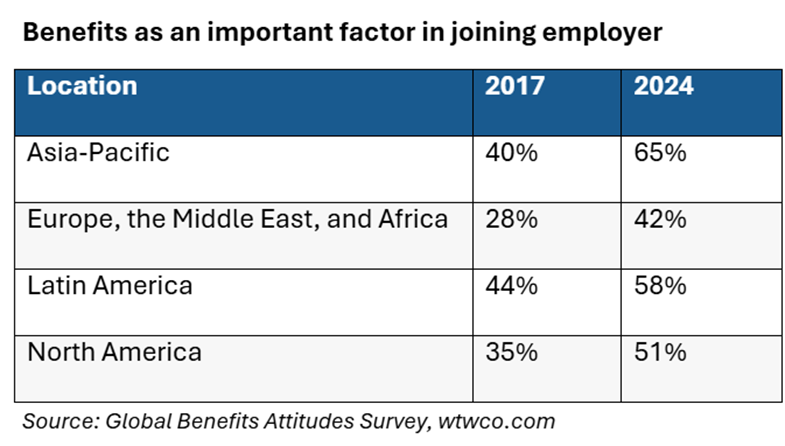
Salary will always be a big consideration in retention and job satisfaction, but other forms of compensation can help fill the gaps.
A robust rewards program, for example, can help with employees’ expenses (gift cards or discounts toward groceries go a long way). Flexible work schedules, meanwhile, are invaluable to an employee with caring responsibilities.
Stay competitive and compliant
Let's say your compensation strategy is solid. Employees are happy with pay and benefits. Now what? Find out what the competition is doing. Benchmark your strategy against industry standards and legal requirements.
Check in with your employees regularly to see if what they’re getting still works. Needs and priorities shift over time, and it’s important to adapt to these changes.
Look at up-to-date studies on pay and overall compensation. Sign up to CHRR+ to access premium content and data on salary and benefits across industries.
Trends and tech in employee compensation
A project is as important – and potentially complex – as drafting and implementing an employee compensation strategy calls for tools to run it efficiently. It’s also important to look at the HR trends, as these will influence how your strategy works.
Let’s take a look at some of these factors:
Pay transparency
This is becoming the norm across Canada, with these provinces/territories having pay transparency laws in place:
- Federal
- British Columbia
- Nova Scotia
- Prince Edward Island
Even in areas without such laws in place, job seekers still expect openness around pay. This expectation influences HR teams in going over salary bands and pay equity carefully.
Pay transparency builds trust and attracts talent. It also promotes a culture of integrity.
Use of compensation technology, AI
According to the 2025 Compensation Best Practices Report by Payscale, more organizations are now using tech, tools, and talent to manage employee compensation:
- Thirty percent of organizations now use bespoke compensation technology
- Seventy percent of organizations have compensation professionals in their workforce
- Sixty-one percent of companies have formal compensation strategies
- Organizations are using multiple data sources to guide compensation decisions
The study notes that around half of organizations surveyed are cautiously optimistic when it comes to AI use for these tasks:
- policy documentation
- legislative compliance
- recommending pay increases
- market pricing
Existing tech tools
While the use of compensation technology is still quite low, there are other ways to integrate tech into employee compensation. There’s HRIS, payroll software, and rewards and recognition solutions. Find out more in our HR technology section.
Employee compensation is a powerful tool
A solid employee compensation strategy can help attract talent, retain employees, and build your brand. You can pick and choose which elements to include. Be guided by research and insights into what employees are looking for. And talk to your people! Find out what works best for them.
If designed and implemented well, an employee compensation strategy can be a powerful tool. It’s all about having the right combination of pay, benefits, and other perks to attract and keep the right people for your company.
Subscribe to CHRR+ today for access to premium content – that includes in-depth studies, exclusive articles, and expert analysis on employment law cases.