
Prepaid option can save time, reduce fraud, boost employee satisfaction
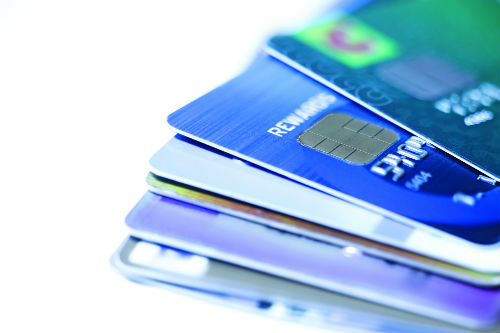
Payroll cards can help businesses achieve 100 per cent electronic payroll, along with saving time and money, reducing fraud and risk, and boosting employee satisfaction.
What is a payroll card?
A payroll card, at its core, is a flexible electronic payment method that streamlines payment processes for businesses and improves payment options for all workers.
Payroll cards are stored-value cards that work in a manner similar to debit cards.
They can be used anywhere that accepts debit cards, including ATM machines, retail point-of-sale and online, and they can be reloaded.
“Employers using (our product) to pay their employees are seeing a massive reduction in payroll costs and happier employees,” says Steve Barha, CEO of Instant Financial in Vancouver, a financial technology company that offers a prepaid Mastercard employers can use to pay staff.
“This isn’t surprising given the efficiency of the prepaid card as a funds movement vehicle. Instant customers are seeing reductions in employee turnover, theft and absenteeism, while seeing increases in employee engagement. As we know, happier, more engaged employees sell more and waste less. The full annualized value of the Instant program is measured in hundreds of dollars per employee.”
Typically, payroll providers offer a mobile app interface with immediate spending and balance information.
Funds can hit an account more quickly than a direct deposit (in some cases, right when a shift ends) with no fees to the consumer.
Consumer spending sets the stage
Payroll cards are one segment of the open-loop prepaid market, which was valued at $3.1 billion in 2015, according to the Canadian Prepaid Providers Organization (CPPO).
This is a significant industry for a country with $1.6-trillion GDP and big banks that dominate financial services.
While 99 per cent of Canadians have a bank account, there is a growing interest, especially among younger people, to adopt alternative payment tools which they view as more convenient, according to a 2017 survey of 1,006 consumers by CPPO.
Thirteen per cent of respondents are using their bank accounts less frequently, and 31 per cent do not want to have a credit card, found the survey.
Eighty per cent of respondents said they do not like to carry a lot of cash, and 58 per cent are making fewer cash purchases than the year before.
In addition, the average Canadian paid $216 in bank fees in 2015, and the typical consumer cannot avoid fees on their bank account without a minimum balance of $1,500 to $5,000, depending on the institution and the type of account, according to Statistics Canada.
Canadian consumers are starting to adopt prepaid cards as a budgeting and spending account tool, as seen with the launch of a general spending account from Koho, a mobile-only suite of financial services based in Vancouver.
Prepaid reduces fraud, guarantees funds, eliminates transaction friction, sidesteps debt, and frees buyers and sellers from the restrictions of traditional financial institution relationships.
Millennials lead the way
With a large millennial working population redefining how employers hire, motivate and retain employees, payroll is one of the most impacted business operations.
For many employees, especially those earning an hourly wage, payroll cards can be a valuable financial tool to manage their money and get paid more frequently.
Although Canada is an electronic payments leader, it has slow rates of settlement on financial transactions. It is impossible to pay workers at the end of their shifts with direct deposits that hit their account the moment they walk out the door.
Consumers, and millennials in particular, desire more self-service options and expect convenience, personalization and direct engagement in every facet of their lives.
Mobile apps inherently lend themselves to self-service, and consumers enjoy being able to make decisions, purchases and otherwise interact with their apps on their own terms.
Payroll cards also give consumers real-time, up-to-the-minute snapshots of their balance and card spending, often via an online portal or app.
Prepaid tools ensure there is no way to overdraft or rack up debt, providing an effective way to avoid overspending — which traditional banking and credit products aren’t designed to do.
Consumers who use general-purpose reloadable and payroll card products are also highly banked, according to a 2015 report from the Philadelphia Federal Reserve Bank of Philadelphia Payment Cards Center.
Some employees use payroll cards to distribute money to family members they support financially, such as their college-aged children. Others use the cards to carry their spendable, “fun money” safely.
Impact of gig economy
In the gig or on-demand economy, change is driving demand for payroll cards.
Industries such as oil and gas, construction, transportation and hospitality often need to pay employees at the end of a shift or by the job, which is highly inefficient and sometimes impossible with a paper cheque. Some employers resort to cash payments, which have even more drawbacks, such as loss and fraud.
At the same time, many employees across the restaurant, construction and transportation industries struggle to make ends meet in between traditional biweekly or even monthly payment schedules, so employers are beginning to offer more frequent and flexible payment alternatives to remain competitive.
When running payroll on a prepaid platform, employers have more options to be responsive to employees’ varying needs.
Downsides to cheques
Beyond offering the benefits of employee recruitment and retention, prepaid cards can eliminate costly cheques. A cheque costs up to $3.85 more to originate, administer, reconcile, clear and settle than the average electronic payment, according to Payments Canada.
And these costs are significantly higher when one or more handwritten signatures are required on the cheque.
By reducing or eliminating the need to issue paper paycheques, companies save the costs of paper cheque forms, paycheque window envelopes, ink and postage. Additionally, millions of cheques are lost and stolen each year.
The average cost to replace a paycheque is US$8 to US$10, according to the American Payroll Association.
Getting started
There are no large infrastructure costs for businesses to begin offering payroll cards as an option. Companies simply enrol in a payroll card service.
Employees then have the choice to enrol in the payroll card program and have all or just a portion of their earnings deposited onto a card.
A payroll card is a form of deposit account and has an associated routing/transit/account number in addition to the payment network card number.
This information is entered into the employer’s payroll system to facilitate a direct deposit to the card account.
Following required ID verification and enrolment, the payroll card provider issues the card, delivers it to the employee, and notifies the employer of payroll card activation.
The systems and processes are in place today to make these electronic payments available to employers and employees of all types.
Peter Read is president of Peoples Card Services in Vancouver. For more information, visit www.peoplestrust.com/en/peoples-card-services.



