Robert Half survey looks at compensation trends for specialized skills like AI, pay transparency and benefits gaps

Human resources roles in Canada. are set to see smaller salary gains for new hires in 2027 than the in-demand positions in other professional fields, according to a new survey.
Starting base salaries for benefits managers will rise 2.3 per cent next year while those for HR assistants are anticipated to rise 1.8 per cent. Both compensation analysts and talent acquisition specialists come in at 1.6 per cent.
These figures are above the national average increase of 1.4 per cent, but they are the two lowest projections among the 17 roles Robert Half identifies as in demand and expected to outpace average salary growth.
By comparison, the top projected increases are more than double those for HR. Marketing automation specialists are projected at 5.9 per cent, business intelligence developers at 5.3 per cent, chief information security officers at 5.2 per cent and litigation support or eDiscovery directors at 5.1 per cent.
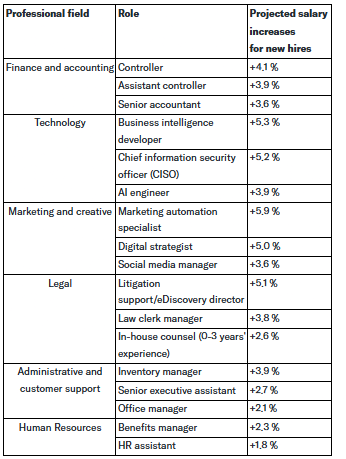
The salary ranges in the guide reflect base salaries for new hires across all levels of experience, according to Robert Half. Across the six specializations the guide covers, salaries are projected to increase between 1.1 and 1.8 per cent.
Premium pay goes to specialized skills
The survey found that 55 per cent of managers are offering higher-than-planned salaries to attract top talent, with 61 per cent citing specialized skills as a key reason. Six in 10 organizations are increasing compensation budgets to attract in-demand talent despite cost pressures.
AI skills are a particular driver. Sixty-three per cent of managers are increasing pay for professionals with relevant AI skills, and 32 per cent said AI expertise commands a greater premium than other technical skills.
"Many employers are moving away from broad-based pay increases and adopting more targeted compensation strategies to invest in specialized and hard-to-find skills that support business priorities," said Koula Vasilopoulos, senior managing director at Robert Half Canada.
Pay transparency going beyond the law
Seventy per cent of companies surveyed are taking pay transparency steps beyond legal requirements, according to Robert Half, and 96 per cent of hiring managers either already include or plan to include salary ranges in job descriptions.
Why? Hiring managers cited:
- a higher-quality candidate pool (49 per cent)
- more efficient salary negotiations (46 per cent)
- reduced time-to-hire (33 per cent) as the top benefits.
Ninety-three per cent of employers said they use or plan to use external market data to benchmark compensation.
Where benefits fall short of what workers want
The guide also identified gaps between the benefits workers value and those employers offer. The widest was cost-of-living adjustments, valued by 50 per cent of workers but offered by 18 per cent of employers.
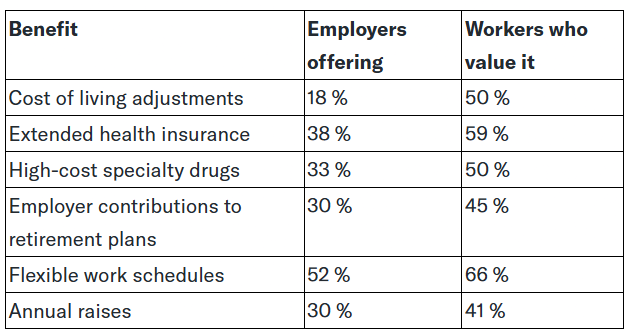
Robert Half said the guide draws on market data, insights from its own talent solutions professionals and survey findings from more than 2,850 hiring managers, business leaders and employed workers across Canada.
Raise budgets for existing staff hold steady
Robert Half's figures track starting salaries, but surveys released in late August point to flat increase budgets for current employees next year.
Mercer Canada, a business of Marsh, found employers plan an average merit increase of 3.0 per cent and total salary increases of 3.2 per cent in 2027, virtually identical to actual increases in 2025 and 2026, while a separate survey by Normandin Beaudry found early data pointing to average increases of 3.1 per cent, matching 2026, Canadian HR Reporter reported.
"Right now, economic uncertainty plays a huge role in employers' compensation strategies," said Elizabeth English, senior talent and careers leader at Mercer Canada.